 Millets National Media Portal
Millets National Media Portal
Millets National Media Portal
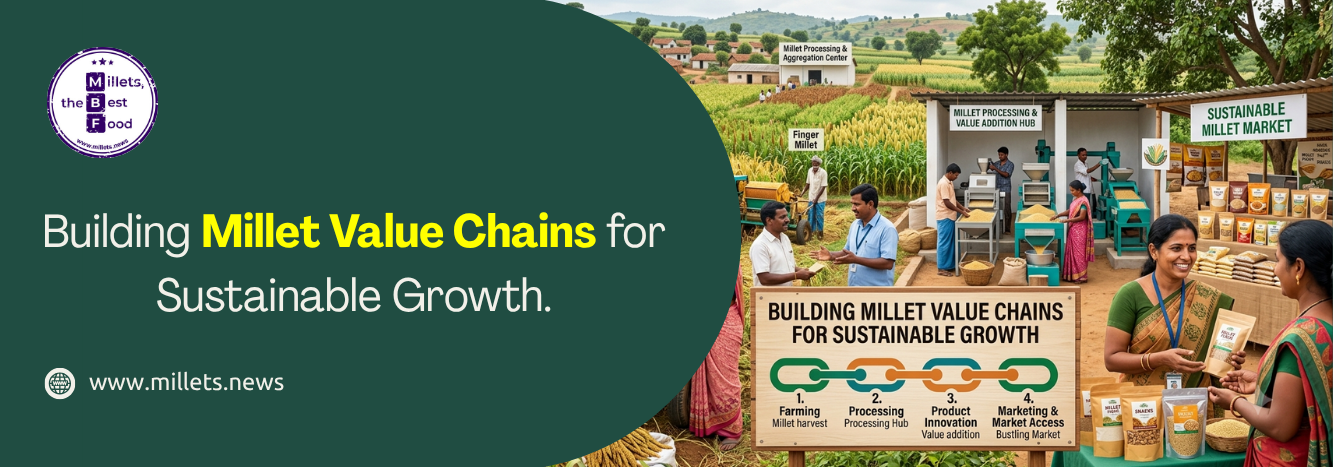
Millets have emerged as one of India's most promising crops, offering solutions to nutritional security, climate resilience, and sustainable agriculture. Once regarded as coarse cereals, they are now recognized as nutrient-rich superfoods that support healthier diets while helping farmers adapt to changing environmental conditions. India, the world's largest millet producer, has made significant progress in promoting millet cultivation through government initiatives, awareness campaigns, and consumer education. However, increasing production alone will not ensure long-term success. The future of India's millet revolution depends on building a strong value chain that connects farmers, processors, manufacturers, retailers, and consumers from seed to shelf.
Millets such as finger millet, foxtail millet, pearl millet, kodo millet, little millet, and barnyard millet are packed with essential nutrients, including calcium, iron, zinc, protein, and dietary fiber. Their low glycemic index makes them an excellent choice for people managing diabetes, while their rich nutritional profile supports heart health, weight management, and digestive wellness. Beyond health benefits, millets are highly climate-resilient crops that require less water, fewer chemical inputs, and shorter growing periods compared to many conventional cereals. Their ability to thrive in dry and marginal lands makes them an ideal crop for sustainable agriculture and climate-smart farming.
Despite these advantages, farmers often face challenges due to limited market access, inadequate processing facilities, inconsistent demand, and weak supply chain infrastructure. Many millet growers struggle to receive fair prices because value addition opportunities remain limited. Without efficient storage, grading, branding, packaging, and processing systems, the true economic potential of millets cannot be fully realized. A comprehensive value chain is essential to transform raw millet grains into a wide range of consumer-friendly products such as ready-to-cook mixes, breakfast cereals, snacks, bakery products, flour, and health foods.
India's agricultural success has historically been driven not only by production but also by integrated ecosystems that combine research, innovation, infrastructure, market development, logistics, and supportive government policies. The same approach is necessary for the millet sector. Investments in modern processing technologies, farmer producer organizations, digital marketplaces, quality certification, export promotion, and private sector participation can significantly improve the profitability and competitiveness of millet-based products. Encouraging food manufacturers and retailers to expand millet offerings will further strengthen consumer demand.
The next phase of India's millet journey must focus on creating sustainable economic opportunities across the entire supply chain. By connecting farmers to profitable markets, improving post-harvest infrastructure, promoting value-added millet products, and increasing consumer awareness, India can position itself as a global leader in millet production and innovation. A resilient value chain will not only improve farmer incomes but also strengthen food security, support environmental sustainability, and ensure that millets become an integral part of everyday diets for generations to come.
© 2023 - 2026 Millets News. All rights reserved.

