 Millets National Media Portal
Millets National Media Portal
Millets National Media Portal
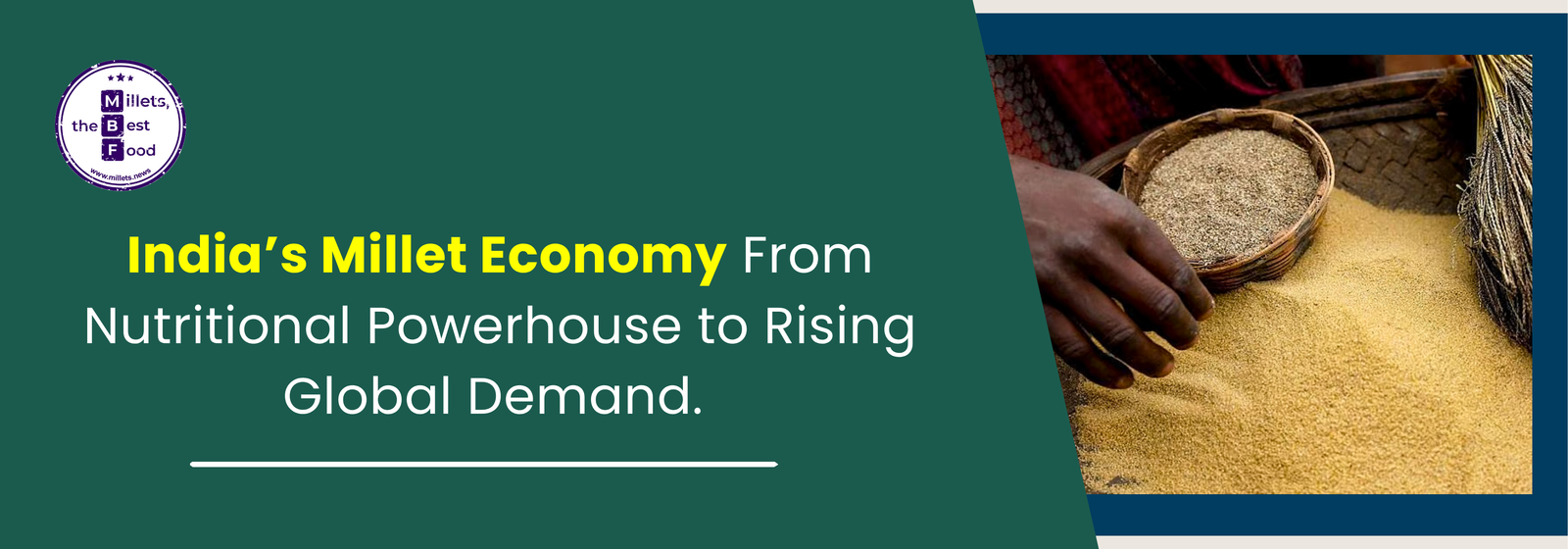
Millets are emerging as a major pillar of India’s nutrition, food security and sustainable agricultural economy. Often described as nutri-cereals, these traditional grains combine nutritional value with strong climate resilience, making them increasingly relevant to consumers, farmers, food businesses and policymakers. India’s leadership in millet production provides a strong foundation for expanding domestic consumption, food processing, value addition and international trade. With production reaching 180.15 lakh tonnes in 2024-25, the country continues to play a significant role in shaping the global millet economy.
India accounts for a substantial share of global millet production, supported by diverse agro-climatic conditions and large cultivation areas across states such as Rajasthan, Maharashtra and Karnataka. Bajra, or pearl millet, represents the largest share of domestic millet production, while jowar, ragi and small millets contribute to a diversified agricultural ecosystem. Cultivation across millions of hectares also demonstrates the importance of millets for farmers operating in dry and rain-fed regions where conventional cereal crops may face greater climatic challenges.
Global demand for millets is also creating new commercial opportunities. Growing consumer preference for nutritious, gluten-free and sustainably produced foods is encouraging businesses to develop millet-based snacks, breakfast products, ready-to-cook foods, flours and other value-added products. India’s millet exports already reach markets including the UAE, Saudi Arabia, Nepal, the United States, Germany, Bangladesh and Libya. Expanding from bulk grain exports toward branded and processed millet foods could further strengthen India’s presence in international markets.
The nutritional profile of millets is another important driver of their growing popularity. Different millet varieties provide dietary fibre, protein, vitamins, minerals and naturally occurring bioactive compounds. Many millets are naturally gluten-free and can contribute to diversified diets. Their agricultural advantages are equally significant. Millets generally require comparatively fewer resources, can perform under water-stressed conditions and are adaptable to marginal soils, making them valuable crops as agriculture responds to drought, water scarcity and increasingly unpredictable weather.
Government initiatives are helping strengthen the millet value chain from cultivation to consumption. Programmes supporting food processing, micro-enterprises, millet-based products, research, farmer organisations, procurement and export promotion are creating opportunities across the sector. Institutions such as ICAR-Indian Institute of Millets Research and APEDA contribute through research, technology development, market development and international promotion.
India’s millet opportunity therefore extends far beyond agricultural production. A growing ecosystem connecting farmers, processors, entrepreneurs, researchers, retailers, exporters and consumers could transform millets into an increasingly important economic category. As nutritional awareness, climate concerns and demand for sustainable foods continue to grow worldwide, India is well positioned to translate its traditional millet heritage and production strength into value-added businesses, stronger farmer opportunities and greater participation in the global food market.
© 2023 - 2026 Millets News. All rights reserved.

