 Millets National Media Portal
Millets National Media Portal
Millets National Media Portal
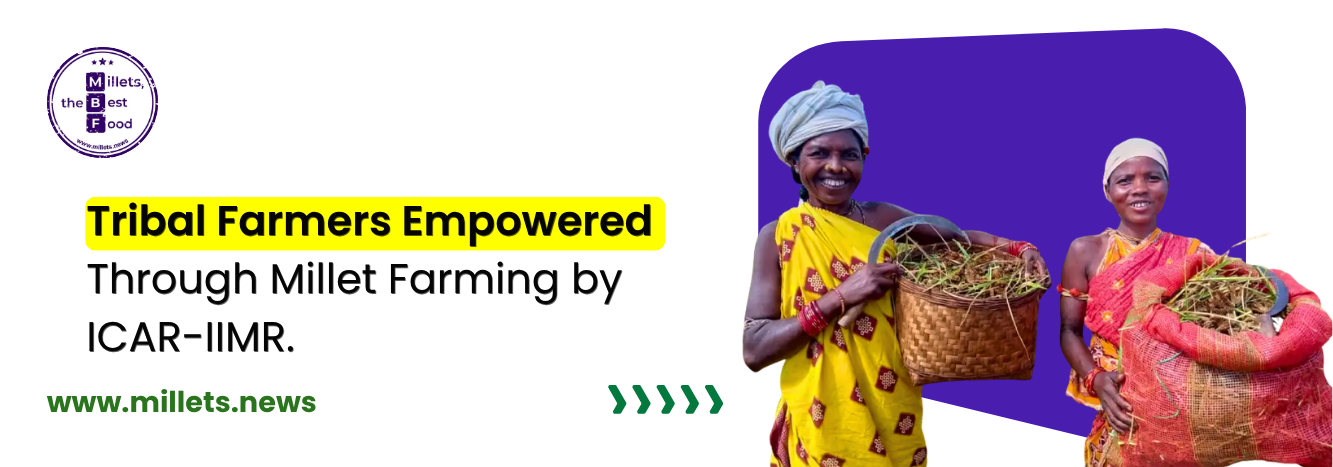
A one-day training programme on “Millets Awareness and Input Distribution” was successfully conducted by ICAR-Krishi Vigyan Kendra, Ramanagara, under the GCOE–TSP initiative of ICAR-Indian Institute of Millets Research, Hyderabad. The initiative aimed to promote millet cultivation among tribal farmers by enhancing technical knowledge, encouraging sustainable agricultural practices, and strengthening climate-resilient farming systems. With growing concerns around climate change, water scarcity, and declining soil health, millets are increasingly being recognized as resilient crops capable of ensuring long-term food and nutritional security. The training programme served as an important platform to create awareness about the agricultural, nutritional, and economic value of millets while motivating farmers to adopt improved and scientific cultivation methods.
The sessions highlighted the critical role of millets in sustainable agriculture due to their low water requirement, adaptability to harsh climatic conditions, and rich nutritional profile. Subject matter experts from the College of Horticulture, Bagalkot, delivered detailed capacity-building sessions focused on practical and application-oriented farming techniques. Farmers received valuable insights into plant health management, including symptom-based identification of major pests and diseases affecting millet crops. Experts also explained integrated and cost-effective crop protection measures to help farmers minimize losses and improve crop health. These technical discussions enabled participants to better understand modern agricultural practices that can improve yield while reducing input costs.
The programme also emphasized enterprise development and value addition within the millet ecosystem. Discussions covered market linkages, value chain development, and entrepreneurial opportunities that can improve farmer income and create sustainable livelihood opportunities. Special focus was given to the nutritional and functional benefits of millets, particularly their role in addressing micronutrient deficiencies, improving dietary diversity, and supporting healthier lifestyles. As global demand for nutritious and functional foods continues to rise, millet-based products are creating new business opportunities for farmers, processors, and entrepreneurs. Participants were encouraged to explore value-added millet products to maximize profitability and tap into emerging markets.
Advanced production practices were another key component of the training, where experts shared knowledge on improved seed varieties, scientific crop management techniques, and efficient resource optimization methods to enhance productivity. Farmers also received guidance on organic farming systems, including certification procedures and strategies for accessing premium niche markets through sustainable agricultural practices. The programme witnessed active participation from around 50 tribal farmers, reflecting strong interest in millet-based interventions and sustainable farming solutions. To support practical implementation at the field level, essential agricultural inputs were distributed, including Ragi (KMR-316) seeds, field bean (HA-5) seeds, biofertilizers such as Trichoderma, Pseudomonas, MC, Rhizobium, Azospirillum, and PSB, along with baskets, training kits, and technical extension materials. Conducted under the guidance of C. Tara Satyavathi, the initiative significantly strengthened farmer capacity, promoted millet-based livelihoods, and advanced sustainable agriculture and nutritional security among tribal communities.
© 2023 - 2026 Millets News. All rights reserved.

