 By Admin
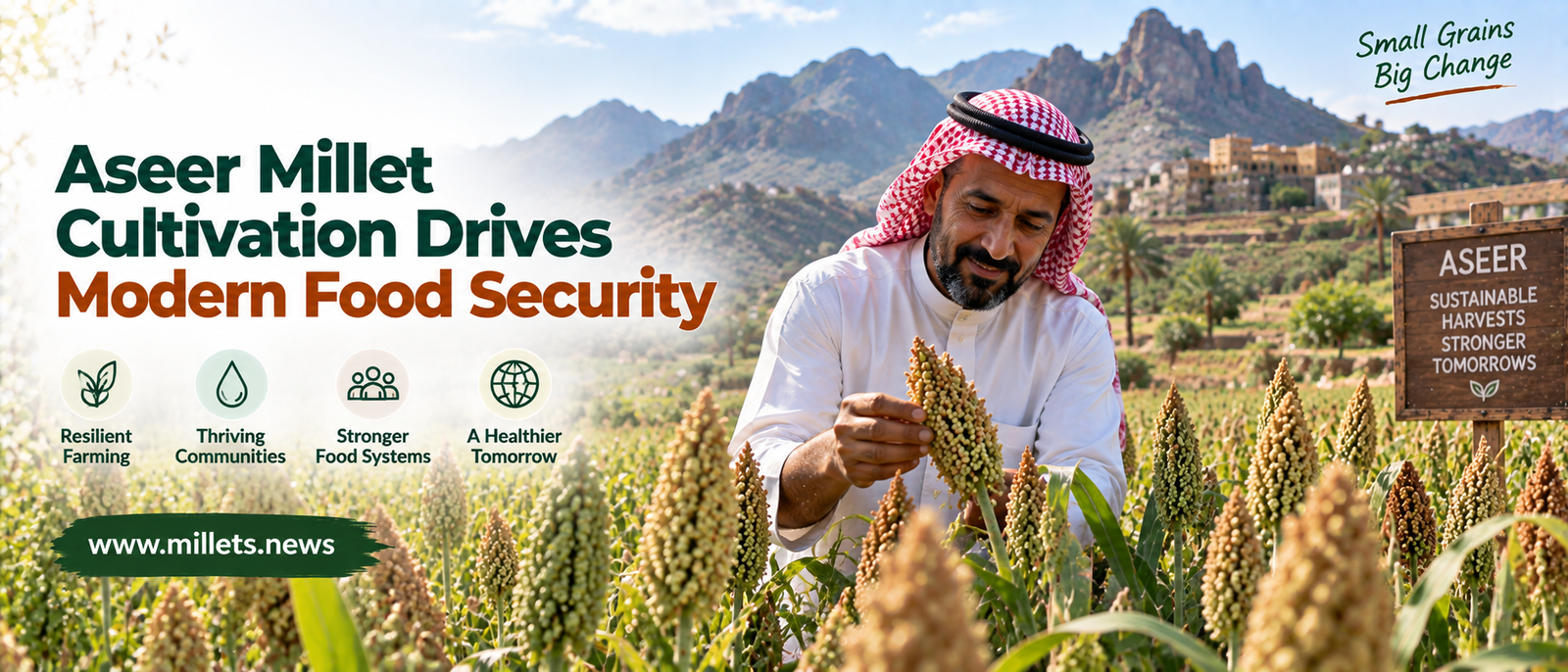
Saudi Arabia’s Aseer region is increasingly promoting millet cultivation as part of a broader long-term food security strategy focused on sustainable and climate-resilient agriculture. According to the Saudi Press Agency, millets are being recognised as “crops of the future” because they require minimal water, fewer chemical inputs, and can withstand drought conditions more effectively than many conventional crops.
Agricultural experts in the region believe millet farming can help strengthen local food production while reducing pressure on limited natural resources. The crop’s adaptability to dry climates and poor soils makes it particularly suitable for arid regions facing rising temperatures and water scarcity. Officials also see millet cultivation as an important step toward improving agricultural sustainability and reducing dependence on imported food products.
The initiative reflects Saudi Arabia’s growing emphasis on climate-smart farming practices and resilient food systems. By encouraging drought-tolerant crops like millets, the country aims to support long-term food security goals while promoting environmentally responsible agriculture across water-stressed regions.