 By Admin
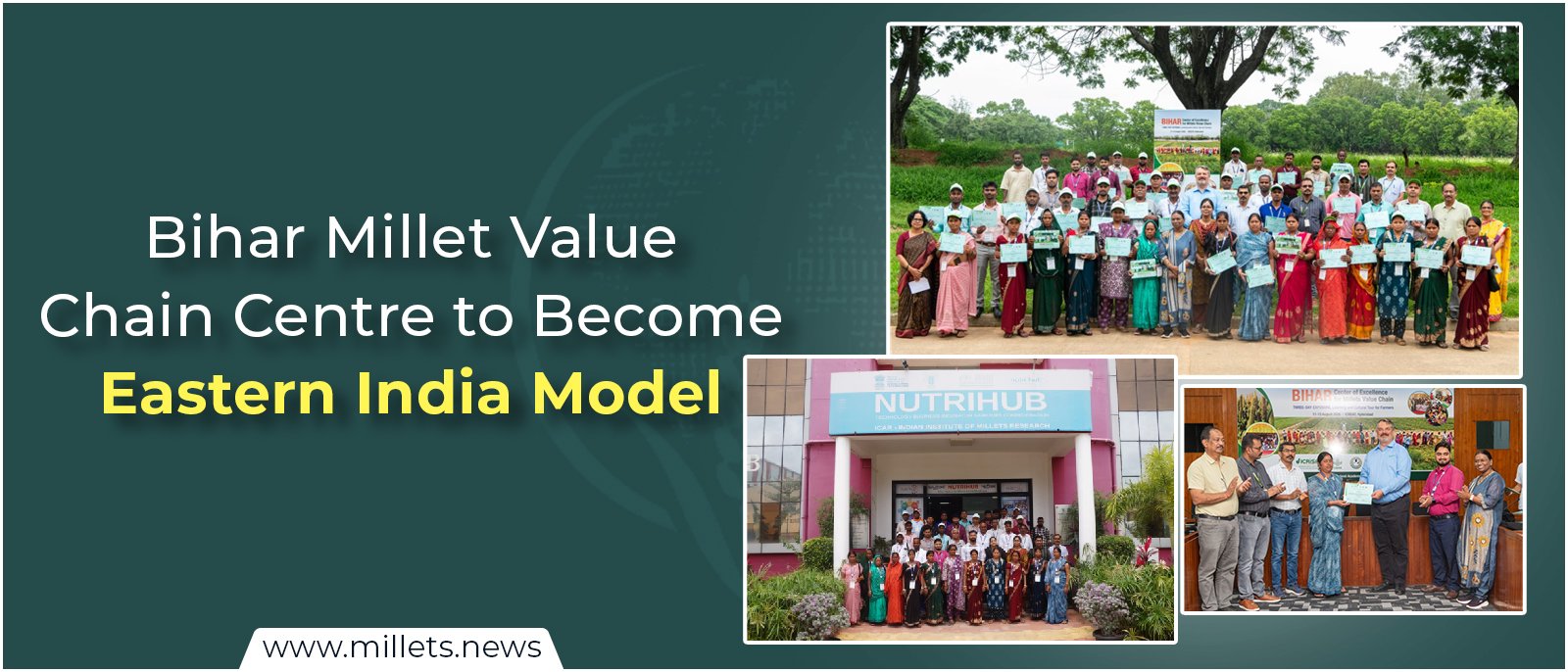
Bihar is seeking to establish itself as an emerging centre for millet value-chain development, with plans to transform the Bihar Centre of Excellence for Millets Value Chain into a model for Eastern India and the wider country. Agriculture Minister Vijay Kumar Sinha said the initiative would contribute to food and nutritional security while connecting agricultural innovation more directly with farmers and consumers.
The announcement came during Sinha’s visit to the International Crops Research Institute for the Semi-Arid Tropics (ICRISAT) at Patancheru in Hyderabad. During discussions with scientists and agricultural experts, the Bihar delegation reviewed progress under the BCoEMVC project and explored opportunities for strengthening the state’s agricultural sector through research, technology and innovation.
A central objective is to ensure that advances in agricultural research translate into tangible economic opportunities for farming communities. Sinha emphasised that scientific innovation needs to be accompanied by effective market access if farmers are to receive greater value from millet cultivation. This positions the initiative as more than a production programme, extending its focus across the entire millet value chain.
Bihar already produces Shree Anna, or millets, but the state sees stronger markets as essential for improving farmer returns. The proposed strategy therefore places considerable emphasis on processing, value addition and organised marketing, helping millet products move beyond farm-level production into higher-value consumer markets.
The collaboration with ICRISAT could provide an important scientific foundation for this transformation. ICRISAT Genebank Head Dr. Kuldeep Singh briefed the delegation on progress under the project and initiatives designed to strengthen millet-based value chains. The partnership is expected to connect Bihar’s agricultural system with advanced research and modern technologies.
Farmer awareness and capacity building will constitute another important component. Sinha called for wider communication about the nutritional and agronomic advantages of millets and interacted with farmers from Bihar who were undergoing training at ICRISAT. Such programmes can help translate institutional research into practical knowledge that producers can apply within their own farming systems.
The delegation also explored ICRISAT facilities covering regenerative agriculture, speed breeding, genetic resources, genomics and agribusiness innovation. Scientists briefed officials on developments in advanced crop breeding, climate-resilient agriculture, biotechnology and entrepreneurship, demonstrating the range of technologies that could potentially support Bihar’s wider agricultural modernisation.
For the millet sector, Bihar’s approach reflects an increasingly important transition from crop promotion to value-chain development. Expanding millet acreage alone may not guarantee better livelihoods unless farmers can access processing infrastructure, technology, training and remunerative markets. Integrating these elements can create stronger incentives for production while stimulating entrepreneurship and consumer demand.
If successfully implemented, the Bihar centre could provide a valuable template for other millet-growing states in Eastern India. By connecting research, climate-resilient production, processing, value addition, marketing and farmer capacity building, the initiative has the potential to demonstrate how millets can contribute simultaneously to nutrition security and rural economic development.