 By Admin
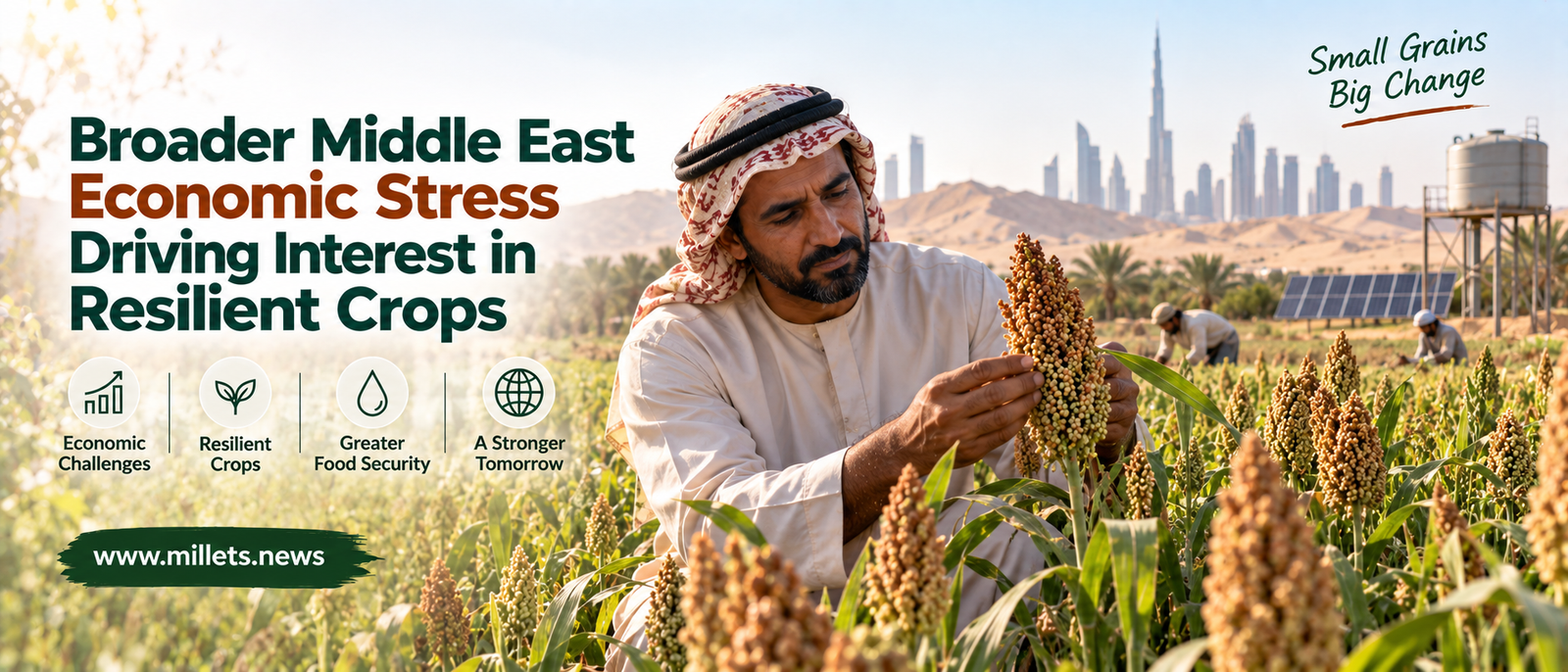
Rising economic uncertainty linked to the ongoing Middle East conflict is increasing global concerns over food security, inflation, and agricultural sustainability. Recent outlook reports released by the International Monetary Fund (IMF) and the United Nations have highlighted how disruptions in the region are affecting energy markets, agricultural inputs, and food supply systems across several countries. Higher fuel and fertilizer costs are placing additional pressure on farming activities, especially in import-dependent economies across Africa and Asia.
The economic stress has renewed attention on the importance of climate-resilient agriculture and sustainable food production systems. Governments, policymakers, and agribusiness companies are increasingly exploring crops that can withstand drought conditions, require fewer resources, and support long-term food security goals. Among the crops receiving growing attention are millets, which are known for their strong adaptability to dry and arid environments.
Millets require comparatively less water, fewer chemical inputs, and can survive under harsh climatic conditions, making them suitable for regions facing rising temperatures and water scarcity. Agricultural experts believe these traditional grains can play an important role in strengthening resilience against future climate and supply-chain shocks. In several Middle Eastern and arid-region farming discussions, millets are now being considered as part of broader food resilience and sustainability strategies.
The renewed focus on resilient crops also reflects changing priorities in global agriculture, where food security and environmental sustainability are becoming increasingly interconnected. Experts note that investing in climate-smart crops like millets, along with improving local food production and reducing dependence on volatile global supply chains, could help countries better manage future economic and agricultural disruptions.