 By Admin
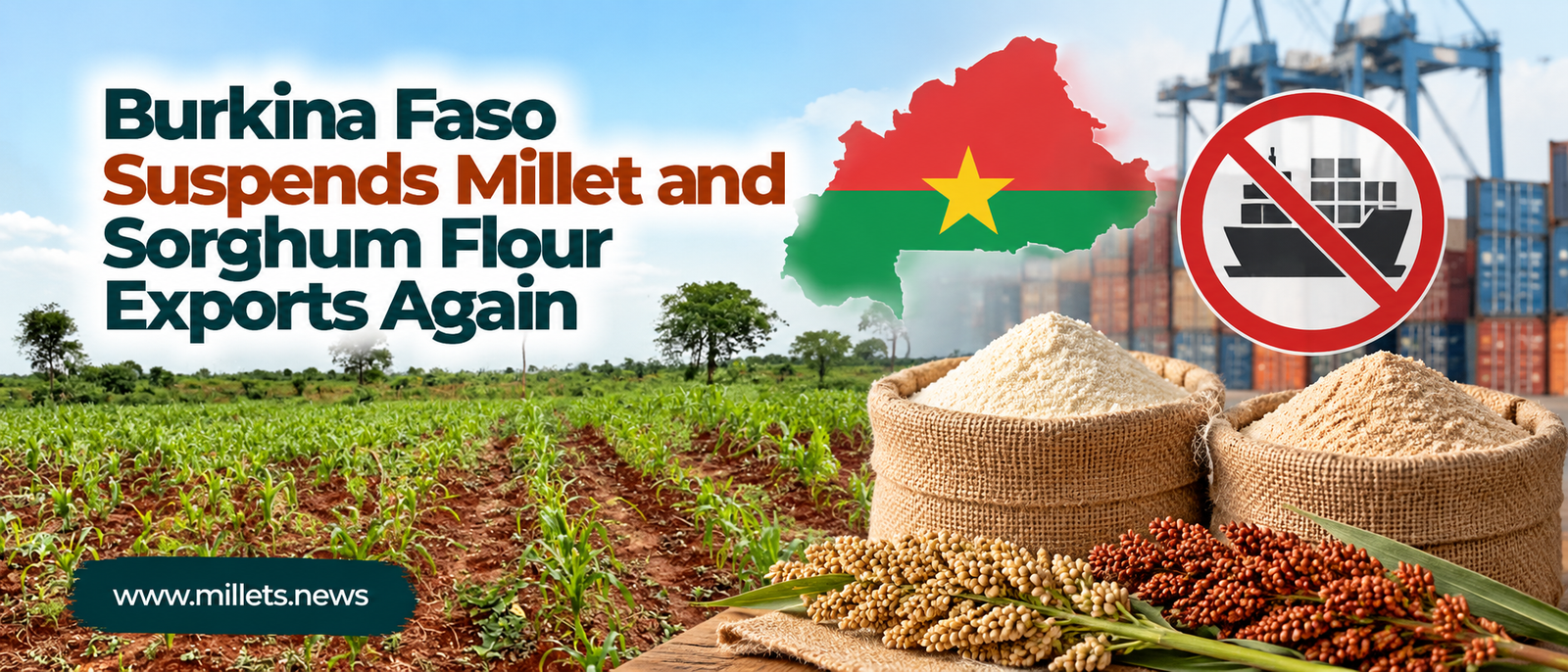
Burkina Faso has reinstated restrictions on the export of millet, maize and sorghum flours, reversing a policy change introduced less than three months earlier.
In a statement dated October 9, 2026, the Ministry of Industry, Commerce and Handicrafts announced that exports of these cereal flours and their derivatives would be suspended nationwide until further notice.
The government said the decision is intended to maintain regular supplies of essential cereal products within Burkina Faso and improve their accessibility for domestic consumers.
Alongside the export suspension, authorities have stopped issuing Special Export Authorisations (ASE) for the affected products.
The ministry has instructed economic operators, border control authorities and security services to support implementation of the restrictions. Businesses and individuals violating the measure may face penalties under applicable regulations.
The latest announcement marks another change in the country's cereal trade policy.
Burkina Faso originally introduced restrictions on exports of millet, maize and sorghum flours in February 2022. These measures remained in place for more than four years before the government lifted them on July 21, 2026.
The July reopening was intended to help domestic processing companies sell accumulated stocks and restore access to regional markets. Exporters were still required to obtain special authorisation from the government.
However, the October decision has once again halted exports of the affected processed cereal products.
The development is particularly relevant to the millet and sorghum industries because it directly affects the ability of domestic processors and traders to supply flour products to international markets.
While the government has identified domestic availability and consumer access as its objectives, the announcement does not provide a specific date for reopening exports.
The decision highlights the importance of millet and sorghum products in Burkina Faso's domestic food market and the continuing role of trade controls in the country's food supply policy.