 By Admin
Decades of agricultural research conducted under the extreme conditions of Rajasthan's arid regions could provide useful solutions for farmers confronting increasing water and climate pressures in Andhra Pradesh and Telangana, according to senior scientists at ICAR's Central Arid Zone Research Institute in Jodhpur.
CAZRI Acting Director and Head of the Division of Transfer of Technology SPS Tanwar said the institute's experience could be adapted in the two southern states rather than requiring agricultural systems to develop every solution independently. The institute has longstanding research connections with organisations based in Andhra Pradesh and Telangana.
Millets form an important part of those institutional connections. CAZRI works with the ICAR-Indian Institute of Millets Research (IIMR), Hyderabad, particularly in areas involving millet post-harvest technologies and development of new varieties.
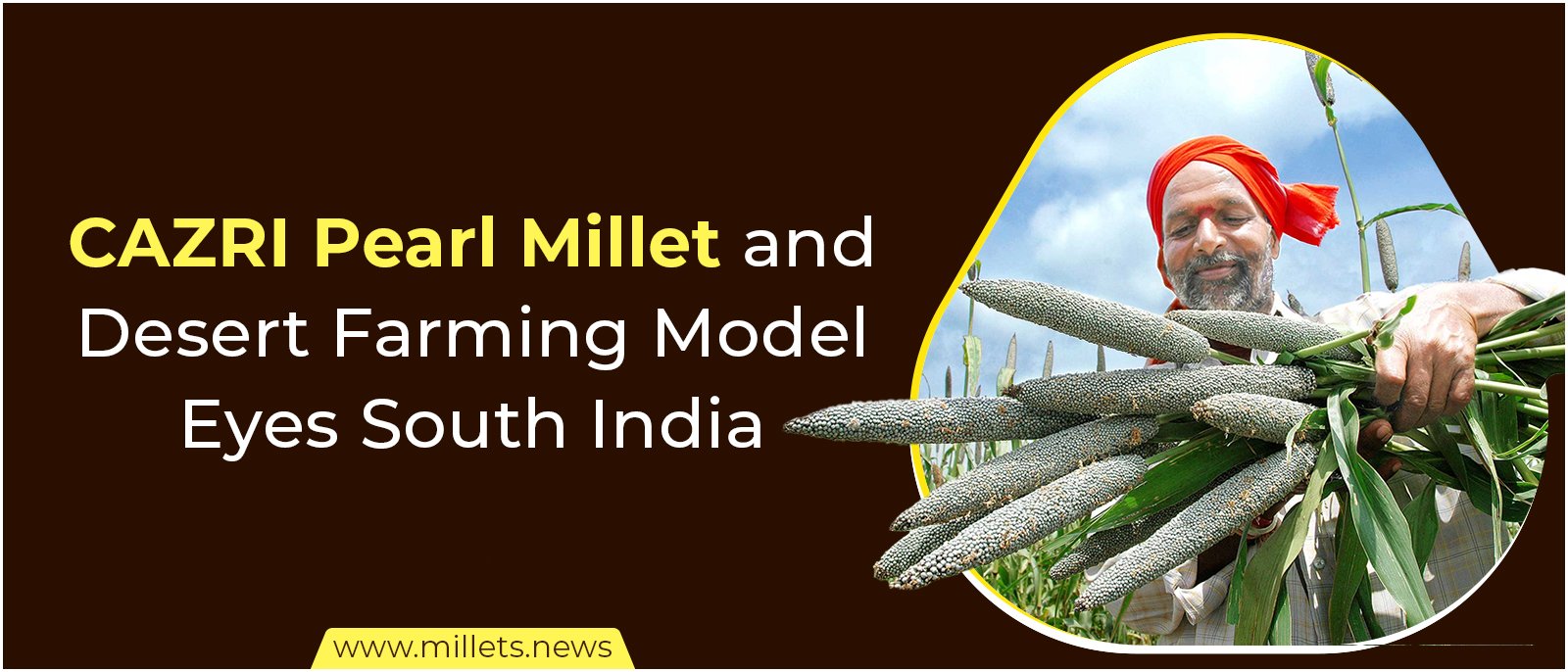
One significant example is Maru Moti, a recently released pearl millet variety. According to CAZRI, the variety was developed using genetic material sourced from the International Crops Research Institute for the Semi-Arid Tropics (ICRISAT) in Hyderabad.
The collaboration illustrates the increasingly interconnected nature of millet research in India. Genetic resources, breeding expertise, post-harvest technologies and knowledge generated by different research institutions can be combined to develop crops and production systems better adapted to challenging environments.
The implications are particularly relevant for Andhra Pradesh and Telangana. CAZRI scientists highlighted concerns surrounding water scarcity and heat spikes during the rabi season, including climatic risks associated with El Niño conditions. Technologies developed for Rajasthan's dry environments could therefore offer useful lessons for these regions.
Water harvesting is one area where Rajasthan's experience could be transferred. CAZRI highlighted the widespread use of diggis—farm ponds designed to capture canal overflow and rainfall—as one factor supporting the expansion of irrigated agriculture in desert areas.
CAZRI also reported considerable progress in combating desertification. According to the institute, Rajasthan has recorded a reduction of 3.87 lakh hectares in desertification, while approximately 4.8 lakh acres of dunes have been stabilised through interventions including wind-erosion control.
The institute's work extends into precision agriculture, protected cultivation, hydroponics and agrivoltaic models, where agricultural production and solar-energy generation can coexist. These technologies demonstrate how arid-region farming can diversify beyond conventional production systems.
Knowledge transfer is already taking place. CAZRI receives agriculture students, forest officers and farmer groups from Andhra Pradesh and other parts of southern India for practical demonstrations of arid farming technologies.
For the millet sector, the story carries particular significance. Pearl millet and other drought-adapted cereals are increasingly important in agricultural systems confronting higher temperatures, uncertain rainfall and pressure on irrigation resources.
The CAZRI experience suggests that climate resilience depends not simply on selecting drought-tolerant crops. Combining resilient millet varieties with water harvesting, improved genetics, post-harvest technology, precision agriculture and effective farmer extension can create stronger farming systems.
Closer cooperation between CAZRI, IIMR, ICRISAT and agricultural institutions in Andhra Pradesh and Telangana could therefore help translate decades of dryland research into practical solutions for farmers facing an increasingly variable climate.