 By Admin
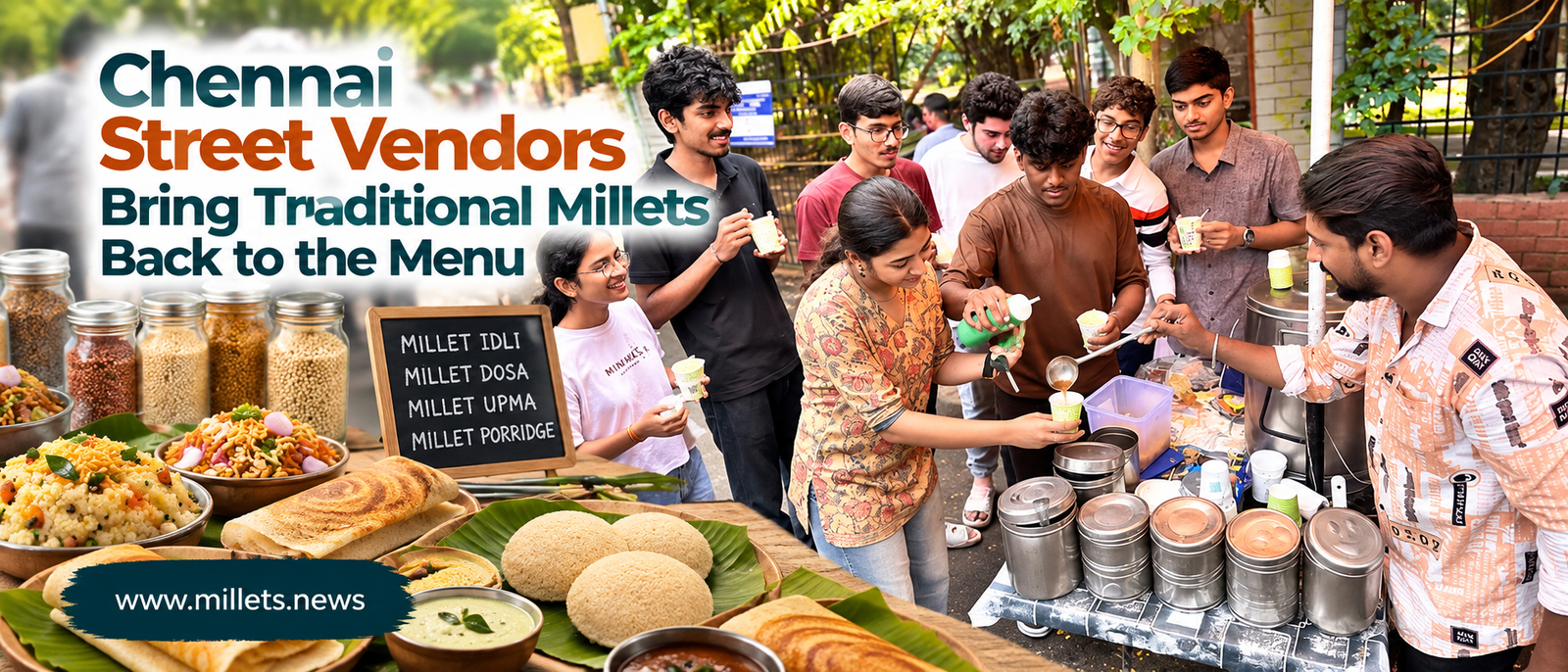
Traditional millets are finding new opportunities in Chennai's street-food culture as local entrepreneurs introduce grain-based dishes alongside familiar South Indian favourites.
A report published by The New Indian Express highlights vendors who are using millets to diversify their menus and attract customers interested in traditional ingredients.
At Mylai Puttu Kadai, near Kapaleeshwarar Temple in Mylapore, siblings Yamuna and Vedha have developed a business specialising in puttu prepared from different grains.
Yamuna began experimenting with the concept eight years ago during the Mylapore Festival. Her initial menu offered three varieties: red rice, ragi and raw rice.
Customer interest was initially limited, but demand increased after visitors sampled the dishes and recommended them to others.
Today, the mobile stall offers a rotating selection of grain-based puttu, including daily options made with ragi and pearl millet, alongside traditional rice varieties and mixed-grain preparations.
The business uses a steaming process in which the puttu is initially prepared at home and finished at the stall. The owners say customers across different age groups have become more familiar with millet foods, although increasing grain and cooking-gas costs remain challenges.
Another example is Vayalum Vazhvum, a food business started by Murgeshan in Adyar.
The venture began with traditional dishes such as sweet and savoury paniyaram before expanding into foods prepared from indigenous ingredients.
One of its distinctive offerings is millet chaap, made using a combination of pearl millet, finger millet, sorghum and wheat.
The vegetarian preparation is shaped and cooked to resemble a kebab-style snack, offering customers a different way to experience millet-based food.
Murgeshan reports growing interest in the product, particularly among customers curious about its appearance and ingredients.
The business has also expanded beyond its original mobile cart into a restaurant-style establishment in Saidapet.
The report highlights a wider trend in Chennai, where vendors are incorporating traditional grains, legumes and other familiar ingredients into convenient street-food formats.
Nutritionist Saagarika Srinivasan also emphasises that foods marketed as healthy should be evaluated on their actual ingredients, preparation methods, portion sizes and hygiene rather than labels alone.
For the millet industry, these examples illustrate how small food entrepreneurs can introduce traditional grains to new customers through convenient, familiar dishes.
They also demonstrate that millet value addition is not limited to packaged products. Street-food businesses and small restaurants can play a role in making millet-based meals more accessible within urban food culture.