 By Admin
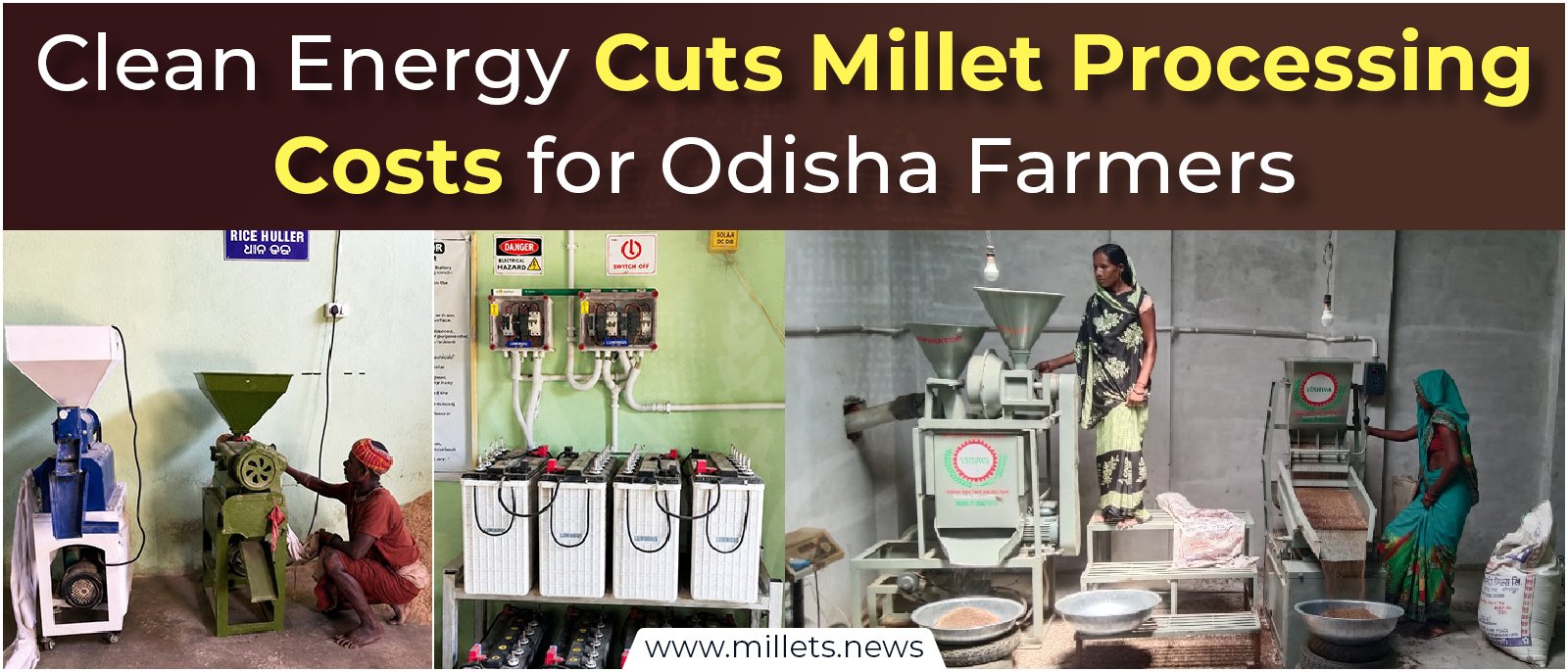
Farmers in Odisha’s Malkangiri district are adopting decentralised renewable energy to make agricultural processing more affordable and accessible. The Damaldei Farmer Producer Company in Pedaguda has established a 3-kW renewable energy-powered processing unit, creating local infrastructure for farmers who previously faced greater dependence on conventional processing arrangements.
The facility is capable of milling millet, rice and dal, making the initiative particularly relevant to strengthening local millet value chains. By processing crops closer to where they are produced, farmers can reduce their dependence on distant facilities while creating opportunities to retain a greater share of the value generated after harvest.
More than 700 farmers are shareholders in the Damaldei Farmer Producer Company, giving the project a strong collective dimension. The processing unit has been established under the PM Dhan Dhaanya Krishi Yojana, demonstrating how farmer organisations can combine infrastructure development with clean-energy technologies to strengthen rural agricultural enterprises.
Odisha Deputy Chief Minister Kanak Vardhan Singh Deo said renewable energy could enable more consistent processing while lowering operational expenditure. Reduced processing expenses can be particularly valuable for small producers because post-harvest costs influence the final returns farmers receive from crops such as millets and pulses.
Local processing also creates opportunities for value addition rather than simply selling unprocessed produce. When FPOs gain access to milling and other post-harvest infrastructure, they can potentially improve product quality, prepare commodities for different markets and develop stronger connections between local production and consumers. The Damaldei FPO is already working to make its agricultural products accessible to buyers.
The project illustrates the growing convergence between renewable energy and climate-smart agriculture. Decentralised energy systems can provide rural processing enterprises with alternatives to conventional power sources while supporting agricultural activity closer to farming communities. Odisha is pursuing broader initiatives that combine clean energy with farmer income and climate-resilient development.
For the millet sector, the initiative demonstrates that increasing cultivation is only one part of building a successful value chain. Farmers also require affordable milling, processing, storage, value addition and market connectivity to translate production into stronger incomes. Clean-energy infrastructure could become an important tool for addressing some of these post-harvest constraints.
Malkangiri’s experience therefore offers a promising model for millet-producing rural regions where processing infrastructure and reliable energy remain challenges. Combining farmer-owned enterprises, decentralised renewable power and local crop processing could help build more sustainable millet value chains while keeping a greater proportion of agricultural value within rural communities.