 By Admin
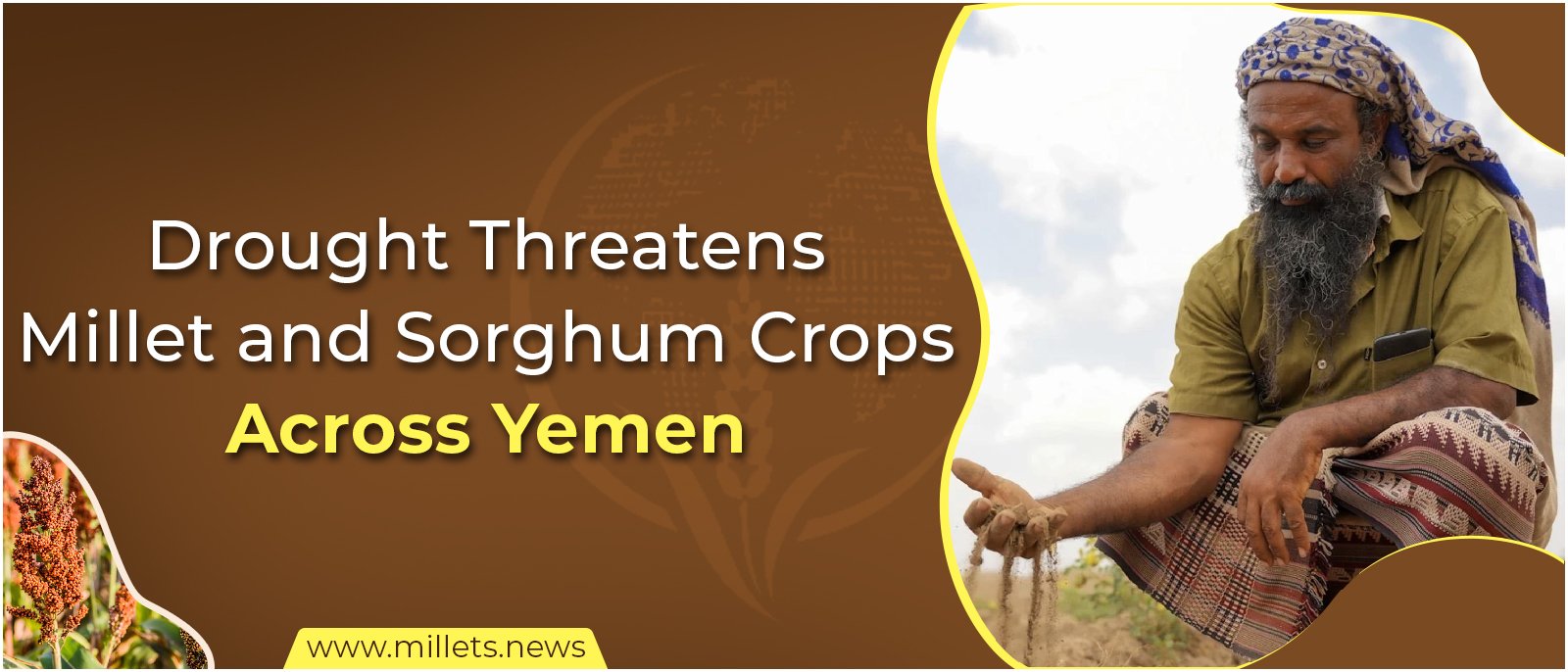
Yemen’s millet and sorghum producers are facing increasing climatic pressure after July 2026 rainfall fell to its lowest level in five years. An FAO agrometeorological assessment shows that rainfall remained both limited and erratic across much of the country, intensifying concerns for rainfed agriculture.
Large parts of Yemen received below-average rainfall compared with the 30-year climatological average. Although localized rainfall surpluses occurred in Hajjah and Ibb, several other parts of the country experienced meteorological drought conditions during the month.
High temperatures compounded the rainfall shortage. Coastal areas, eastern plateaus and desert regions experienced temperatures of around 35°C to 40°C, increasing evapotranspiration and accelerating the depletion of already limited soil moisture. Highland areas remained comparatively cooler at approximately 15°C to 20°C.
Vegetation monitoring provides another indication of agricultural pressure. Around 64% of cultivated areas remained under fair-to-good vegetation conditions, while nearly 10% experienced severe stress, particularly across the Central Highlands and Southern Uplands.
Conditions were relatively stable across 84% of cultivated areas, while 9% improved and approximately 7% deteriorated. The deterioration was particularly evident in the Central Highlands, illustrating how rainfall variability is producing different agricultural outcomes across the country.
Crop-monitoring indicators also detected mild agricultural water stress in Al Bayda, Raymah and Sana’a. FAO linked these conditions primarily to rainfall deficits combined with elevated temperatures during July.
Of particular importance to the millet sector, FAO reports that significant areas cultivated with sorghum and millet were under watch conditions. Reduced soil moisture can affect crop establishment and development, making subsequent rainfall particularly important for the performance of Yemen’s rainfed cereal systems.
The agricultural challenge extends beyond crops. Rainfall deficits and high temperatures are also placing pressure on livestock, pasture and water resources, while declining pasture availability can increase the difficulty and cost of maintaining animals in already vulnerable rural communities.
At the opposite climatic extreme, localized storms over the Southern Uplands produced flash flooding, affecting communities and agricultural livelihoods. Yemen is therefore confronting the difficult combination of widespread rainfall deficits alongside damaging localized rainfall events.
The outlook remains concerning. An earlier FAO assessment for the July–September growing period projected a high probability of widespread drought across Yemen’s rainfed agricultural areas, with rainfall deficits exceeding 40% below the long-term average in many agricultural zones.
These climatic pressures are occurring against an already severe food-security backdrop. FAO projected that approximately 53% of Yemen’s population could face Crisis-level or worse acute food insecurity during 2026, making disruption to domestic agricultural production particularly consequential.
For millet and sorghum systems, Yemen demonstrates an important reality about climate resilience. Although these cereals can perform under comparatively difficult growing conditions, prolonged rainfall deficits, extreme heat and depleted soil moisture can still significantly constrain production.
Strengthening water management, drought preparedness, climate monitoring and early-warning systems will therefore be critical to protecting Yemen’s millet and sorghum farmers as climatic variability intensifies.