 By Admin
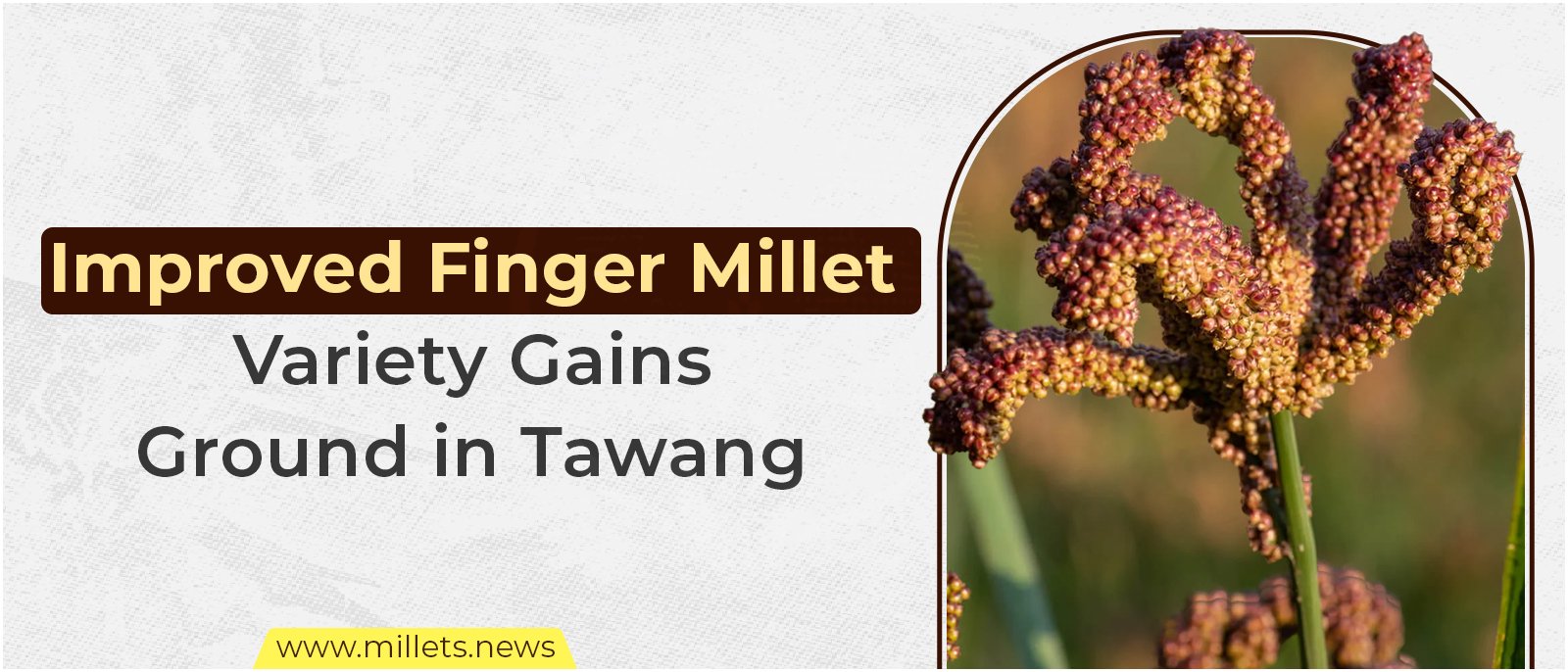
An improved finger millet variety is showing encouraging adoption among farmers in Tawang district of Arunachal Pradesh, where researchers are combining varietal improvement with field demonstrations and small-scale mechanisation to strengthen millet cultivation.
The variety, VL Mandua 376, is being promoted through the North Eastern Hill programme of ICAR–Vivekananda Parvatiya Krishi Anusandhan Sansthan (ICAR-VPKAS), Almora, in collaboration with Krishi Vigyan Kendra, Tawang. Farmer-scientist interactions and demonstrations were conducted at Kyidphel, Baghar and Phomang villages on August 17 and 18.
Farmers have responded positively to VL Mandua 376 because of its shorter crop duration, higher yield potential and adaptability to Tawang's local agro-climatic conditions. Researchers also observed increasing farmer-to-farmer dissemination of the variety, indicating that adoption is beginning to extend beyond the original demonstration sites.
Field observations provided encouraging indications of crop performance. Researchers reported vigorous growth, effective tillering and good panicle development, while participating farmers shared feedback about yield characteristics, production challenges and the variety's advantages compared with traditionally cultivated local finger millet.
A dedicated Finger Millet Field Day was organised at Baghar village in Lumla Block on August 18. Thirty-nine farmers participated and observed VL Mandua 376 under field conditions, including its crop growth and well-filled panicles.
One of the variety's most significant characteristics is its early maturity. According to the report, VL Mandua 376 matures approximately 25 days earlier than the commonly cultivated local variety. This shorter growing period can be particularly valuable in Tawang, where high altitude and a limited cultivation window create distinctive production constraints.
The initiative is also addressing the labour-intensive post-harvest side of finger millet production. At Phomang village, researchers demonstrated the Vivek Millet Thresher-cum-Pearler to 30 farmers, showing how the machine can perform threshing and pearling operations.
Introducing appropriate small-scale machinery could substantially reduce the time, labour requirements and physical drudgery associated with traditional manual processing, particularly for farmers operating in difficult hill environments.
Scientists participating in the programme also discussed improved crop management and agronomic practices with farmers. Their interactions helped researchers document farmers' preferred traits, production constraints, adoption behaviour and perceptions of the improved variety.
The growing popularity of VL Mandua 376 illustrates the importance of farmer-to-farmer seed dissemination in scaling improved millet varieties. When farmers observe successful performance under neighbouring farms' conditions, local experience itself can become an important mechanism for technology adoption.
For high-altitude millet farming, the Tawang experience offers a particularly valuable model. Combining early-maturing varieties, locally validated agronomy, farmer participation and appropriate mechanisation can address several constraints simultaneously rather than focusing exclusively on increasing yields.
If wider adoption continues, VL Mandua 376 and supporting processing technologies could contribute to improved finger millet productivity, reduced farm labour and stronger millet-based livelihoods in Tawang's mountain communities.