 By Admin
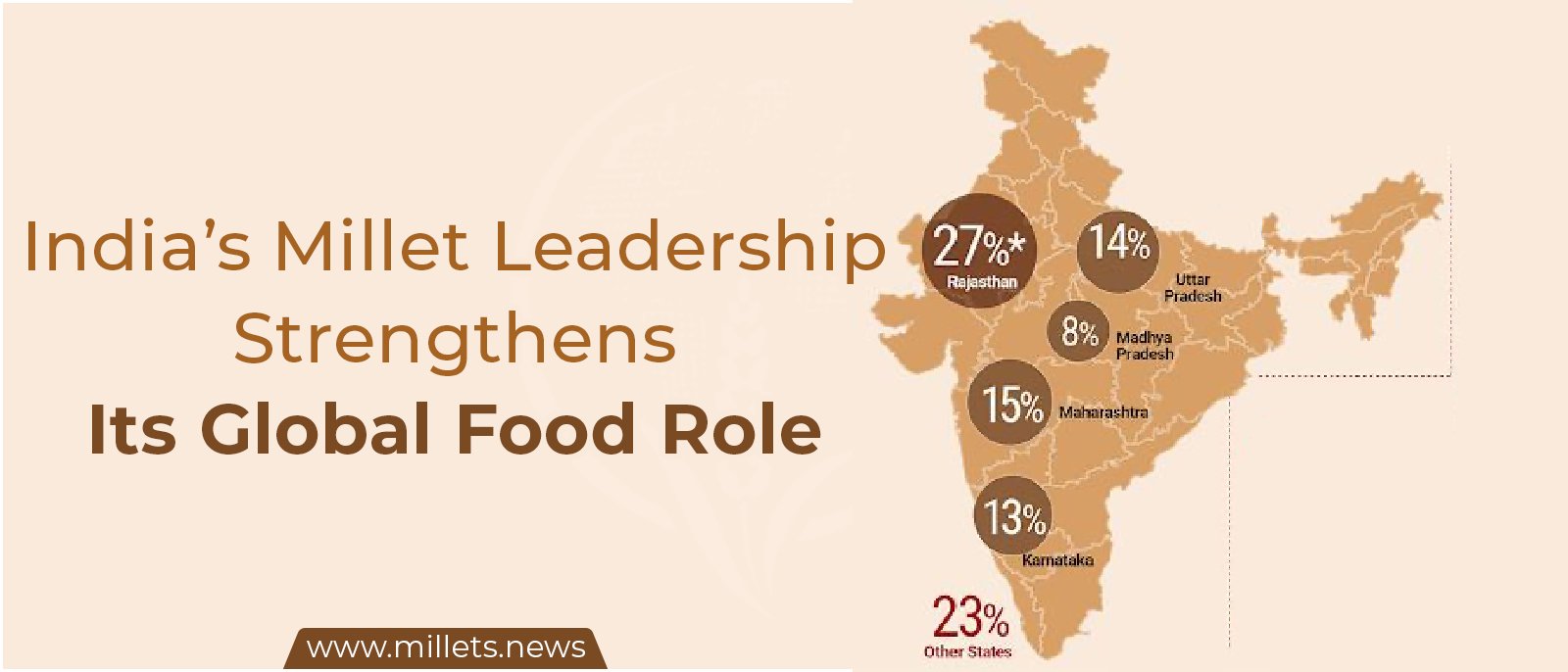
India’s agricultural strength extends across some of the world’s most important food commodities, but its leadership in millet production carries particular significance as countries search for crops capable of supporting more resilient food systems. A recent assessment of the nations underpinning global food supply places India among 11 agricultural heavyweights influencing production, exports and international food security.
The country is highlighted as the world’s leading producer of millet, alongside its prominent position in rice, milk, bananas and onions. India also accounts for roughly 40% of global rice exports, illustrating the enormous scale and diversity of its agricultural economy. Major destinations for Indian agricultural products include markets across the Middle East, Africa and the United States.
For the millet sector, India's position has significance beyond production volumes. Millets can perform under comparatively difficult growing conditions and have become increasingly important in discussions surrounding climate-resilient agriculture, nutrition and diversified food systems. India's large cultivation base consequently gives the country considerable potential to influence millet research, processing, consumption and international market development.
The wider global picture shows that food security remains concentrated among a relatively small group of agricultural powers. The United States leads agricultural exports, Brazil dominates several major commodity markets, while China has the world's largest agricultural output by value. Russia, Ukraine, Canada, Australia and other major producers similarly occupy strategically important positions within international food supply chains.
At the same time, the concentration of food production creates vulnerabilities. Climate shocks, geopolitical conflicts and disruptions to international trade can affect supplies and prices far beyond the countries where they originate. India's agriculture faces its own challenge through its continuing dependence on monsoon rainfall, making changing precipitation patterns an important concern for future production.
This is where greater attention to millets and other resilient crops could become increasingly valuable. Diversifying agricultural systems can complement major staples while giving farmers additional options in regions facing water constraints and climatic uncertainty. Strengthening production must nevertheless be accompanied by processing capacity, consumer demand, research, value addition and reliable markets.
India's millet leadership therefore represents more than a national agricultural achievement. As governments worldwide reassess the resilience of their food systems, India's experience with these traditional grains could contribute to a broader international conversation about nutrition, agricultural diversity and climate adaptation.