 By Admin
In Rajasthan's Banswara district, a 65-year-old Bhil tribal woman is working to protect traditional millet varieties and preserve the agricultural knowledge passed down through generations.
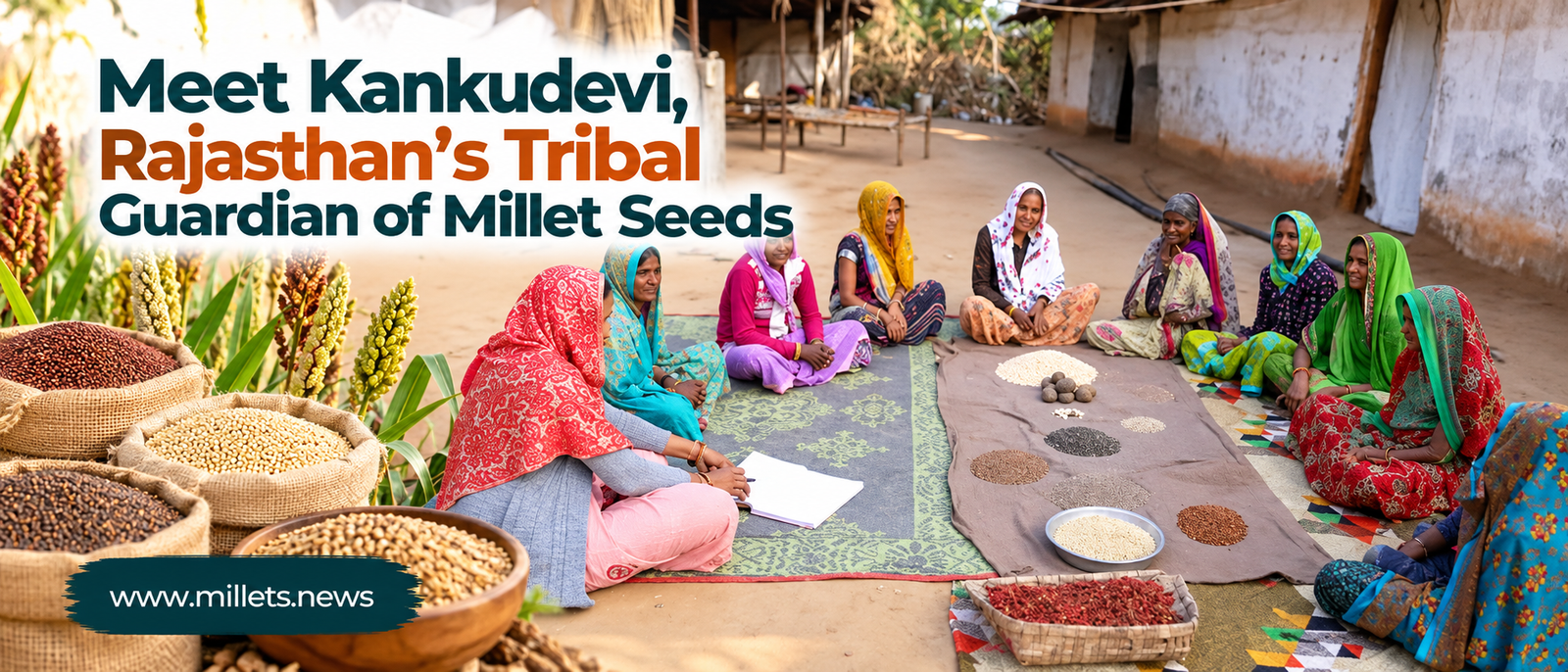
Kankudevi Kama Damor, affectionately known as Beej Mata, lives in Seranagla village in Anandpuri tehsil. Her efforts focus on conserving indigenous seeds, encouraging their cultivation and sharing them with farming families.
Growing up in a rainfed farming community, Kankudevi witnessed an agricultural system built around crop diversity. Her father cultivated more than 30 varieties across 16 crop types, allowing different crops to mature at different times and reducing dependence on a single harvest.
Traditional millets such as ragi, kuri and kangni were important components of the community's diet and farming practices.
Over time, however, the cultivation of indigenous crops declined as farming families increasingly adopted commercial and hybrid seeds. Kankudevi recalls once maintaining ten millet varieties and 15 pulse varieties, although several traditional seeds have since disappeared.
Concerned about the loss of this agricultural heritage, she began actively conserving seeds and encouraging other women to participate.
With support from Vaagdhara, a grassroots organisation, Kankudevi joined the Saksham Mahila Samuh and adopted traditional earthen-pot seed storage methods.
The women's group developed a community seed-sharing arrangement that allows farmers to obtain indigenous seeds without purchasing them.
Farmers receiving seeds are encouraged to contribute another variety in exchange. Those unable to provide a different variety may return twice the quantity they received after cultivation.
This approach helps keep traditional seeds in circulation and reduces the risk of individual varieties disappearing from the community.
Kankudevi also promotes millet cultivation as an economic opportunity.
According to her account, farmers in the area recently sold ragi for approximately ₹3,700 per quintal, compared with around ₹2,000 per quintal for maize. These are reported local selling prices, not official MSP figures, and do not establish which crop offers higher net profits.
Beyond agriculture and income, Kankudevi believes traditional millet varieties are closely connected to the cultural identity of the Bhil community.
Millet-based foods, seasonal farming practices and seed-saving knowledge have long formed part of local traditions. Preserving these crops therefore helps maintain both agricultural biodiversity and cultural heritage.
Her work illustrates how women-led community seed banks can contribute to the conservation of traditional millets while supporting farmers facing increasingly unpredictable rainfall and changing agricultural markets.
As interest in climate-resilient crops grows, Kankudevi's efforts demonstrate the continuing relevance of indigenous knowledge in shaping sustainable farming systems.