 By Admin
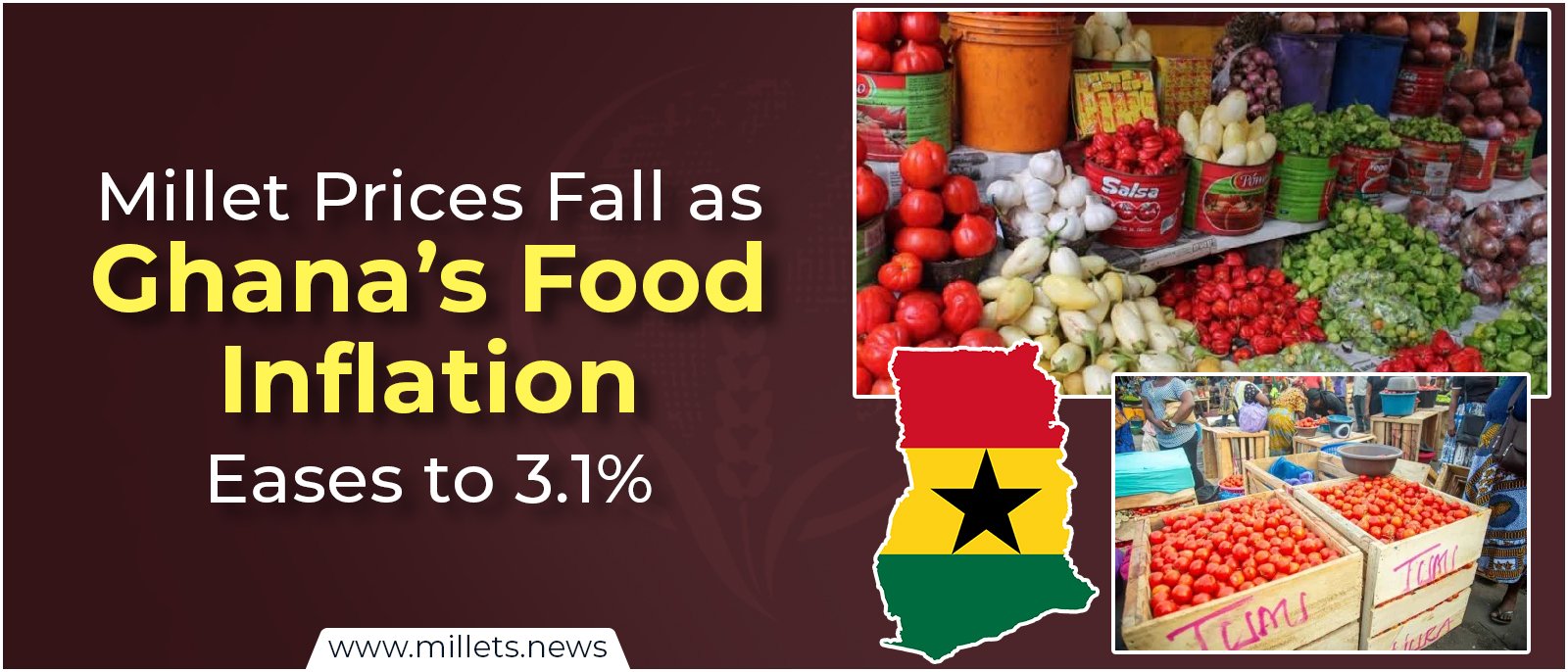
Ghana’s food market is showing signs of easing price pressure, with millet among several staple foods becoming cheaper compared with a year earlier. Food inflation declined to 3.1% in July 2026 from 3.9% in June, according to figures from the Ghana Statistical Service. The moderation could provide some relief to households after prolonged periods of elevated living costs.
Millet joined rice and beans in recording double-digit price declines, while maize prices dropped by almost 33%. These reductions are particularly significant because staple grains form an important component of household diets and food expenditure. Greater availability of some domestically produced foods has contributed to the more favourable price environment.
Food nevertheless remains a major influence on Ghana’s overall cost of living. Food and non-alcoholic beverages accounted for 32.4% of movements in the Consumer Price Index, despite the slowdown in food inflation. Ghana’s headline inflation also declined from 5.3% in June to 4.6% in July, marking its first monthly decline after three consecutive increases.
The improvement has not been uniform across food categories. While consumers purchasing millet, maize and several other staples are benefiting from lower prices, commodities including ginger and fresh tomatoes have become substantially more expensive. Ginger prices were 111.3% higher than a year earlier, while fresh tomatoes increased by 43.4%.
Ghana’s relatively stable currency has also contributed to easing inflationary pressure. Imported goods recorded inflation of just 2.0%, while improved supplies of some locally produced foods helped moderate domestic food prices. These developments demonstrate how agricultural production, market availability and wider macroeconomic conditions collectively influence household food costs.
For the millet sector, declining consumer prices present a more complex picture than simply cheaper food. Affordable millet can strengthen its accessibility as a nutritious staple, but sustained low farm-gate prices could become challenging if producer margins are squeezed. Maintaining a healthy millet value chain therefore requires balancing consumer affordability with viable returns for farmers.
Ghana’s latest figures also illustrate millet’s place within the broader African food economy. Strengthening production, storage, processing and distribution can help maintain stable supplies while reducing exposure to sharp price fluctuations. Efficient millet value chains can therefore contribute simultaneously to food affordability, farmer livelihoods and national food security.