 By Admin
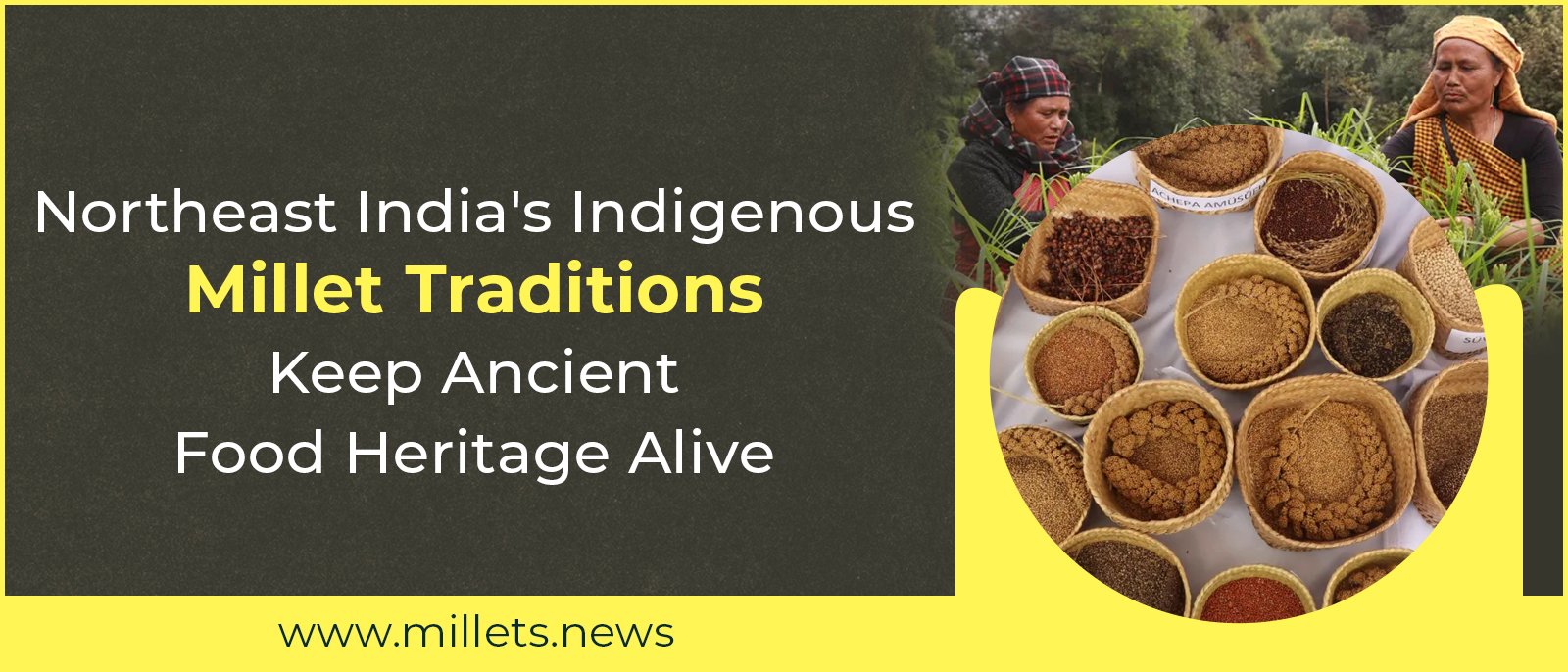
Across Northeast India, indigenous communities are preserving centuries-old millet traditions that continue to support nutrition, sustainable farming, and cultural identity. Traditional grains such as foxtail millet, finger millet, little millet, and other native varieties remain an integral part of local food systems, featuring in everyday meals, festive dishes, and community farming practices.
These traditional millets are cultivated using age-old farming methods that are well adapted to the region's diverse landscapes and changing climatic conditions. Besides being highly nutritious, millets require fewer agricultural inputs and offer greater resilience to drought and unpredictable weather, making them valuable crops for sustainable agriculture and food security.
The growing interest in indigenous food systems is helping revive traditional millet cultivation while encouraging younger generations to reconnect with their culinary heritage. Communities, researchers, and local organisations are working together to conserve native millet varieties, promote traditional recipes, and strengthen local food systems that support biodiversity, climate resilience, and rural livelihoods.