 By Admin
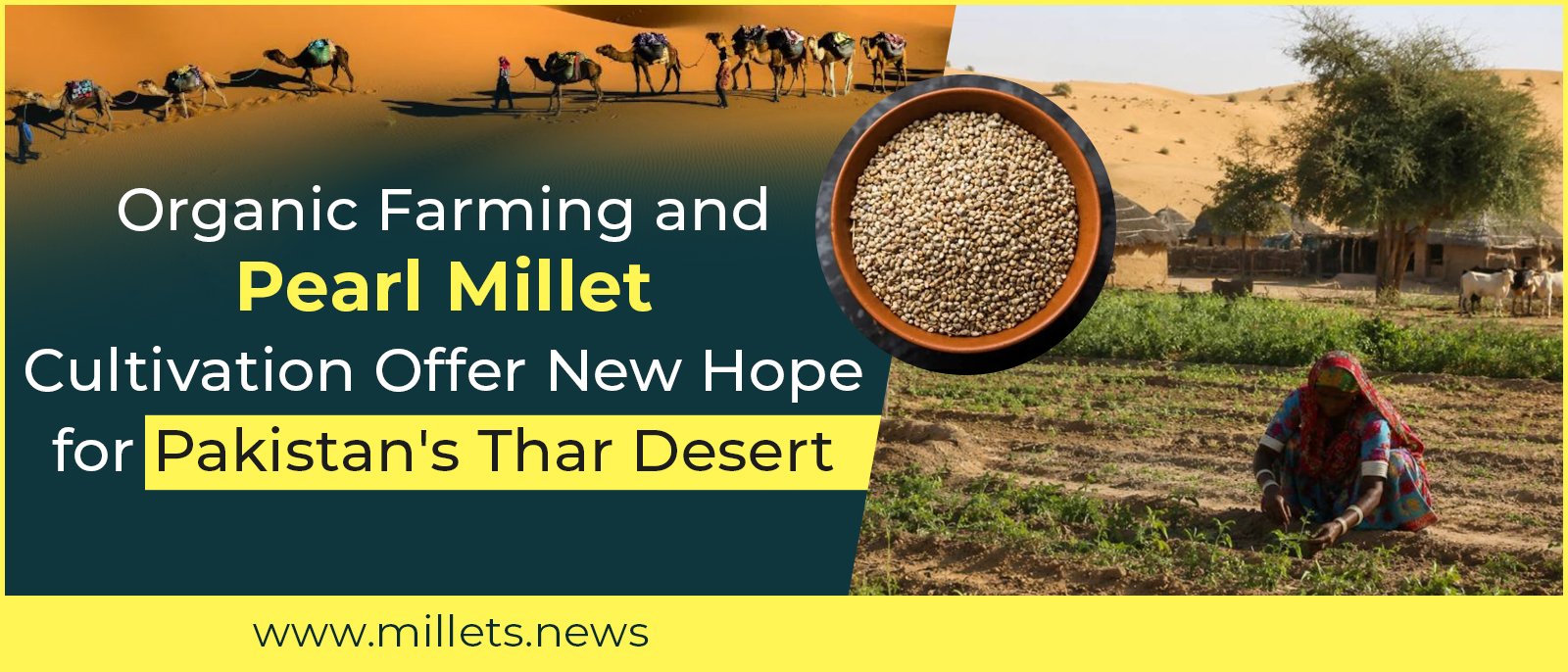
Pakistan's Thar Desert is emerging as a promising hub for organic agriculture, where traditional farming practices and climate-resilient crops are helping communities adapt to harsh environmental conditions. Limited use of chemical fertilizers and pesticides has enabled farmers to preserve naturally organic farming systems while maintaining soil health and biodiversity.
Pearl millet (bajra) remains the region's primary staple crop due to its exceptional drought tolerance, nutritional value, and ability to thrive under rainfed conditions. Farmers also cultivate indigenous crops such as cluster beans, mung beans, sesame, moth beans, and cowpeas, which require minimal water and naturally improve soil fertility through nitrogen fixation.
With rising global demand for organic food, Thar's traditional agricultural system presents significant opportunities for sustainable farming and rural livelihoods. The article highlights how centuries-old farming knowledge is supporting food security, climate resilience, and biodiversity conservation while positioning the region as a potential leader in organic agriculture