 By Admin
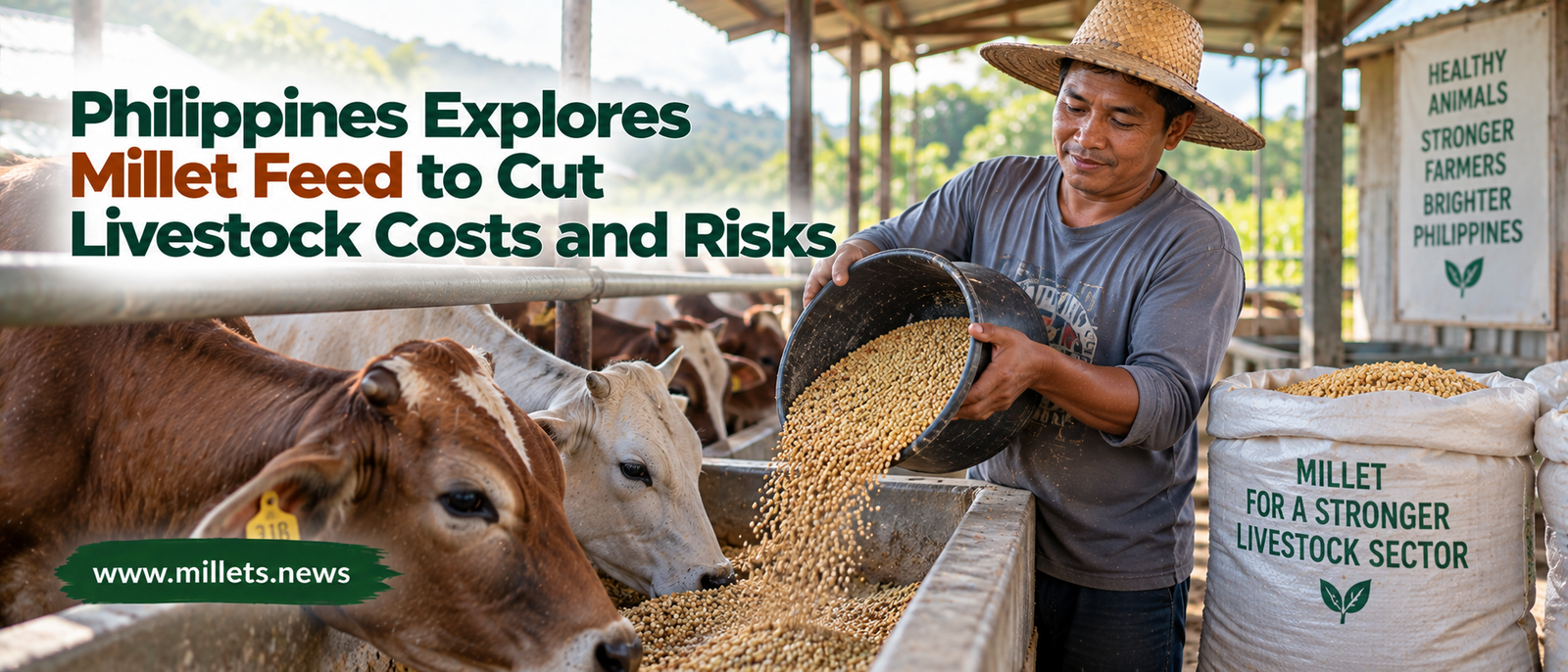
The Philippines is exploring millet as an alternative ingredient for animal feed as the country seeks to reduce livestock production costs and strengthen the resilience of its domestic feed supply.
Agriculture Secretary Francisco Tiu Laurel Jr. examined millet and other feed ingredients during a recent visit to India. The Department of Agriculture believes India’s experience cultivating and using drought-tolerant grains could provide valuable lessons for Philippine livestock producers and feed manufacturers.
Corn remains one of the principal ingredients used in livestock feed. Consequently, poor harvests, adverse weather and supply interruptions can raise feed prices and increase the overall cost of producing meat, milk and other animal products.
Millet could provide an additional feed option because the crop can generally grow under relatively dry conditions and requires less water than corn. This characteristic may make it useful when drought or unreliable rainfall affects conventional feed crops.
The proposal has gained additional relevance amid expectations of declining Philippine corn production. Government data indicate that corn output could fall by 14.4% to approximately 2.08 million metric tonnes during the third quarter of 2026, compared with 2.43 million tonnes during the corresponding period in 2025.
However, the commercial adoption of millet in livestock diets would require careful evaluation. Important considerations include local crop yields, production costs, nutritional composition, feed-processing requirements, availability and performance across different livestock species.
Millet should therefore be viewed as a potential complementary ingredient rather than an immediate universal replacement for corn. Research, feeding trials and economic assessments would be needed to establish appropriate inclusion levels and determine whether local production can supply feed manufacturers at competitive prices.
The initiative forms part of a wider strategy to strengthen the Philippine livestock and dairy industries. Alongside the feed proposal, the Philippine Carabao Center has opened a ₱237.9-million laboratory dedicated to producing sex-sorted buffalo semen.
The facility is expected to help breeders increase the number of female buffaloes for dairy production while also supporting meat and draught-animal requirements. It aims to produce approximately 170,000 sex-sorted semen straws annually.
Philippine milk production currently supplies less than 5% of national demand, leaving the country heavily dependent on imported dairy products and breeding material. Improving domestic breeding capacity and lowering animal-feed costs could therefore address two important constraints affecting the livestock sector.
For the millet industry, the proposal demonstrates an opportunity extending beyond human food. Feed markets can potentially create significant demand for millet while encouraging farmers to cultivate a drought-tolerant grain that may perform under increasingly variable climatic conditions.
Successful implementation would require coordinated work across crop research, seed availability, farmer training, feed formulation, processing infrastructure and livestock nutrition. If economically viable, domestically grown millet could offer Philippine farmers a new market while giving livestock producers greater flexibility in sourcing feed.