 By Admin
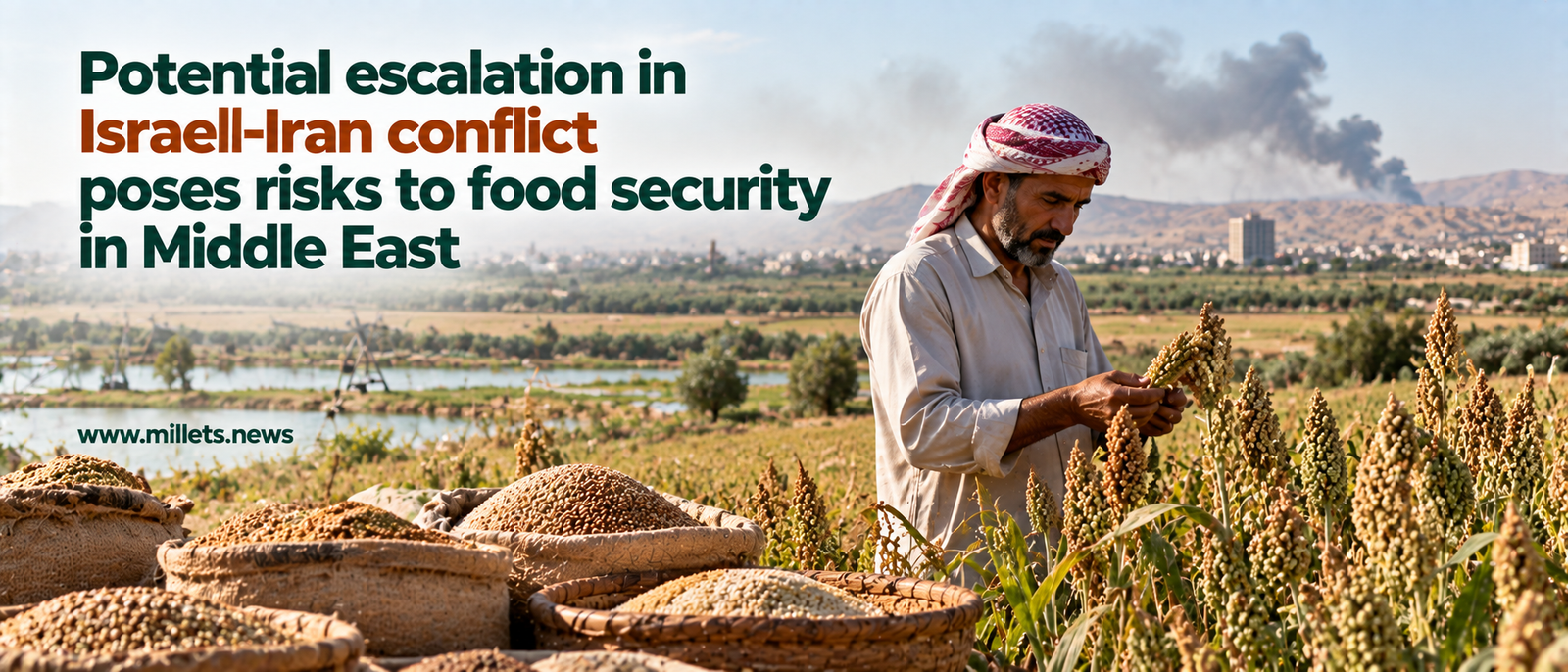
A potential escalation in the Israel-Iran conflict is raising serious concerns about food security across the Middle East, according to a recent S&P Global report. The report highlights the strategic importance of the Strait of Hormuz, a critical maritime route through which large volumes of food, fertilizers, and agricultural commodities are transported to Gulf countries. Any disruption or closure of the strait could significantly impact regional food imports and supply-chain stability.
Gulf nations remain heavily dependent on imported food products because of limited domestic agricultural production and challenging climatic conditions. Countries across the region rely on maritime imports for grains, edible oils, livestock feed, and other essential food commodities. Exporters from major supplier nations such as India and Brazil are also closely monitoring the situation, as shipping delays and rising freight costs could affect global agricultural trade flows.
Industry experts warn that continued uncertainty around shipping routes may lead to higher food prices and increased inflationary pressures in import-dependent economies. Concerns are also growing about the broader impact on fertilizer trade, energy markets, and agrifood supply chains already facing stress from geopolitical tensions. Analysts believe Gulf countries may increasingly focus on strengthening food security strategies, diversifying import routes, and investing in resilient agricultural systems to reduce long-term supply risks.