 By Admin
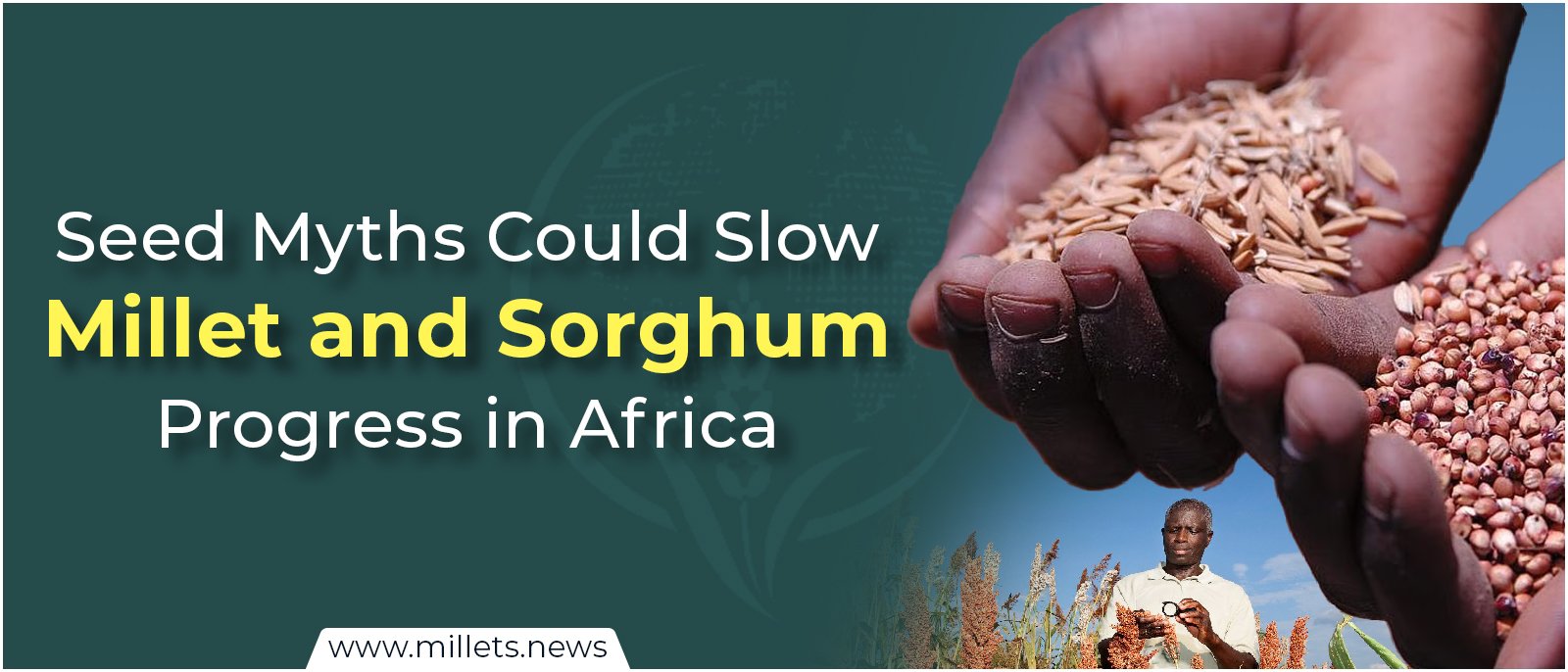
Scientific advances are producing new opportunities for African farmers to strengthen crop productivity and withstand increasingly difficult growing conditions. Yet technology alone may not be enough. A World Economic Forum article warns that misunderstanding surrounding improved seeds, hybrids and genetically modified crops is emerging as an important obstacle to agricultural innovation and food resilience across Africa.
The issue became particularly visible during field engagements conducted by Dev-Afrique Development Advisors in Nigeria and Senegal, where researchers were assessing millet and sorghum systems. Interviews with farmers, agricultural input dealers and community members revealed that improved varieties, hybrid seeds and GMOs were frequently treated as interchangeable concepts despite representing distinctly different approaches to crop development.
An improved variety can be created through conventional plant breeding, where breeders select plants carrying desirable characteristics and cross them over successive generations. Traits targeted can include drought tolerance, disease resistance, earlier maturity and improved productivity. Although modern breeding employs increasingly sophisticated scientific tools, improved varieties are not automatically genetically modified crops.
Hybrid seeds represent another category. Plant breeders create hybrids by crossing carefully selected parental lines to produce first-generation offspring that combine desirable characteristics from both parents. GMOs, by contrast, involve biotechnology that directly modifies genetic material in ways that conventional breeding typically cannot achieve, and their approval and cultivation are governed by country-specific biosafety regulations.
These distinctions are especially significant for millet and sorghum, crops increasingly recognised for their nutritional value and capacity to perform under challenging climatic conditions. African breeding programmes have spent years developing improved varieties intended to help farmers manage changing weather while strengthening productivity. Many of these varieties were created through conventional breeding rather than genetic modification.
When farmers assume that every scientifically improved seed is genetically modified, potentially valuable varieties can face resistance before their agronomic merits are properly considered. According to the article, the consequences extend across agricultural systems: extension specialists spend time addressing misconceptions, seed businesses encounter trust barriers, and investments in plant breeding may fail to achieve widespread adoption.
The challenge therefore extends beyond seed technology to agricultural communication and scientific literacy. Farmers need accessible information explaining how varieties were developed, what advantages they may provide, their limitations and any potential trade-offs. Researchers, governments, universities, extension agencies, development organisations and seed companies all have roles in making that information understandable and transparent.
For Africa's millet and sorghum sectors, the lesson is particularly important. Developing drought-tolerant, disease-resistant or higher-yielding varieties can contribute to more resilient food systems, but their impact ultimately depends on whether farmers understand and trust the technology. Better seeds therefore need to be accompanied by better conversations, connecting scientific innovation with informed farmer choice rather than allowing misinformation to determine adoption.