 Millets National Media Portal
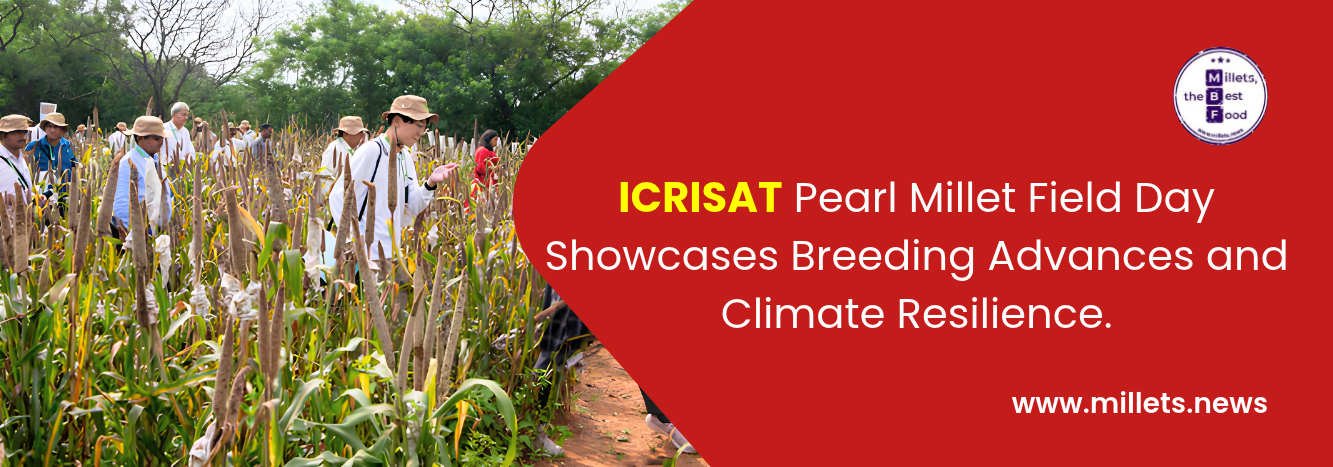
ICRISAT is strengthening pearl millet research and breeding to improve agricultural productivity, enhance climate resilience and create better economic opportunities for smallholder farmers. Through advanced breeding technologies and scientific collaboration, the organization is developing improved pearl millet materials with higher grain quality, drought tolerance, heat resistance and superior fodder value. These innovations aim to support farmers in dryland agricultural regions while improving food security, livestock production and long-term farm profitability.
These research priorities were highlighted during ICRISAT’s biennial Pearl Millet Scientists’ Field Day, held on 12–13 October 2026. The two-day event brought together approximately 80 scientists from public- and private-sector research institutions across India, Africa, Japan and other regions. Participants evaluated advanced breeding materials, shared scientific insights and identified promising parental lines for developing improved pearl millet hybrids suited to different farming environments.
The field day followed the recent release of RHB 273, developed through collaboration between ICRISAT and the Indian Council of Agricultural Research (ICAR). Recognized as the world's first three-way pearl millet hybrid, RHB 273 was developed for India's low-rainfall A1 agroecological zone. The hybrid combines promising grain productivity, drought tolerance and improved fodder quality, offering potential benefits for farmers through better crop performance and livestock nutrition.
The event showcased an extensive collection of breeding materials, including 8,000 B lines, 8,000 R lines and 2,000 forage lines across approximately 16,000 plots. Scientists assessed important agricultural traits such as drought and heat tolerance, disease resistance, early maturity, grain quality and enhanced fodder characteristics. Special attention was given to materials with higher protein content, brown midrib (bmr) traits and sweet-stalk characteristics, which offer opportunities for value addition in food, animal feed and biomass markets.
ICRISAT scientists emphasized the importance of sustained investment in agricultural research and collaboration with public research organizations and private seed companies. The Hybrid Parents Research Consortium (HPRC) continues to play an important role in identifying promising parental lines and accelerating the development of improved hybrids for farmers. Feedback from previous field days has also helped researchers strengthen breeding priorities, including improved grain colour, drought tolerance, blast resistance and forage quality.
Through forward and shuttle breeding approaches, ICRISAT is developing productive and adaptable pearl millet materials for drought-prone environments. Researchers also highlighted the importance of shorter-duration and early-maturing parental lines to reduce crop lodging, improve mechanized harvesting and lower labour costs.
The research aligns with the broader MAHARISHI initiative, supported by collaboration with ICAR and industry partners to advance millet improvement globally. ICRISAT's continued pearl millet breeding efforts aim to increase farm productivity, strengthen climate resilience, improve farmer incomes and expand market opportunities across India, Africa and other dryland regions.
© 2023 - 2026 Millets News. All rights reserved.

