 By Admin
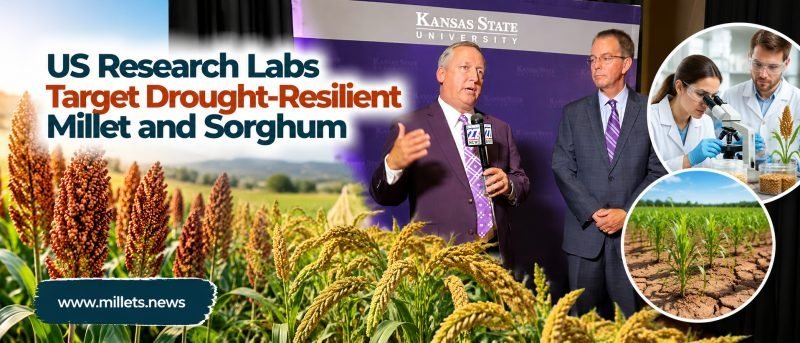
American sorghum producers could gain new opportunities in the expanding clean-fuels economy following long-awaited federal implementation guidance for the Section 45Z Clean Fuel Production Credit.
National Sorghum Producers welcomed guidance from the Internal Revenue Service alongside updated modeling from the U.S. Department of Energy, saying the measures provide farmers and biofuel producers with a more workable framework for participating in the clean-fuel credit.
For the sorghum industry, one of the most significant developments is the explicit recognition of distillers sorghum oil within clean-fuel pathways. The co-product can potentially contribute to production pathways for biodiesel, renewable diesel and sustainable aviation fuel under the new framework.
The updated approach also allows qualifying agricultural practices to contribute to the credit framework and provides transition relief covering fuel produced during 2025 and 2026. According to NSP, the transition provisions are particularly important because some growers could not complete required nutrient plans before federal guidance became available.
NSP CEO Tim Lust said the framework provides greater market certainty, supports domestic biofuel demand and creates additional opportunities for American-grown sorghum. NSP Chair and Kansas sorghum farmer Amy France similarly welcomed the increased certainty for farmers and fuel producers.
The development has implications beyond taxation. Recognition of sorghum-derived inputs in low-carbon fuel pathways can potentially broaden demand for the crop and increase the commercial importance of co-products generated during processing.
Sorghum's connection with renewable fuels is particularly relevant as agriculture and energy industries explore feedstocks capable of participating in lower-carbon fuel supply chains. Sustainable aviation fuel represents one of those emerging markets, alongside established renewable diesel and biodiesel industries.
Other U.S. commodity groups have also welcomed the latest 45Z implementation steps, indicating that the framework has wider significance for American agriculture and biofuel feedstocks.
For the global sorghum sector, the policy development illustrates how the crop's commercial potential is extending beyond conventional food, feed and ethanol markets. Recognition of distillers sorghum oil within clean-fuel pathways could strengthen the connection between sorghum production, value-added processing and the evolving low-carbon energy economy.