 By Admin
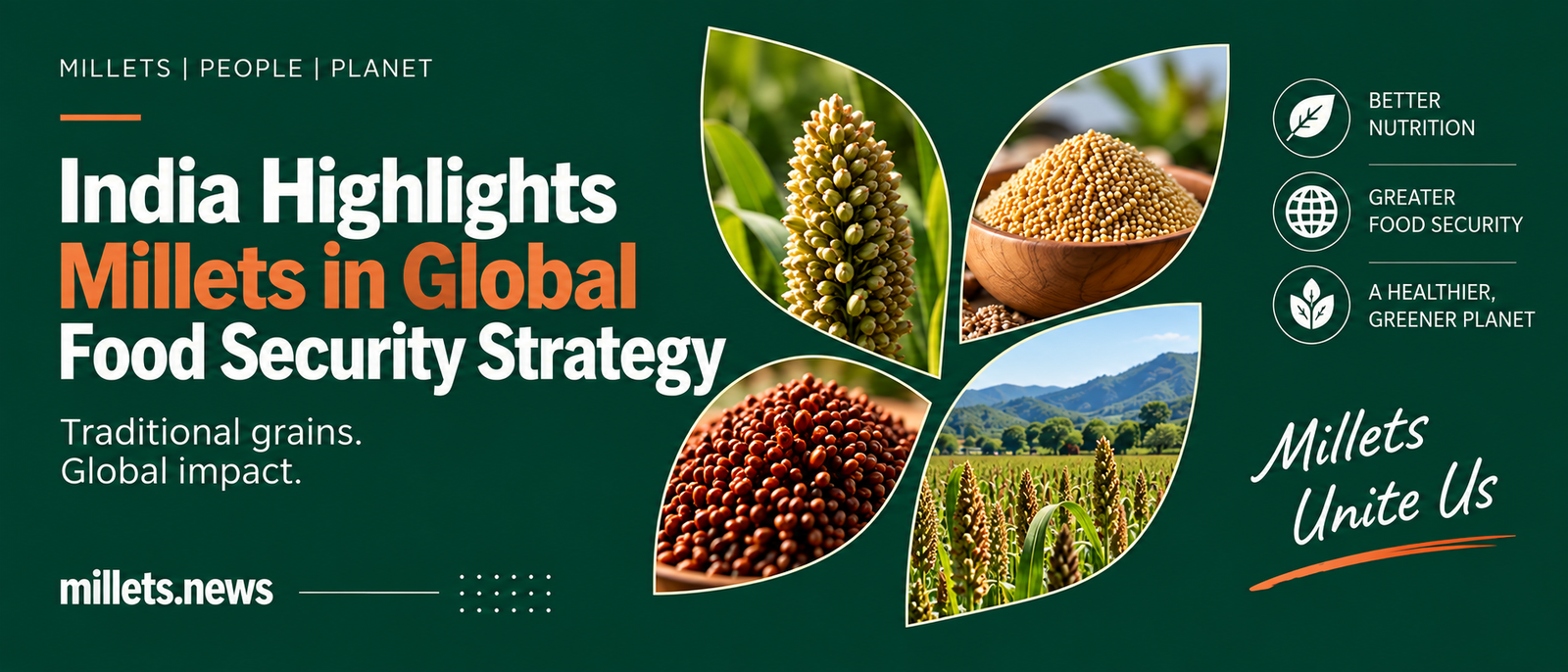
India has placed millets and climate-resilient agriculture at the centre of its broader approach to strengthening food security, highlighting their role during an international discussion hosted by Israel’s Ministry of Agriculture and Food Security.
India’s Ambassador to Israel, JP Singh, participated in a panel titled Global Perspectives – Navigating Food Security in an Unpredictable World, alongside representatives from Georgia, Ecuador and the European Union. Israeli Agriculture and Food Security Minister Avi Dichter was also present.
During the discussion, Singh outlined India’s multidimensional food-security strategy, which combines agricultural resilience with technological innovation and public support systems. The approach encompasses climate-resilient crops, millets, artificial intelligence and sensors, drip irrigation and soil-health management.
India also highlighted the importance of maintaining domestic food-grain and fertiliser buffers, diversifying suppliers and providing targeted support through programmes including the National Food Security Act and PM-KISAN.
For the millet sector, the discussion is significant because it positions millets not simply as traditional grains but within a wider framework linking climate adaptation, agricultural technology and national food security.
The ambassador also addressed the resilience of international trade corridors. He emphasised diversified supply chains, alternative routes including the India-Middle East-Europe Economic Corridor (IMEC), maritime security, diplomacy and dialogue as mechanisms for maintaining critical food and trade flows during periods of disruption.
Agricultural cooperation between India and Israel was another important component of the discussion. Singh highlighted opportunities to strengthen agricultural productivity through the two countries’ Centres of Excellence and other collaborative initiatives. India and Israel already cooperate in areas including agriculture, water management and capacity building through Israel’s MASHAV development framework.
For Millets.news, the development demonstrates the growing policy relevance of millets within discussions about resilient food systems. Their inclusion alongside precision technologies, efficient irrigation, soil management and strategic food reserves illustrates how millet cultivation can form one component of a much broader response to food-security challenges.