 By Admin
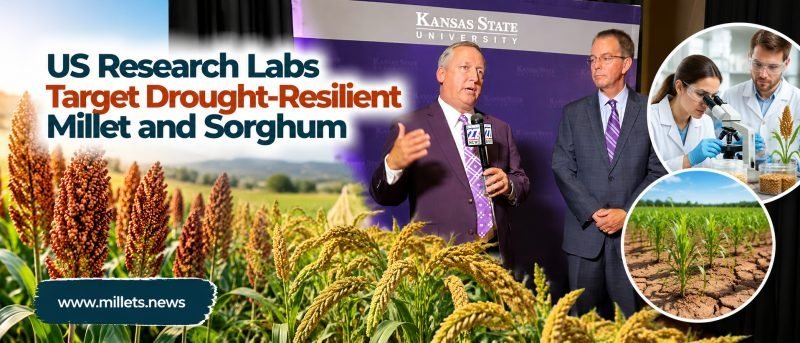
Sorghum is gaining attention among Nebraska farmers as a versatile crop capable of addressing several challenges simultaneously, from drought exposure and livestock-feed requirements to crop diversification and weed management.
Tracy Zink, chairwoman of the Nebraska Sorghum Board and a farmer from McCook, says sorghum can be particularly valuable on acres vulnerable to moisture shortages. Its capacity to remain productive while waiting for rainfall gives producers another option when growing conditions become difficult.
Zink also highlighted sorghum's potential economic contribution to diversified farming operations. For producers raising cattle, the crop can retain value as a feed source even when grain yields fall below expectations. This creates an additional utilisation pathway within mixed crop-and-livestock systems.
Another advantage involves weed management. Incorporating sorghum into crop rotations can allow farmers to vary herbicide programmes instead of repeatedly depending on identical chemistry from year to year. Zink said her operation has observed favourable results from this approach.
The observations were shared around the Nebraska sorghum industry's annual field day, where producers could compare practical decisions involving planting populations, fertiliser applications, herbicide programmes and seed costs.
Nearly 90 farmers, researchers and industry representatives attended the field day at plots near Indianola, Nebraska, providing an opportunity to examine sorghum performance and production practices under field conditions.
The economic comparison with crops such as corn is also important. According to Zink, differences in seed costs can influence the economics of sorghum production, although growers still need to consider fertiliser requirements and targeted yields when evaluating their production systems.
For the wider sorghum sector, Nebraska's experience demonstrates how the crop can contribute to more diversified and adaptable farming systems. Its value does not depend exclusively on harvested grain: drought tolerance, livestock integration and rotational flexibility can all influence a farmer's decision to include sorghum.
As increasingly variable growing conditions challenge producers across parts of the U.S. Great Plains, crops capable of providing multiple agronomic and economic functions could become increasingly important components of farm planning.