 By Admin
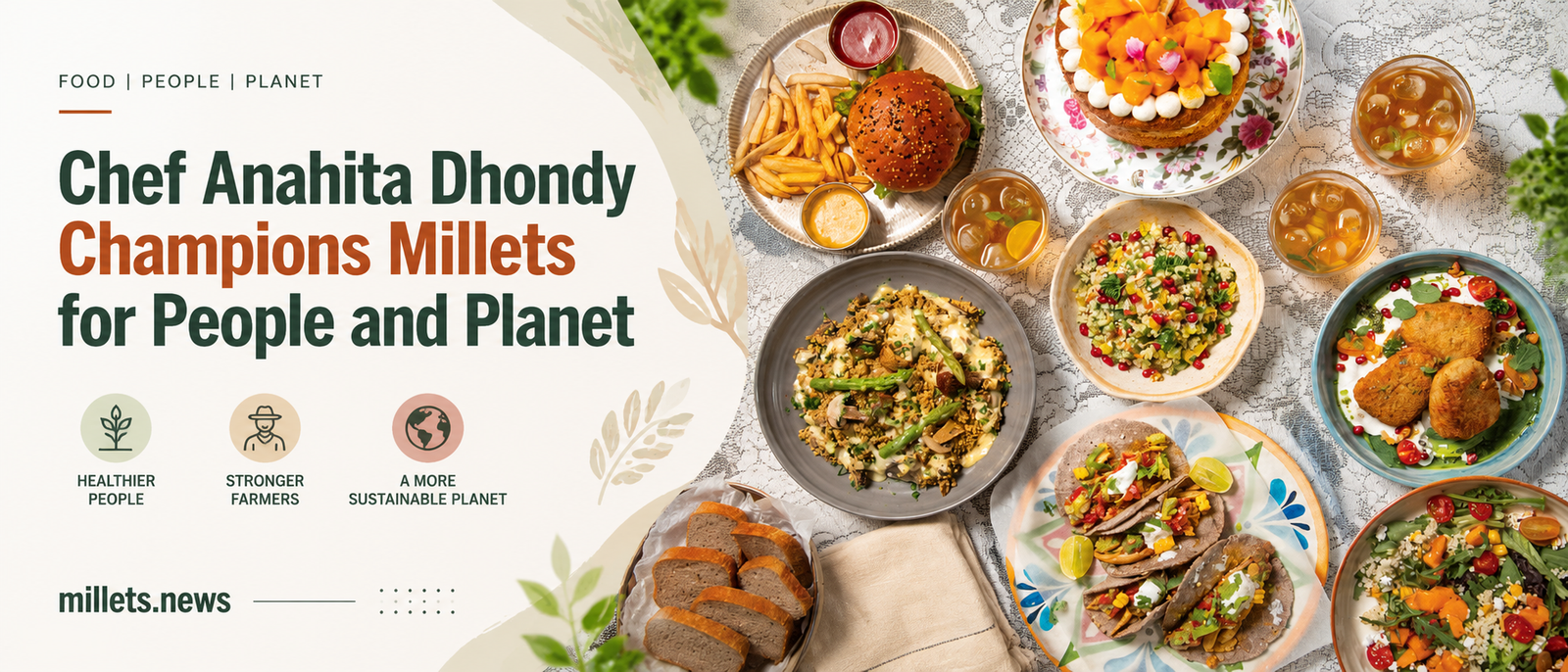
Celebrated chef and sustainability advocate Anahita Dhondy is placing grains—and particularly millets—at the centre of a wider conversation about food diversity, sustainable agriculture and contemporary cooking.
Her new book, The Grain Kitchen, explores how different grains can be transformed into approachable dishes while encouraging consumers to introduce greater grain diversity into their everyday meals.
Dhondy's engagement with millets dates back more than a decade. She says she began experimenting seriously with the grains around 2014–15 while working at SodaBottleOpenerWala, where their nutritional characteristics, textures, versatility and local production caught her attention.
Since then, promoting grains has become an important part of her culinary work. Dhondy has cooked with and discussed millets at national and international forums and spoke about them at the United Nations in 2018. She also welcomed the global attention generated by the International Year of Millets 2023.
For Dhondy, millet's appeal extends beyond nutrition. She connects the grains with environmental sustainability, farmer livelihoods and consumer food choices, describing them as crops capable of bringing these dimensions together.
That perspective aligns with the broader sustainability case for millets. They are widely recognised for characteristics such as climate resilience, drought tolerance and relatively low water requirements, while also contributing to agricultural and dietary diversification.
A major theme of The Grain Kitchen is culinary versatility. Dhondy points out that millets can be milled into flour or cooked in ways similar to rice, creating opportunities to incorporate them into a broad range of recipes.
The book deliberately extends beyond traditional Indian preparations. It combines Indian and international recipes, ranging from straightforward everyday dishes to more technical preparations, reflecting the changing tastes of consumers who increasingly experiment with cuisines from different regions.
Dhondy also highlights a challenge familiar to the millet sector: consumer familiarity.
Rice and wheat have occupied dominant positions in many diets for generations, while consumers may be uncertain about cooking less familiar grains. She argues that millet adoption should therefore be gradual, giving people time to learn preparation methods and understand different textures and applications.
Her #MilletMonday initiative has similarly sought to address this knowledge gap, with around 100 recipes designed to encourage people to experiment with grains in their kitchens.
Rather than positioning millet adoption as the rejection of rice or wheat, Dhondy's approach emphasises dietary diversity—adding a wider range of grains to the plate and discovering how each can work within familiar and new recipes.
For the millet industry, this consumer-facing approach is significant. Increasing millet production and developing new products are only part of building sustainable demand. Consumers also need practical knowledge about how to prepare, cook and enjoy different millet varieties.
Through The Grain Kitchen, Dhondy is attempting to make that transition more approachable—moving millets from the language of sustainability and nutrition into the everyday experience of cooking and eating.