 By Admin
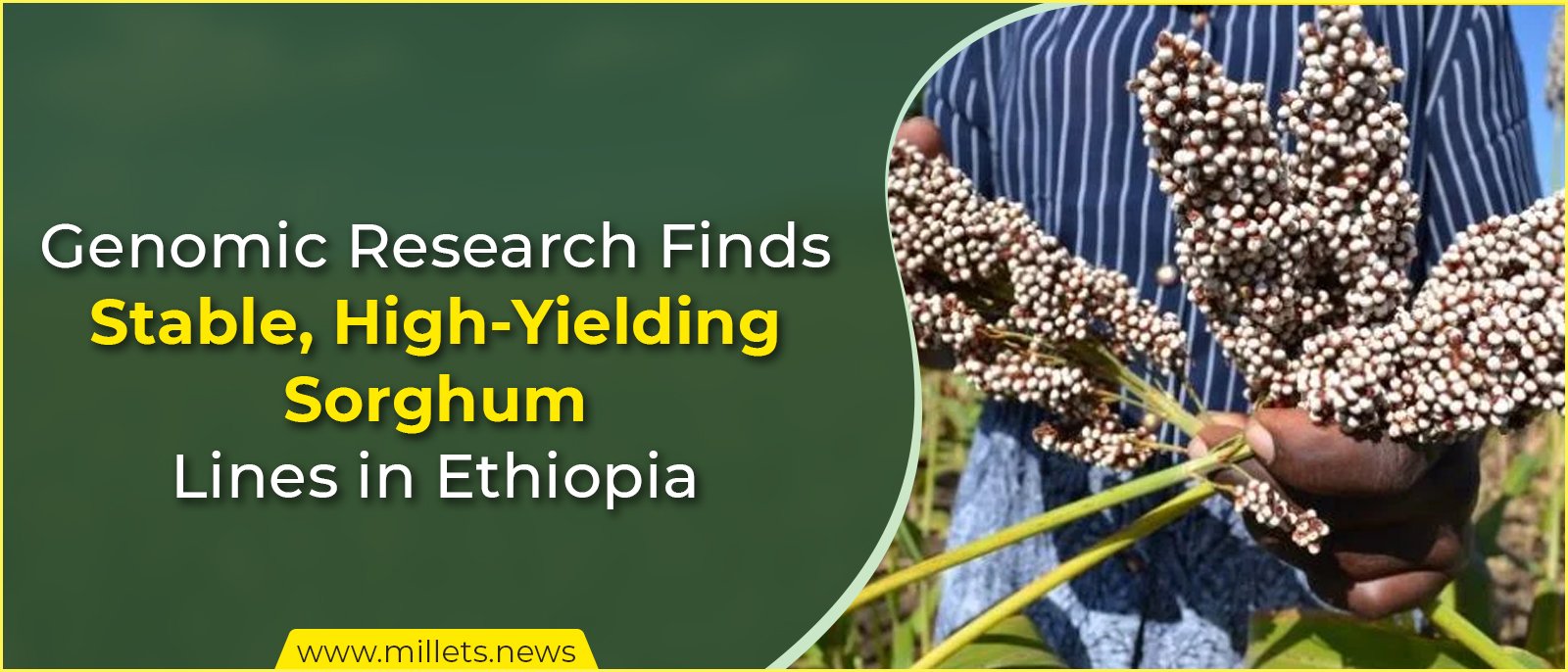
A new scientific study in Ethiopia has identified promising sorghum genotypes that could support future efforts to develop high-yielding varieties with more consistent performance across different growing conditions.
Published in the Journal of Agriculture and Food Research, the study was conducted by researchers Addisu Getahun and Adugna Abdi Woldesemayat.
Sorghum (Sorghum bicolor) is an important cereal crop in Ethiopia, where it contributes to household food supplies, livestock feeding and agricultural livelihoods.
Although sorghum is generally recognised for its adaptation to relatively dry environments, productivity can vary considerably depending on rainfall, temperature, soil conditions and the genetic characteristics of the crop.
To investigate these differences, researchers evaluated 216 Ethiopian sorghum genotypes across three contrasting agricultural environments.
Field evaluations were conducted during the 2022 and 2023 cropping seasons at Dangur, Pawi and Haramaya.
The research combined conventional field measurements with advanced statistical and genomic techniques to understand both grain yield and the consistency of performance across environments.
The researchers used Additive Main Effects and Multiplicative Interaction (AMMI) analysis and Genotype plus Genotype-by-Environment (GGE) biplot analysis to examine how different sorghum lines responded to changing growing conditions.
These methods help distinguish genotypes that perform consistently across multiple environments from those that produce higher yields only under particular conditions.
The findings identified G194 (ETSL101673) and G198 (ETSL101687) as promising candidates combining favourable grain yield with stability across the tested environments.
The researchers recommended further evaluation of these genotypes in expanded multi-location trials before considering their broader agricultural use.
Other genotypes demonstrated strong yield potential but greater sensitivity to environmental conditions.
For example, G209 (Gambella1107), G210 (Gobiye) and G211 (Macia) were among the high-yielding lines, with reported yields reaching up to 5.8 tonnes per hectare in particular trial environments.
However, their stability performance was less favourable, suggesting that they may be better suited to specific growing conditions rather than broad deployment.
The research also used genome-wide association studies, or GWAS, to investigate genetic regions associated with grain yield and related agricultural traits.
According to the published journal abstract, the analysis identified eight significant quantitative trait nucleotides associated with candidate genes involved in processes such as seed development, carbohydrate metabolism, panicle architecture and grain maturation.
These findings provide potential starting points for future genetic research and sorghum breeding programmes.
However, identifying a statistical association between a genetic marker and a trait does not establish that the marker directly causes the observed performance.
Additional functional validation will be needed to clarify the biological roles of the identified genomic regions.
The study also demonstrated the importance of genotype-by-environment interactions in sorghum breeding.
A genotype capable of producing high yields under favourable conditions may not necessarily maintain the same performance when rainfall, temperature or other environmental factors change.
For farmers cultivating sorghum in variable environments, reliable yields may be as important as maximum yield potential.
The findings therefore support breeding approaches that consider productivity and stability together rather than selecting varieties solely on the basis of their highest recorded yields.
The researchers suggest that combining multi-environment field trials with genomic analysis can help breeders identify promising genetic material more effectively.
For Ethiopia and other regions facing variable growing conditions, this approach may contribute to the long-term development of sorghum varieties with improved agricultural performance.
Nevertheless, the study does not demonstrate that the identified genotypes are ready for commercial cultivation or that they will perform equally well across all drought-prone regions.
Further field trials, breeding evaluations and validation of the identified genetic associations remain necessary.
The research contributes to the growing scientific effort to strengthen sorghum productivity through improved understanding of crop genetics and environmental adaptation.