 By Admin
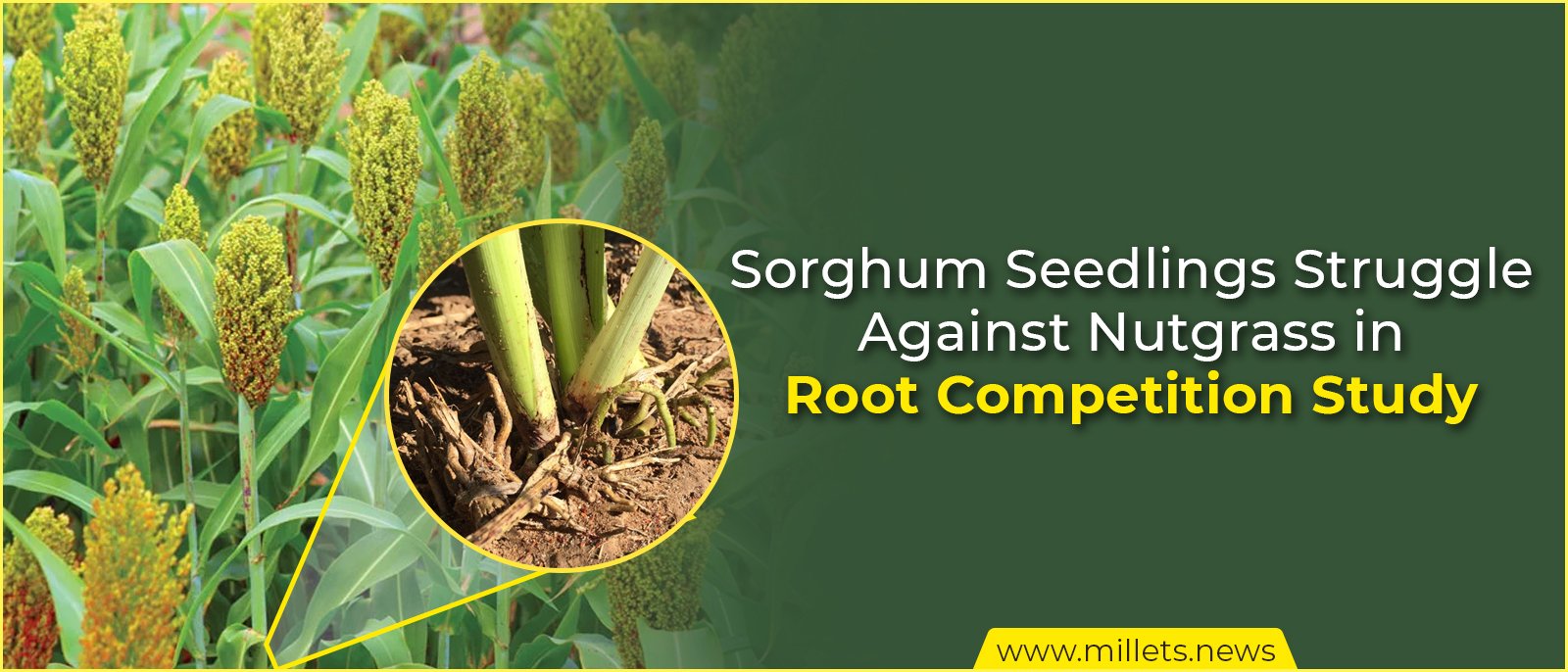
A new scientific study has revealed how purple nutsedge, one of the world's most persistent agricultural weeds, can suppress sorghum growth despite the crop's natural ability to release chemicals that inhibit competing plants.
Published on November 4, 2026, in Chemical and Biological Technologies in Agriculture, the research was conducted by scientists led by Giulia Giorgi and colleagues at Sapienza University of Rome, Italy.
Sorghum is known for its allelopathic properties, meaning it can release naturally occurring compounds that influence the growth of neighbouring plants.
However, the researchers investigated whether these defensive characteristics are sufficient to protect young sorghum plants when competing directly with purple nutsedge.
The study examined seedlings of Sorghum bicolor and Cyperus rotundus grown together under controlled conditions.
Researchers combined measurements of plant growth with proton nuclear magnetic resonance spectroscopy, commonly called ¹H-NMR metabolomics, to investigate chemical changes occurring inside the roots.
The analysis identified 38 metabolites in sorghum roots and 40 in purple nutsedge roots.
The results revealed a substantial difference in how the two species responded to competition.
Sorghum seedlings grown alongside purple nutsedge showed significant reductions in plant height, leaf number, root length and root biomass.
By contrast, the measured growth characteristics of purple nutsedge remained largely unaffected.
Chemical analysis provided further evidence of the contrasting responses.
Sorghum roots exhibited reductions across several groups of metabolites, including amino acids, carbohydrates, organic acids, phytosterols and dhurrin.
Dhurrin is a naturally occurring compound associated with sorghum's chemical defence system.
The researchers interpreted the broader metabolic reductions as evidence consistent with nitrogen limitation and a trade-off between growth and defence.
This suggests that competition with purple nutsedge may place considerable pressure on the resources available to developing sorghum plants.
Purple nutsedge showed a different response.
Its primary root metabolic profile remained comparatively stable, with a significant reduction detected mainly in gamma-aminobutyric acid, or GABA.
The researchers interpreted this pattern as evidence of relatively resilient energy metabolism during competition.
Additional relationships involving glutamine, galactose and phenylalanine suggested possible differences in nitrogen utilisation and root development.
However, these metabolic patterns do not independently establish the precise mechanism through which purple nutsedge suppresses sorghum.
The researchers concluded that the weed demonstrated stronger competitive performance during the seedling stage under the conditions examined.
The findings are particularly relevant to agricultural weed science because sorghum's allelopathic potential has attracted interest as a possible component of sustainable weed management.
The results suggest that possessing natural weed-suppressing compounds does not necessarily guarantee competitive success against aggressive weed species.
Understanding the metabolic processes involved could help researchers investigate crop resilience and identify characteristics associated with improved competitiveness.
Nevertheless, the experiment involved a limited number of plants under controlled conditions.
Its findings should not be interpreted as proof that purple nutsedge will always suppress sorghum under field conditions or that a particular weed-control treatment will be effective.
Further field research is needed to determine how soil conditions, nutrient availability, crop varieties and weed pressure influence these interactions.
For the sorghum sector, the study provides new insights into the biological challenges that crops face during early development.
It also demonstrates how metabolomic technologies can help scientists investigate plant competition at the biochemical level.
By identifying differences in root metabolism and seedling growth, the research contributes to efforts to better understand weed–crop interactions and support future studies on sustainable agricultural management.