 By Admin
Taiwan's Industrial Technology Research Institute (ITRI) is exploring how advanced food-processing technologies can create new commercial opportunities for indigenous agricultural products, including traditional millets.
The institute presented its innovations at an event titled ESG × AI: Unlocking New Business Opportunities in Agricultural Byproduct Circularity, held at Kaohsiung Asia New Bay Area Startup Park.
Organised under the guidance of Taiwan's Department of Industrial Technology, the event brought together agricultural researchers, technology developers and potential commercial partners.
One of the featured initiatives focused on improving the consistency of traditional indigenous millet wine production.
ITRI has worked on the cultivation and classification of microorganisms associated with millet wine fermentation, developing standardised fermentation starters using ten indigenous yeast plants.
The resulting product, known as Sui-Niang millet wine, demonstrates how traditional fermentation practices can be supported by modern processing methods.
Standardisation can help producers better manage fermentation conditions and achieve more consistent product characteristics.
However, the report does not provide comparative data establishing improvements in production yield, safety or commercial sales.
The institute has also collaborated with local businesses to refine processing parameters and explore distribution channels for indigenous products.
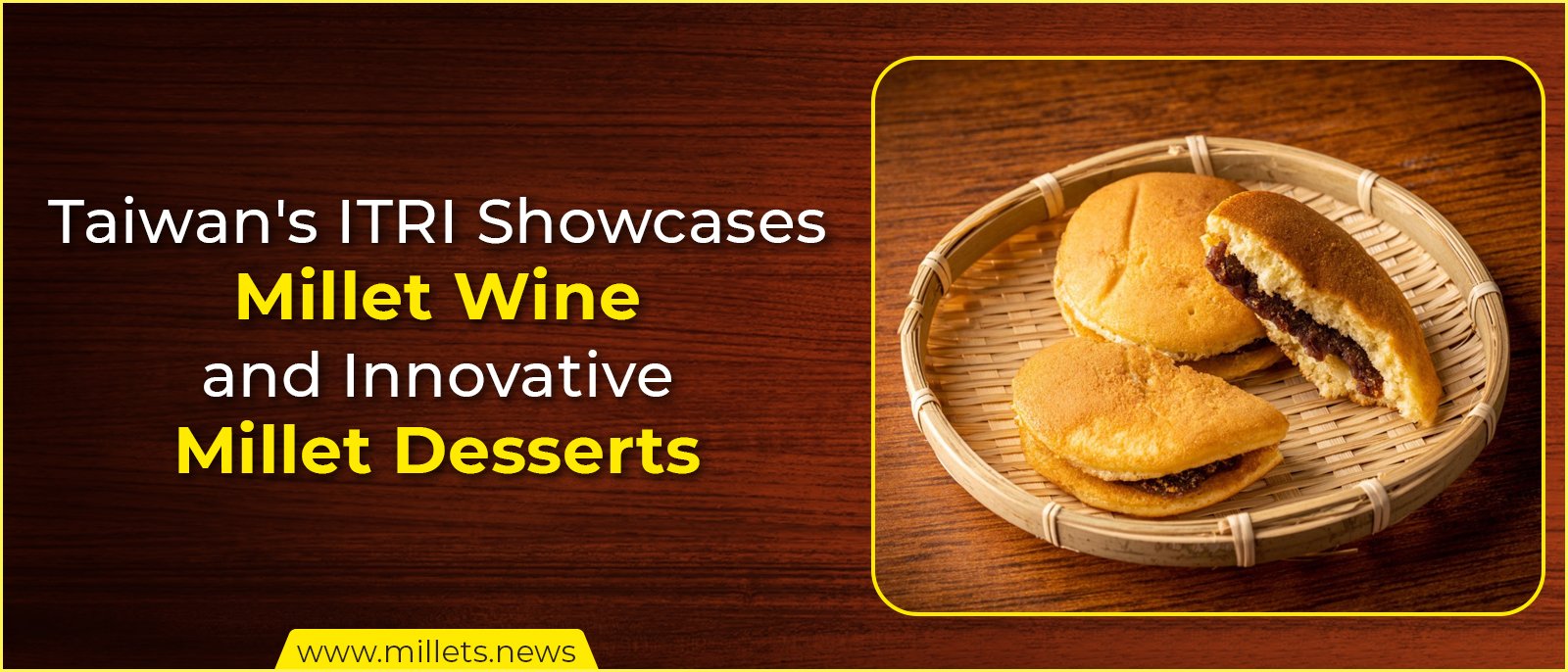
Another millet-related innovation involved a partnership with Daitokuya Chokyu, a Japanese confectionery business with a history spanning more than three centuries.
The collaboration produced millet dorayaki, adapting a familiar Japanese-style confectionery to incorporate Taiwan's indigenous grain ingredients.
A separate red quinoa dorayaki was also developed.
The initiative illustrates how traditional crops can be introduced into contemporary food products while retaining their connection to regional agricultural heritage.
Beyond millets, the event highlighted artificial intelligence, environmental monitoring and automated processing technologies for mountain tea and shiitake mushrooms.
For example, ITRI demonstrated connected tea-processing equipment and AI-assisted fermentation management for mountain tea kombucha.
These technologies formed part of a wider effort to help rural producers improve processing consistency and create additional value from agricultural resources.
ITRI also organised business matchmaking sessions involving food, retail and cultural industries.
Such partnerships may help producers explore new markets, although the report does not establish that the millet products have already achieved large-scale commercial distribution.
For the millet sector, the development is noteworthy because it connects indigenous food traditions with modern product development.
Millets are often promoted for their agricultural and nutritional characteristics, but the creation of marketable food products is another important dimension of their economic potential.
Fermentation technologies and product diversification may provide opportunities for small-scale processors to expand their offerings.
At the same time, commercial success will depend on product quality, regulatory compliance, consumer acceptance and dependable distribution networks.
The Taiwanese initiative demonstrates how agricultural research institutions can work with indigenous communities and private businesses to explore new applications for traditional grains.
By combining food heritage, processing technology and product development, ITRI's work offers an example of innovation in the wider millet value chain.