 By Admin
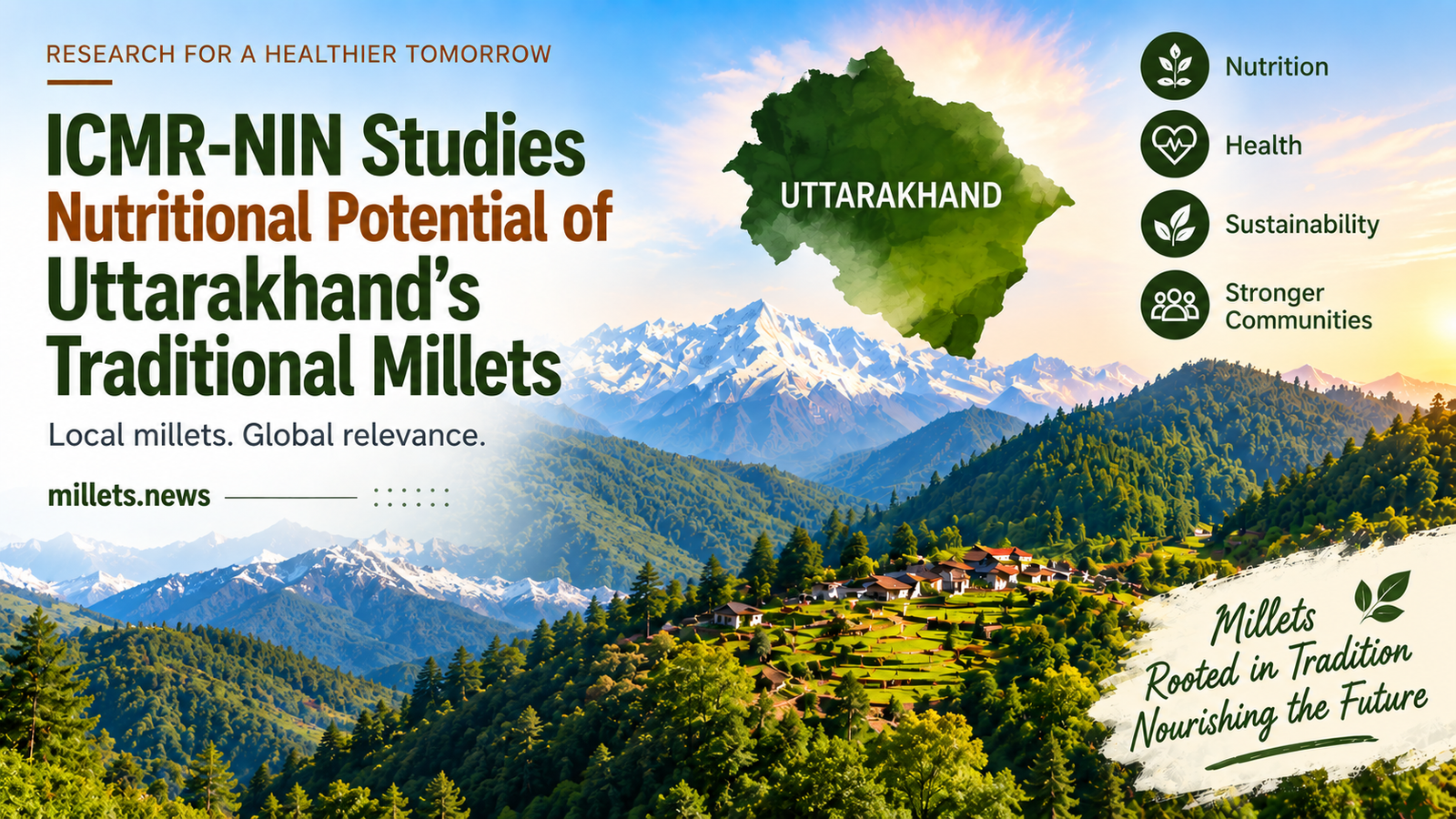
Traditional grains cultivated for generations in Uttarakhand's Himalayan farming systems are receiving closer scientific attention as researchers investigate their nutritional characteristics and potential relevance to public health.
Scientists at the ICMR-National Institute of Nutrition (ICMR-NIN) in Hyderabad are studying local agricultural products including mandua, jhangora, chaulai and koda, according to information shared by institute director Dr. Bharati Kulkarni during a visit by a 15-member Uttarakhand media delegation organised by PIB Dehradun.
The research is intended to scientifically understand the specific nutritional characteristics of these traditional crops. The development is significant for Uttarakhand, where locally adapted grains have long formed part of hill agriculture and traditional diets.
A particularly important component involves ragi, or finger millet. Dr. Kulkarni said clinical and analytical studies are underway to examine its consumption in relation to anaemia.
At this stage, however, the research should not be reported as proof that finger millet prevents or cures anaemia. The studies are ongoing and are assessing the relationship and potential effects scientifically.
The research sits within ICMR-NIN's wider work on food composition, nutrient requirements, dietary guidelines and public-health nutrition. The institute maintains the Indian Food Composition Tables, which provide information on energy, protein, micronutrients and minerals in foods available in India.
Dr. Kulkarni also emphasised the distinction between food security and nutrition security. Adequate availability of food alone does not guarantee good nutritional outcomes; dietary diversity and healthier eating behaviours are also important.
The discussion comes as India faces what researchers describe as a double burden of malnutrition. Undernutrition and micronutrient deficiencies persist while overweight and obesity among children and young people are becoming increasingly important public-health concerns.
The visiting journalists also toured ICMR-NIN laboratories and received an overview of research involving food analysis and lipid chemistry, illustrating the analytical infrastructure being used to investigate food composition and nutrition.
For the millet sector, the programme could provide stronger scientific evidence about the nutritional composition of traditional Himalayan grains. Such evidence can potentially support future work in dietary diversification, public nutrition, product development and millet value addition, although those applications should await the actual research findings.