 By Admin
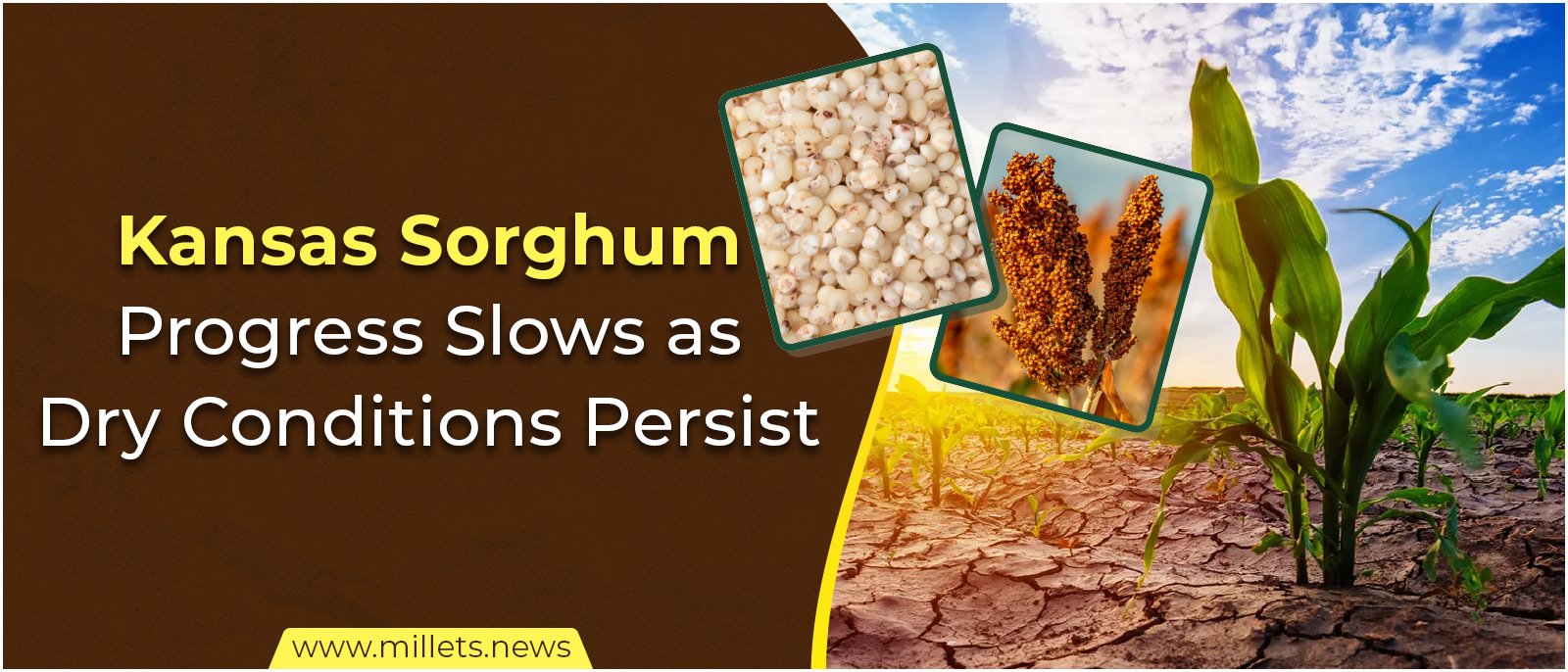
Kansas sorghum is progressing more slowly than usual as widespread moisture shortages continue to challenge agricultural conditions across the state. The latest USDA crop assessment shows a substantial portion of the crop in fair-to-poor condition as producers move deeper into the 2026 growing season.
For the week ending August 16, farmers had 6.2 days suitable for fieldwork, according to USDA's National Agricultural Statistics Service. The relatively high number of workable days coincided with increasingly dry soil conditions across major agricultural areas.
Topsoil moisture was rated 25% very short and 35% short, meaning 60% of the state's topsoil fell into the two moisture-deficit categories. Only 38% was considered adequate, while 2% was classified as surplus.
Conditions below the surface were similarly challenging. USDA classified 24% of Kansas subsoil moisture as very short and 36% as short, with 39% adequate and just 1% surplus. These figures indicate that moisture limitations were not restricted to the immediate soil surface.
Sorghum reflected these difficult growing conditions. USDA rated 11% of the Kansas crop very poor, 22% poor and 40% fair. Only 24% was classified as good and 3% as excellent, leaving the combined good-to-excellent share at 27%.
Crop development was also behind historical benchmarks. Sorghum heading reached 62%, eight percentage points behind both the 70% recorded at the same stage last year and the five-year average of 70%.
The crop's coloring stage presented a somewhat more stable picture. Approximately 20% of Kansas sorghum had reached coloring, slightly ahead of the 18% reported both a year earlier and for the five-year average.
Sorghum was not alone in experiencing challenging conditions. Pasture and range ratings showed 30% in poor or very poor condition, while 37% was classified as good or excellent. The figures reinforce the broader influence of limited moisture on Kansas agricultural systems.
The situation is particularly relevant because Kansas is a major U.S. sorghum-producing state. Monitoring crop development there provides an important indication of potential production conditions within the wider American sorghum sector.
The report also demonstrates an important characteristic of drought-adapted crops. Sorghum's capacity to tolerate water-limited environments provides farmers with valuable resilience, but drought tolerance does not make the crop immune to prolonged soil-moisture deficits.
Subsequent USDA data show that the developmental lag continued into the following week. By August 23, Kansas sorghum heading had reached 72%, still behind 83% last year and the five-year average of 81%. This suggests the slower developmental pattern identified in the August 16 report persisted.
For sorghum growers and grain-market participants, rainfall and soil-moisture conditions through the remaining stages of crop development will therefore remain important indicators to watch as Kansas moves toward the 2026 harvest.