 By Admin
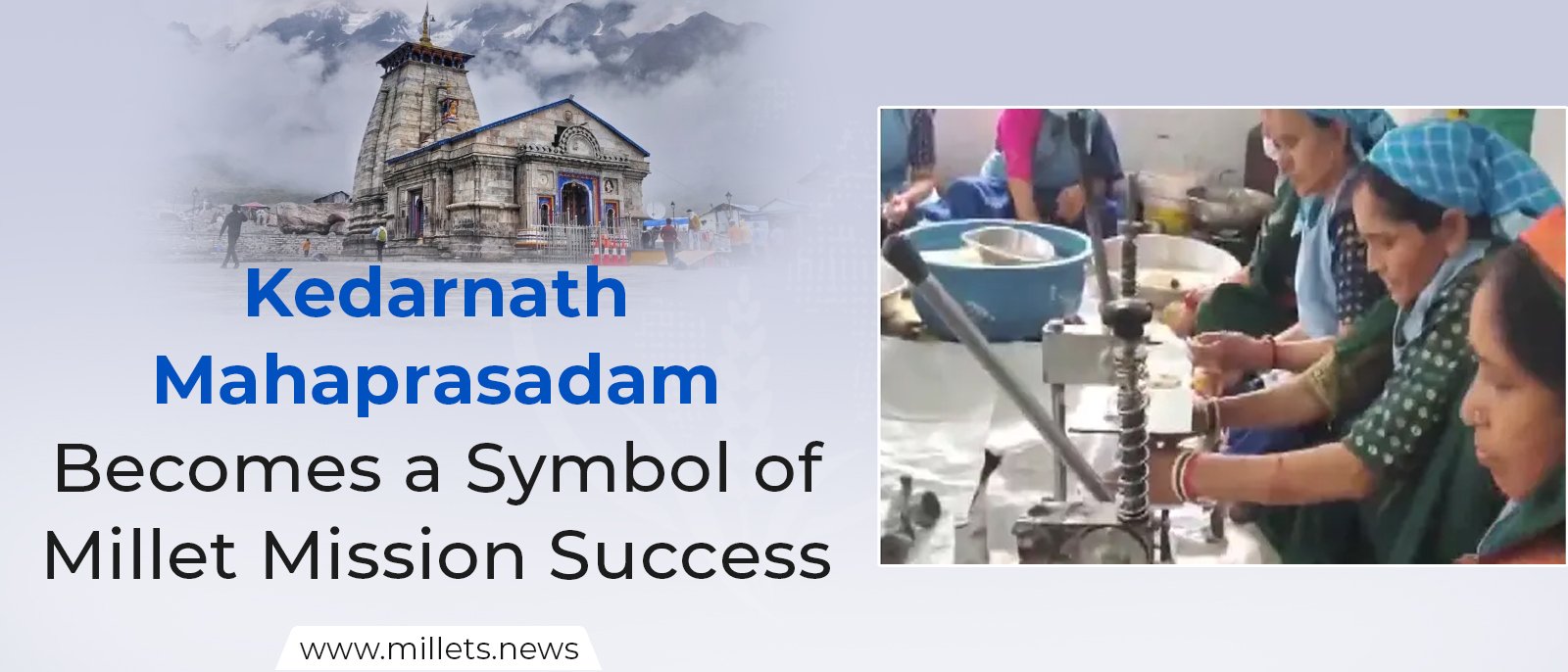
A women-led Self-Help Group in Uttarakhand’s Rudraprayag district is showing how traditional grains can create livelihood, support farmers, and strengthen local food culture. The group, consisting of more than 50 women, is preparing Mahaprasadam laddus offered at the holy Kedarnath temple. These laddus are made using amaranth, a traditional coarse grain promoted under the Uttarakhand government’s Millet Mission.
This initiative is important because it connects three powerful areas: spiritual tourism, women’s employment, and local agriculture. By using locally grown amaranth for temple prasadam, the project is helping farmers get better opportunities while giving women a meaningful source of income.
Officials have stated that the Millet Mission is one of the flagship schemes of the Uttarakhand government. Its goal is to increase millet and traditional grain production and improve farmer incomes. Local farmers have also received support such as facilities for storage and other cultivation needs.
The women involved in preparing the laddus say the work has created employment for them and helped their families. This shows how millet-based value addition can become a strong rural livelihood model, especially when women’s groups are given proper support and market linkage.
The Kedarnath Mahaprasadam initiative is not just about making laddus. It is a practical example of how traditional grains can be linked with faith, tourism, nutrition, and rural development.
By bringing amaranth from local farms to one of India’s most sacred temples, Uttarakhand is showing a powerful model for millet promotion. This initiative proves that millets and traditional grains can support farmers, empower women, preserve food heritage, and build sustainable local economies.