 By Admin
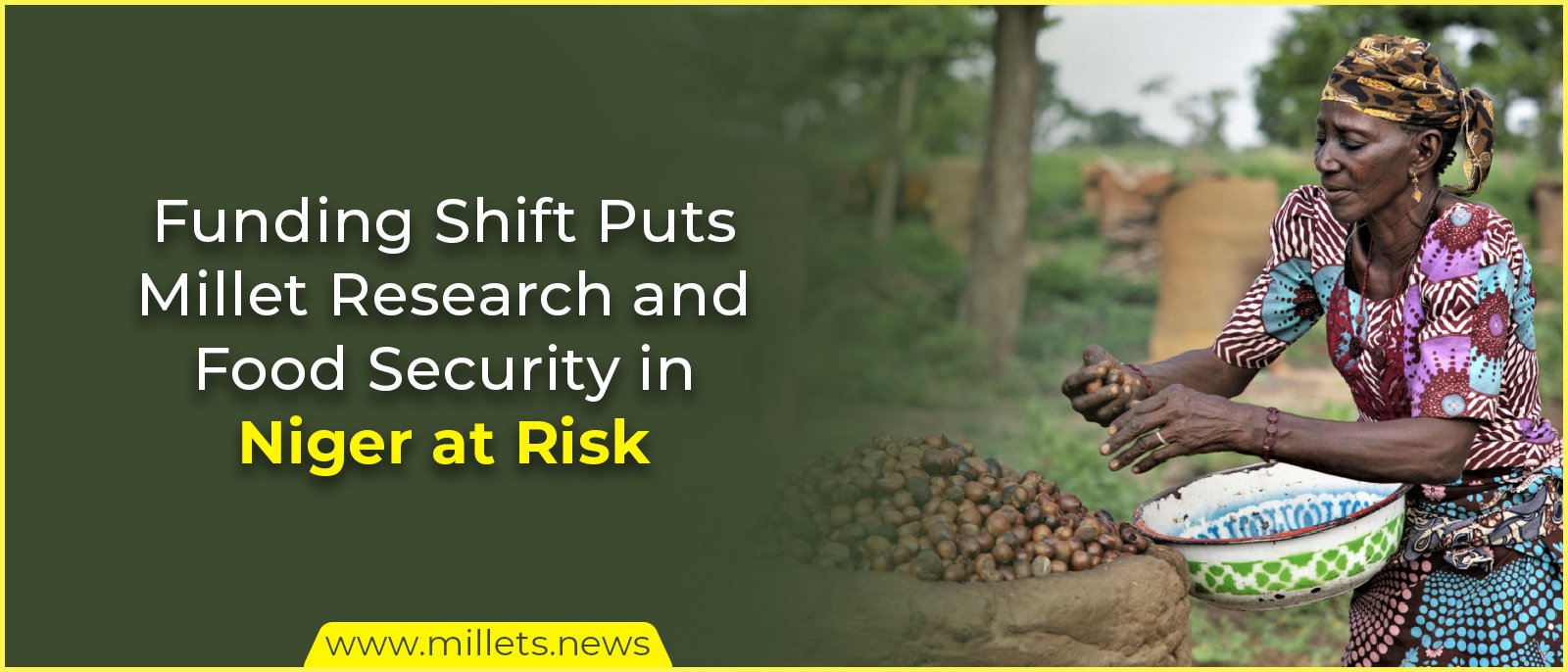
Agricultural research supporting millet farmers in Niger is facing uncertainty as the United States restructures its Feed the Future Innovation Labs programme. For years, partnerships between American universities and African researchers supported practical solutions to crop pests, diseases and production challenges. Among the affected initiatives was research designed to protect pearl millet, one of Niger's most important food-security crops.
Plant breeder Bassirou Sani Boubacar Gaoh had been working with farmers to address the millet head miner, a damaging pest capable of severely reducing pearl millet harvests. His programme combined field training with technologies such as PlantVillage, which can assist with pest and disease monitoring. Early detection is particularly important because the insect attacks millet during a relatively short and critical stage of grain development.
The work was supported through a Feed the Future Innovation Lab hosted by Pennsylvania State University. Researchers were also preparing biological approaches involving natural predators and exploring ways to strengthen national crop-health surveillance in cooperation with Niger's agricultural authorities. Those plans were disrupted following the suspension and subsequent termination of much USAID-supported overseas programming.
The Feed the Future Innovation Labs are now being restructured through a new U.S. State Department funding process. The programme continues to identify global food security as an objective, but former officials and researchers interviewed by Grist expressed concern that African research priorities may receive less emphasis as funding becomes more closely aligned with current U.S. foreign-policy objectives. The State Department, for its part, says applications are assessed against published criteria and that investments should directly benefit American farmers, researchers and taxpayers.
For millet-producing regions of the Sahel, continuity in agricultural research can have direct consequences for farmers. Pearl millet must contend with drought, extreme temperatures and pest outbreaks, making effective surveillance and locally adapted crop-protection strategies increasingly important. Interruptions to long-term research partnerships can therefore affect not only scientific programmes but also farmers who depend on their results.
The situation also demonstrates the international value of agricultural research collaboration. Knowledge developed while addressing millet pests and crop stresses in Africa can contribute to scientific understanding elsewhere, while African researchers and crop genetic resources can benefit international breeding programmes. Maintaining these two-way research relationships could remain important for building more resilient food systems in both developing and developed agricultural regions.