 By Admin
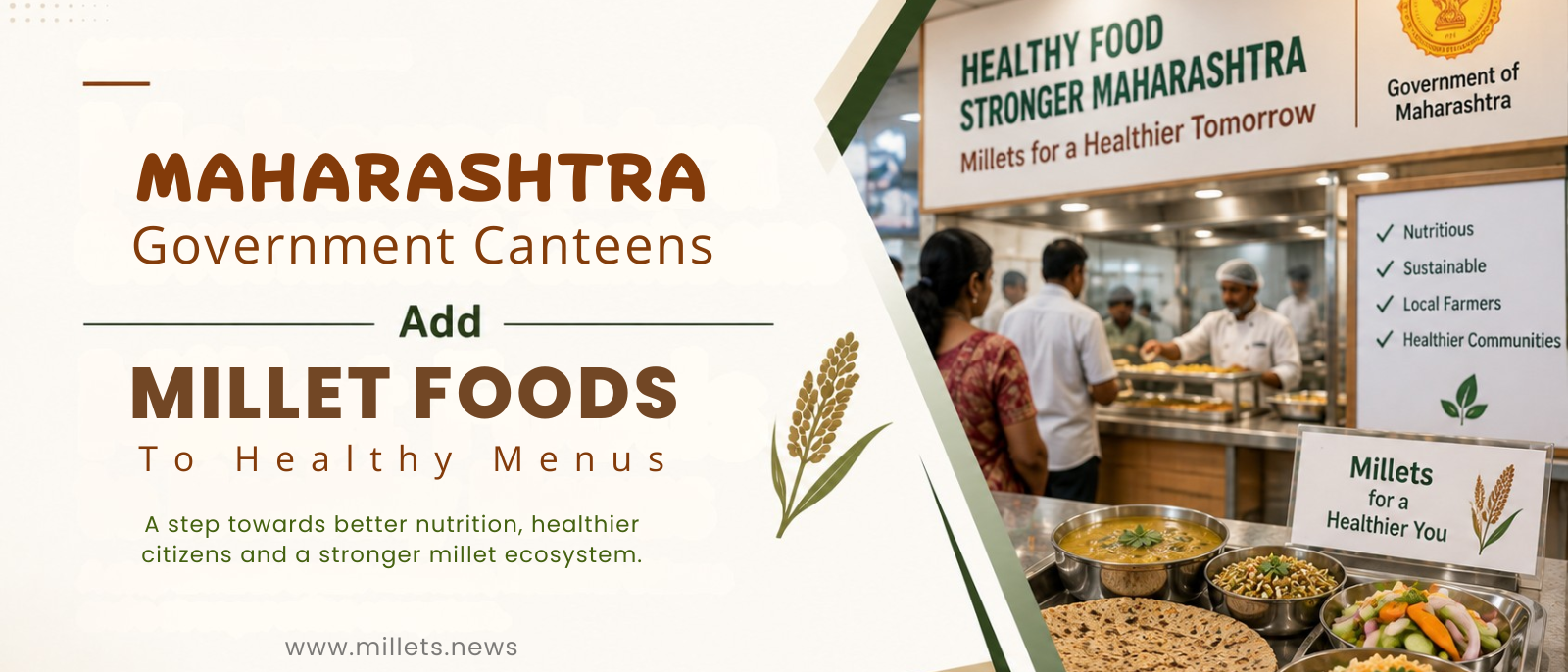
Millets are set to gain greater visibility in Maharashtra's government workplaces as the state introduces a new policy designed to encourage healthier eating among employees.
The Maharashtra Cabinet, chaired by Chief Minister Devendra Fadnavis, has approved guidelines requiring government and semi-government establishments to prioritise healthier foods while gradually reducing the proportion of oily and heavily processed snacks served in canteens and at official functions.
Millets feature prominently among the traditional foods recommended under the initiative. Government establishments have been encouraged to serve ragi, jowar and bajra bhakris, along with millet-based khichdi.
The wider menu recommendations include seasonal fruits, boiled pulses, eggs, poha, upma, idli-sambar, thalipeeth, sprouted pulses, leafy vegetables, salads, dal, usal and nutritious dairy products. Beverages such as buttermilk, coconut water, solkadhi and low-sugar alternatives are also encouraged.
At the same time, foods such as batata vada, pakodas, cutlets and biscuits will not be completely prohibited. Instead, the policy calls for their proportion to be progressively reduced in favour of foods considered more nutritionally balanced.
The guidelines will apply beyond everyday office canteens. Healthier food choices are also expected at government meetings, conferences, training programmes and official events, potentially expanding institutional demand for traditional grain-based foods.
Importantly, the requirements are to be incorporated into new catering contracts issued by government and semi-government offices. Institutions have also been asked to conduct employee awareness programmes on healthy diets and lifestyles.
The government has recommended referring to dietary guidance from the ICMR-National Institute of Nutrition when preparing menus.
Some changes have already been introduced at the Mantralaya canteen, where fruits, boiled pulses, eggs, poha, idli-sambar and other healthier choices have become available. Officials say the proportion of oily snacks has consequently declined.
For the millet sector, the policy represents an interesting form of institutional dietary integration. Rather than promoting millets exclusively through agricultural schemes or awareness campaigns, Maharashtra is placing millet foods directly into the environments where government employees routinely eat.
If implemented across departments, the initiative could provide greater everyday exposure to foods based on finger millet (ragi), sorghum (jowar) and pearl millet (bajra) while reinforcing the role of traditional grains within contemporary diets.