 By Admin
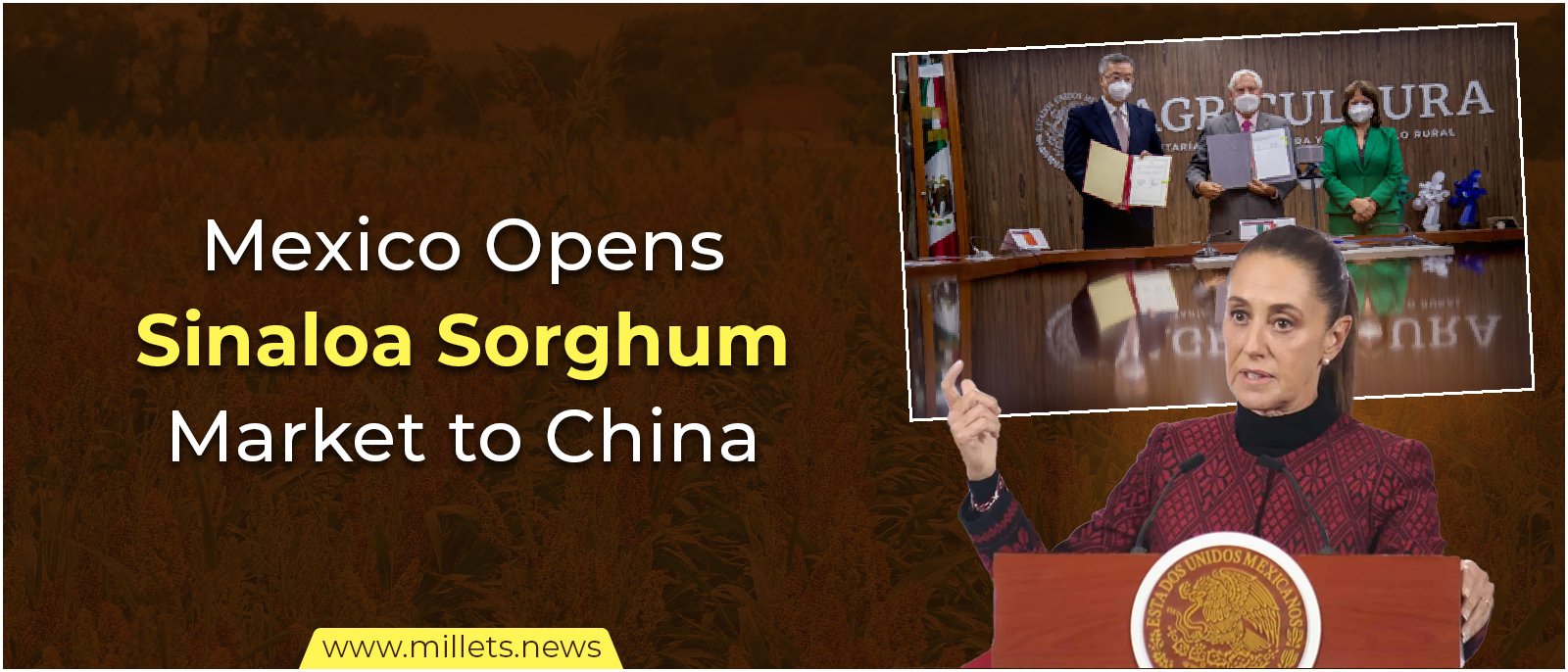
Mexico's sorghum industry could gain a major new international market after a Chinese company entered into an agreement aimed at purchasing substantial quantities of grain from Sinaloa. The development could strengthen agricultural trade between Mexico and China while giving farmers another commercial alternative amid profitability pressures affecting traditional grain production.
China-based Sichuan Yourong Group and Gessa Agroservicios have signed a letter of intent covering the potential purchase of up to 1.2 million tonnes of Sinaloan sorghum. The initiative also positions the Pacific port of Topolobampo as a prospective gateway for moving Mexican grain into Asian markets.
The proposed volume should not yet be interpreted as a completed 1.2-million-tonne export sale. As an initial step, five containers of Sinaloa-grown sorghum are expected to be shipped from Topolobampo to China for industrial evaluation. Successful validation would pave the way for definitive commercial contracts supported by international financial guarantees.
The prospective buyer has already examined sorghum produced in Sinaloa and Chihuahua for industrial applications. According to company representatives quoted in the report, tests showed extremely low tannin content, an attribute considered valuable for some Chinese industrial uses.
One particularly interesting destination for Mexican sorghum could be baijiu, China's traditional distilled spirit. The Chinese company also identified balanced animal feed and biofuels among the potential applications for imported Mexican grain, giving the proposed trade relationship relevance across multiple industries.
The initiative could also introduce greater commercial predictability for participating farmers. Company representatives indicated an interest in developing contract-farming arrangements, potentially allowing producers to secure buyers before planting rather than relying entirely on uncertain post-harvest markets.
Sinaloa officials see an additional opportunity in agricultural diversification. Sorghum has lower production costs and lower water requirements than corn, according to the state's agriculture undersecretary, creating potential for productive reconversion in areas where farmers face economic and resource constraints.
That dimension makes the agreement particularly significant beyond international trade. Expanding sorghum cultivation could provide farmers with another cropping option while helping agricultural regions respond to increasing pressure on water resources and production costs.
However, access to China will depend on strict compliance with phytosanitary requirements established by Mexican and Chinese authorities. Producers, warehouses and exporters cannot automatically participate simply because the letter of intent has been signed; they must satisfy the applicable export protocols.
The project has already involved more than a year of coordination among agricultural authorities, phytosanitary agencies, farmers' organisations, storage operators and businesses. Laboratory testing, field visits, storage inspections and logistical assessments have been undertaken to determine whether Mexican sorghum can consistently meet Chinese requirements.
Topolobampo's role could become strategically important if commercial volumes expand. Existing storage infrastructure, agricultural expertise and Pacific-facing logistics provide Sinaloa with advantages for developing a more direct agricultural trade corridor with Asian buyers.
For the international sorghum market, Mexico's potential entry into China adds another dimension to an increasingly diversified supply landscape. China already represents an influential destination for internationally traded sorghum, and greater Mexican participation could create additional competition and sourcing options.
The proposed agreement therefore extends beyond a single export transaction. If the pilot shipments satisfy Chinese requirements and the larger contracts materialise, Sinaloa could establish a significant new sorghum value chain linking Mexican farms directly with Chinese food, feed and biofuel industries.