 By Admin
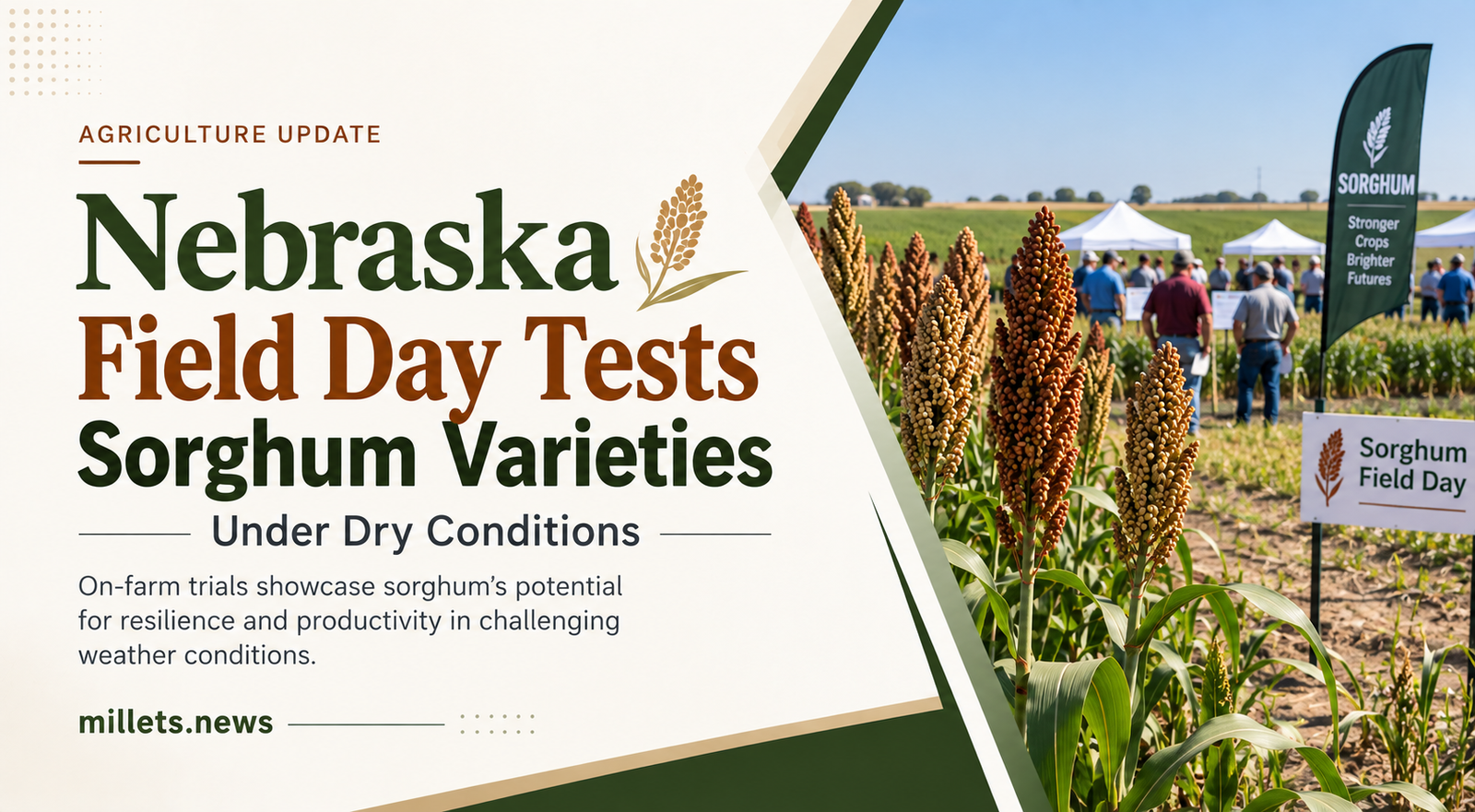
Sorghum growers in Nebraska will get a close look at how different varieties and management strategies are performing under dryland conditions when the 2026 Nebraska Sorghum Field Day takes place near Indianola on September 9.
Organised by Nebraska Sorghum in partnership with Nebraska Extension, the event will connect producers with researchers, Extension specialists and industry representatives while providing access to field-scale sorghum trials.
One of the central components of the programme is a trial involving 22 sorghum varieties. Researchers are also comparing 15-inch and 30-inch row spacing and three different plant populations—40,000, 60,000 and 80,000 plants per acre.
These trials are particularly relevant because they are being conducted under dryland conditions during a dry 2026 growing season. Farmers attending the field day will therefore be able to observe how different sorghum varieties and management configurations perform when moisture availability is constrained.
The research is designed to produce practical information rather than simply demonstrate experimental plots. Ruby Collins, assistant Extension educator in water and cropping systems with Red Willow County Extension, said participants will be able to examine real-world performance and management results directly in the field.
Researchers participating in the programme include University of Nebraska–Lincoln Cropping Systems Specialist Nicolas Cafaro La Menza and Kansas State University Extension Agronomist Lucas Haag, alongside other Extension specialists and industry experts.
Nebraska Sorghum Producers Chair Tracy Zink is hosting the field day, with the programme designed to combine replicated research results with practical observations from companies working with sorghum across diverse production environments.
Data from the plots are also being collected by the University of Nebraska–Lincoln. The longer-term objective is to improve understanding of how different sorghum varieties and agronomic practices perform under varying conditions, providing producers with additional evidence when choosing hybrids, planting configurations and management systems.
For the wider sorghum sector, the Nebraska trials demonstrate the value of testing genetics, planting density and row configuration together under actual dryland conditions. Such field-based evidence can become increasingly valuable as producers seek cropping strategies capable of maintaining productivity amid variable rainfall and moisture availability.
The field day begins at 4 p.m. CT on September 9, with the programme open to anyone interested in sorghum production, research and the crop's future. Registration is required.