 By Admin
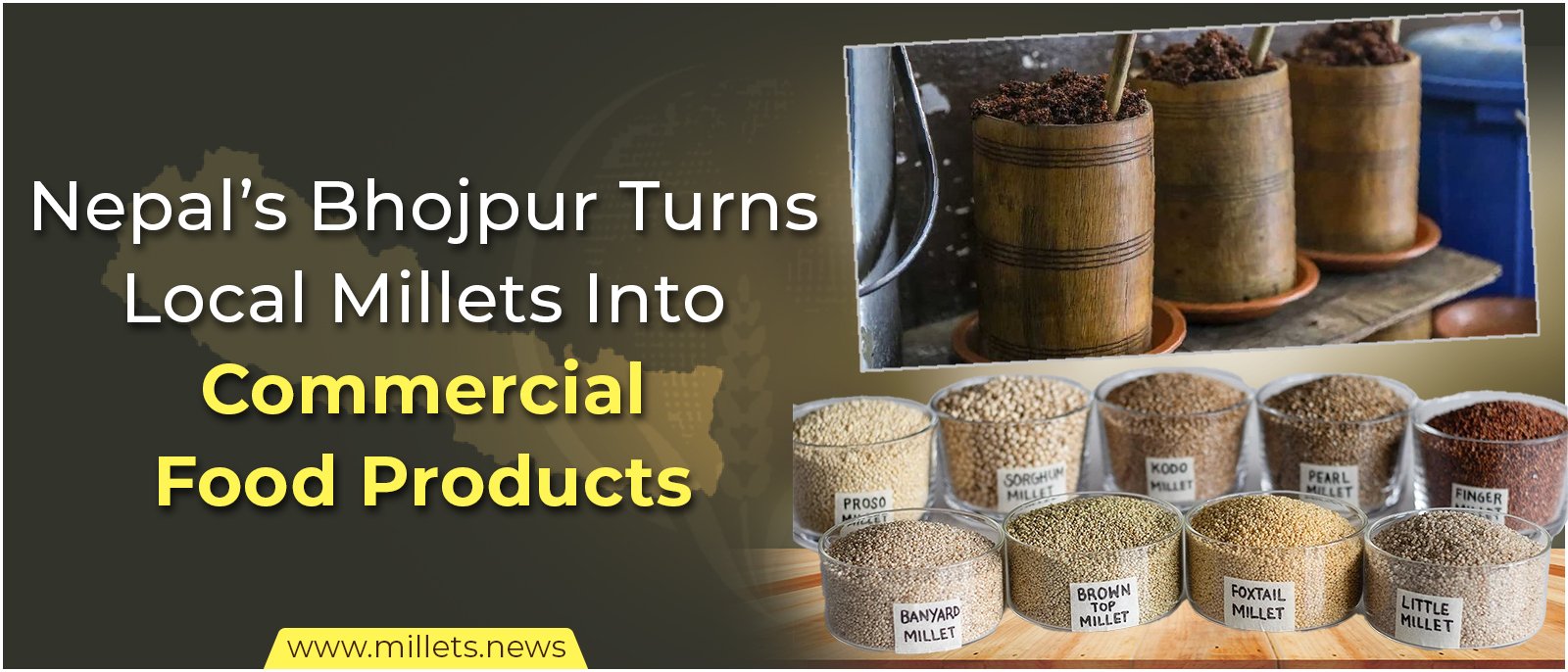
Government-backed agricultural programmes in Bhojpur district, Nepal, are helping farmers transition from traditional subsistence agriculture toward more commercially oriented production, with locally grown millets emerging as part of the district's value-addition strategy.
Support is being provided across multiple stages of agricultural production, including irrigation, mechanisation, processing, improved planting materials and marketing. These interventions are intended to help farmers increase productivity while creating stronger commercial opportunities for locally produced crops.
During fiscal year 2025/26, 109 farmers received grant assistance through different programmes. Officials say combining financial support with technical knowledge and improved agricultural technologies has encouraged more farmers to pursue commercial production.
A particularly significant development for the millet sector is taking place in Ramprasadrai Rural Municipality-6, where millet biscuit production has begun under a programme supporting the processing, labelling and marketing of agricultural and indigenous crops.
The initiative demonstrates how millet can move beyond being sold exclusively as a raw agricultural commodity. Processing the grain into consumer-ready products such as biscuits can create opportunities for local value addition, product differentiation and expanded market access.
The programme also identifies broader possibilities for indigenous cereals. According to Nepal News, crops including millet, foxtail millet, buckwheat and corn could reach markets outside Bhojpur when combined with modern processing, packaging and branding.
This approach is particularly relevant to millet-producing regions where farmers may receive limited value from selling unprocessed grain. Developing locally branded products can allow communities to participate in additional stages of the agricultural value chain.
Bhojpur's wider agricultural transformation is being supported through irrigation development. During the previous fiscal year, 54 farmers received assistance for irrigation infrastructure, including ponds and pipelines. Officials say improved irrigation is reducing dependence on monsoon rainfall and encouraging crop diversification.
Agricultural mechanisation is another component of the programme. Modern equipment is being promoted to reduce labour requirements and production costs while improving productivity, an important consideration as rural areas contend with labour shortages and migration.
The district is simultaneously investing in commercial crops such as oranges and cardamom. Programmes include nursery development, improved orchards, mechanisation and modern cardamom-processing infrastructure, demonstrating a broader strategy to connect agricultural production with higher-value markets.
However, officials and agricultural stakeholders acknowledge that subsidies alone cannot guarantee long-term commercial success. Storage, processing, reliable markets, fair prices and effective marketing will remain essential if increased production is to translate into sustainable farmer incomes.
For millet producers, that observation is particularly important. Expanding millet cultivation without creating demand and processing capacity can restrict economic returns. Developing biscuits and other packaged products provides one pathway for connecting indigenous crops with changing consumer markets.
The Bhojpur initiative therefore illustrates a broader opportunity for Nepal's millet economy: combining traditional crops with modern processing, branding, entrepreneurship and market development.
If commercially sustainable markets can be established, indigenous grains such as millet and foxtail millet could contribute not only to agricultural diversity but also to rural enterprise development and locally retained economic value.