 By Admin
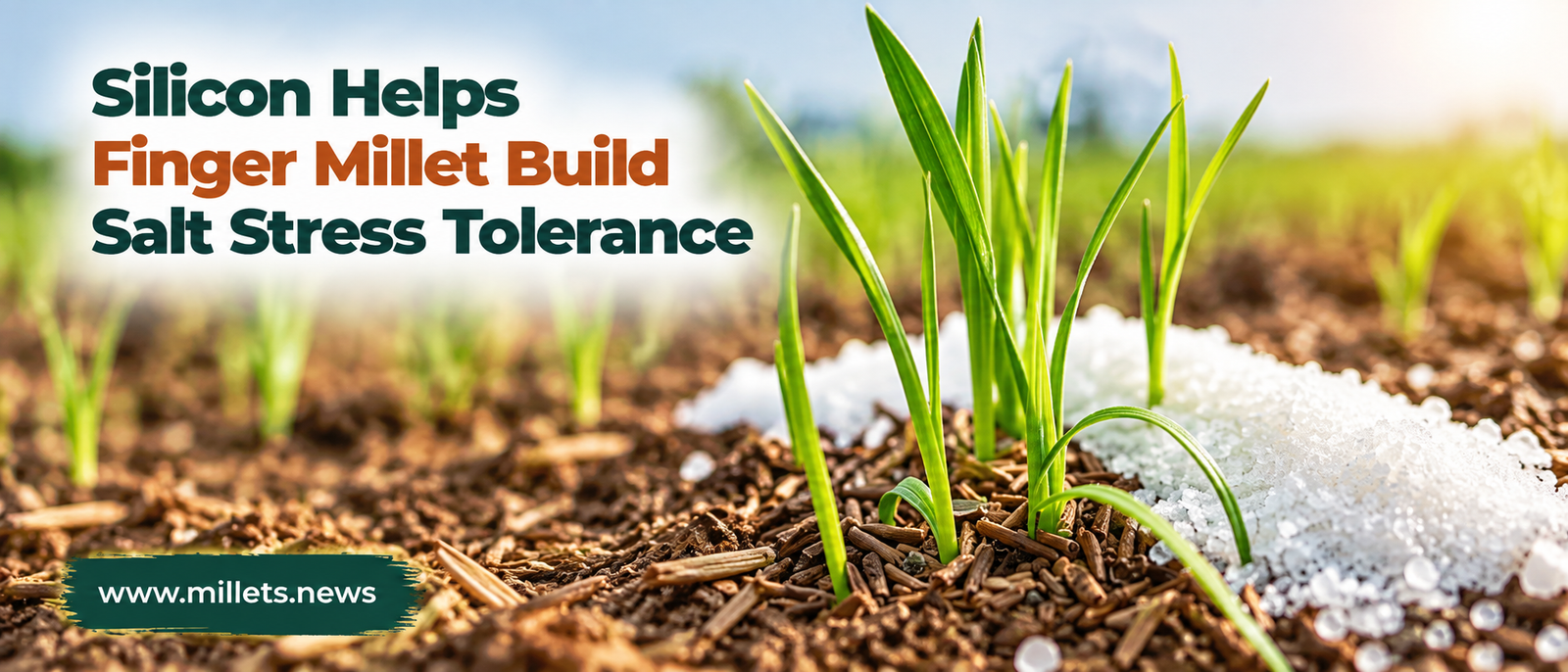
Researchers have identified molecular mechanisms that may explain how silicon helps finger millet withstand saline growing conditions, providing new insights into strengthening the climate resilience of this nutritionally important crop.
The study examined the salt-tolerant finger millet landrace ST-JA-WA using physiological measurements and transcriptome analysis. Seedlings were subjected to control conditions, salt stress, silicon supplementation and a combination of salt stress and silicon.
Salt exposure negatively affected germination, photosynthetic pigments and cellular stability. However, adding silicon under saline conditions improved germination and root development while helping the seedlings maintain chlorophyll and carotenoid levels. Silicon also reduced indicators of membrane damage.
Researchers found that silicon strengthened the plant's antioxidant defence system. Activities of enzymes involved in controlling damaging reactive oxygen species increased when silicon was supplied to salt-stressed seedlings.
Gene-expression analysis provided further evidence of how the response works. Silicon altered the activity of genes associated with glycolysis, photosynthesis, lipid metabolism and other metabolic processes. Genes involved in central carbon metabolism were activated in ways that could help plants maintain energy production and cellular protection during salt stress.
The researchers also observed changes related to osmolyte production, ion balance and auxin metabolism. Together, these physiological and molecular adjustments suggest that silicon reduces the burden created by salinity and enables finger millet seedlings to function more effectively under stressful conditions.
The findings are significant because finger millet is already valued as a hardy cereal cultivated across semi-arid regions of Asia and Africa. Although naturally resilient, the crop can still experience reduced germination, photosynthetic performance and productivity when exposed to excessive soil salinity.
The researchers conclude that silicon could have potential as a biostimulant for improving finger millet resilience in saline environments. However, the reported experiment was conducted on seedlings under controlled treatments, so further field-level research would be important before translating the findings into broad cultivation recommendations.