 By Admin
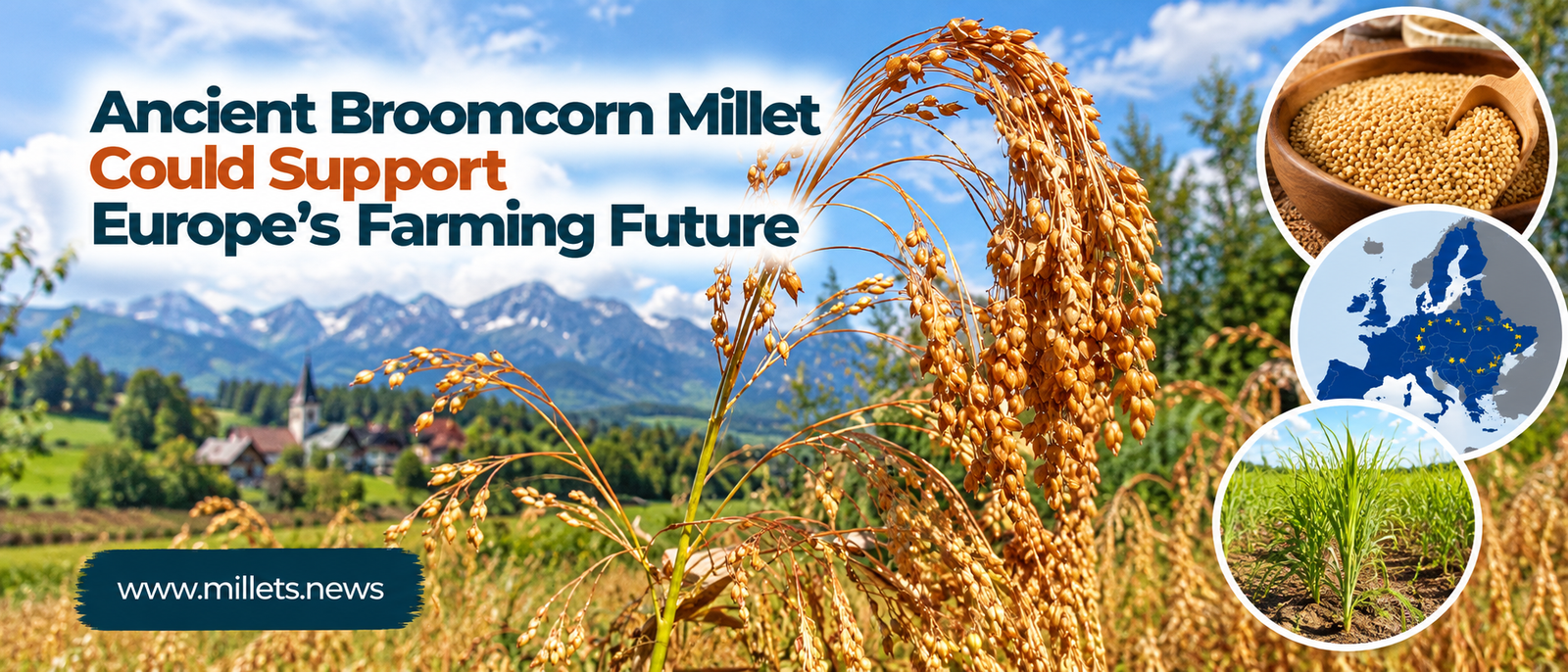
A researcher at Vilnius University in Lithuania is drawing attention to the historical importance of broomcorn millet and its potential role in helping European agriculture adapt to changing environmental conditions.
Professor Giedrė Motuzaitė Matuzevičiūtė, Head of the Bioarchaeology Research Centre at the university's Faculty of History, studies ancient plant remains, chemical evidence and isotopic signatures to understand how millet cultivation spread across different societies.
According to an article published by Vilnius University on October 30, 2026, broomcorn millet (Panicum miliaceum) was once an important food crop in parts of Europe and Asia but gradually lost prominence as other cereals became dominant.
Broomcorn millet and foxtail millet were domesticated in northern China approximately 8,000 years ago. Their relatively short growing seasons and ability to tolerate dry conditions helped them become useful crops in diverse agricultural environments.
One important development in archaeological research has been the identification of miliacin, a chemical biomarker strongly associated with broomcorn millet.
Because miliacin can remain preserved in lake sediments, researchers can use it to investigate historical periods of millet cultivation and examine possible relationships with changing environmental conditions.
Scientists also study carbon isotope signatures preserved in ancient human and animal remains.
Broomcorn millet uses C4 photosynthesis, which produces a distinctive isotopic signal compared with C3 cereals such as wheat and barley.
However, isotope analysis alone cannot conclusively identify millet consumption because other C4 plants can produce similar signatures. Researchers therefore combine isotopic evidence with archaeological plant remains and biomolecular analysis.
These approaches help reconstruct ancient diets, agricultural practices and the movement of crops between communities.
The research also highlights that millet did not spread uniformly across Europe.
In some regions, it became an important everyday food. Elsewhere, communities adopted it selectively, sometimes using it when environmental conditions made other crops less reliable.
Over time, economic systems, cultural preferences, agricultural policies and the expansion of commercial cereal production contributed to millet's decline in many European regions.
Wheat, rye, barley and maize increasingly dominated agricultural landscapes and food markets, while traditional knowledge about millet cultivation and preparation gradually diminished.
Professor Motuzaitė Matuzevičiūtė argues that the decline of millet should not automatically be interpreted as evidence that it was an inferior crop.
Instead, its disappearance from many diets reflects wider changes in farming systems, trade and food preferences.
The research has contemporary relevance as European agriculture faces pressure to diversify crops and improve resilience to environmental stress.
Broomcorn millet's relatively rapid maturation and tolerance of dry conditions make it a potential candidate for further investigation in northern agricultural systems.
The university article notes that broomcorn millet has historically been cultivated at latitudes reaching approximately 60 degrees north, suggesting opportunities to examine its suitability for Nordic farming.
However, this is a proposed opportunity rather than evidence that large-scale commercial cultivation has already been established.
The researcher emphasises that scientific evidence alone will not restore millet's position in European agriculture. Supportive policies, market development and renewed public interest would also be important.
The broader message is that examining traditional grains can help researchers understand how agricultural diversity changes over time and why lesser-known crops may deserve renewed attention.
For the global millet sector, the work connects archaeological knowledge with present-day discussions about biodiversity, climate adaptation and diversified food systems.