 By Admin
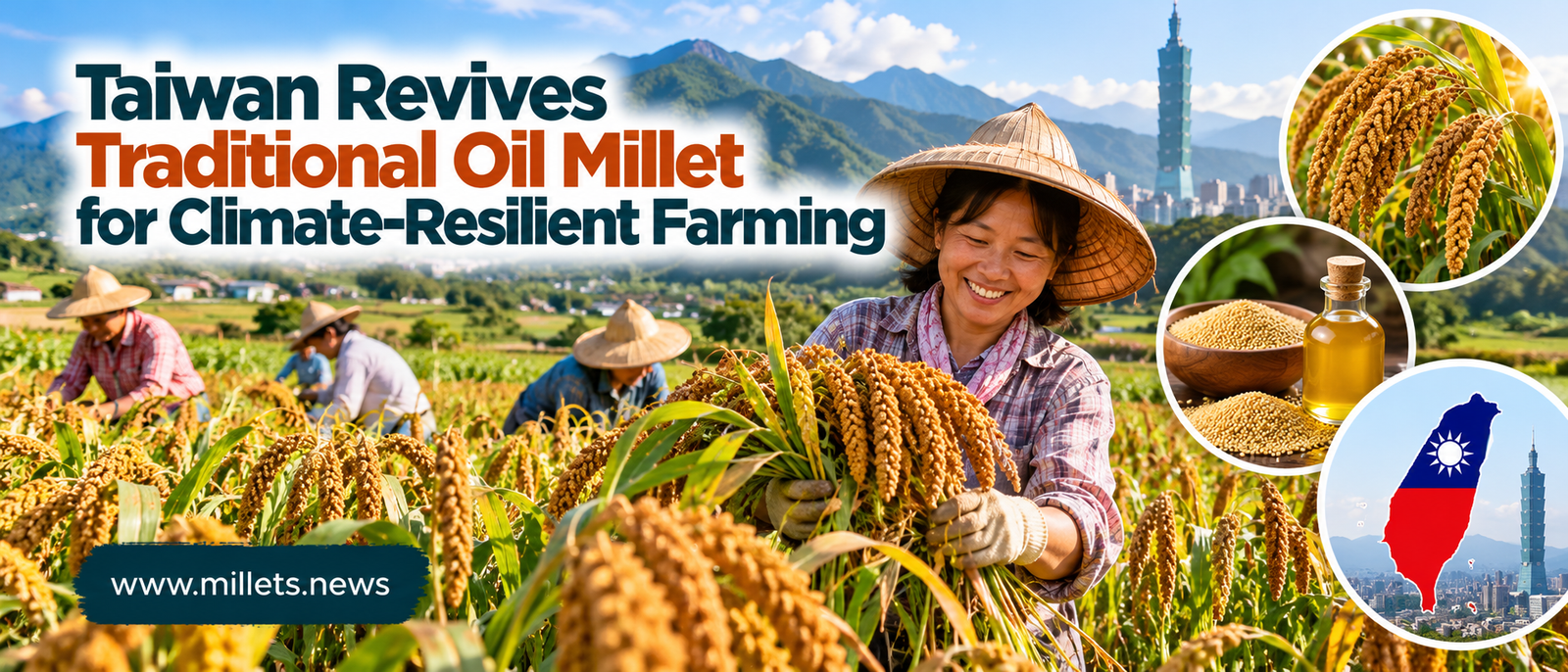
Taiwan is expanding efforts to conserve and revive traditional oil millet, an indigenous grain-bearing grass with potential applications in climate-resilient agriculture and local food systems.
According to an October 20, 2026 report published by EnergyOMNI, the Taiwan People's Food Bank Association has increased cultivation of Taiwan oil millet, scientifically known as Spodiopogon formosanus, through a revival initiative launched in 2022.
The project began with small experimental plots intended to support food and agricultural education.
By 2026, the cultivated area had expanded more than tenfold to over 2,910 square metres.
Participating partners are located across Miaoli, Nantou, Yunlin, Pingtung, Hualien and Taitung, indicating growing geographical participation in the conservation initiative.
The association identifies drought and salt tolerance as two important characteristics of Taiwan oil millet.
These traits have encouraged interest in its potential role in agricultural systems facing environmental stress, although further agronomic evaluation would be necessary to establish performance under different growing conditions.
The organisation also reports that nutritional analysis found approximately 15.56 grams of crude protein per 100 grams of oil millet, around twice the amount reported for brown indica rice in its comparison.
This figure refers to the association's reported analysis and should not be treated as a universal nutritional value for all oil millet varieties or growing conditions.
Additional trial cultivation has been undertaken in the Fataan area of Hualien to observe how the plant responds to distinctive soil conditions and challenging environments.
The revival initiative forms part of the association's broader work on food resilience, which connects agricultural production, food recovery, sustainability and nutrition.
To mark World Food Day 2026, the association joined the Global FoodBanking Network's Food for Change campaign.
It reported rescuing more than 1,400 metric tonnes of food between 2021 and 2025, collecting approximately 2.72 million donated items and recording around 2.58 million beneficiary instances.
The association distributes donated food through more than 220 social welfare organisations across Taiwan.
Alongside these activities, its oil millet project aims to preserve a traditional crop resource while encouraging public awareness of agricultural biodiversity.
For the wider millet sector, the initiative illustrates how lesser-known indigenous grains and grain-bearing grasses are being reconsidered as potential components of diversified food systems.
Although the cultivation area remains relatively small, the project's expansion demonstrates sustained interest in conserving traditional agricultural resources and examining their future uses.
The Taiwan experience also highlights the importance of distinguishing early-stage conservation and trial cultivation from established commercial production.
Further research on yields, processing, nutritional composition and market demand would help determine the crop's potential for broader agricultural adoption.