 By Admin
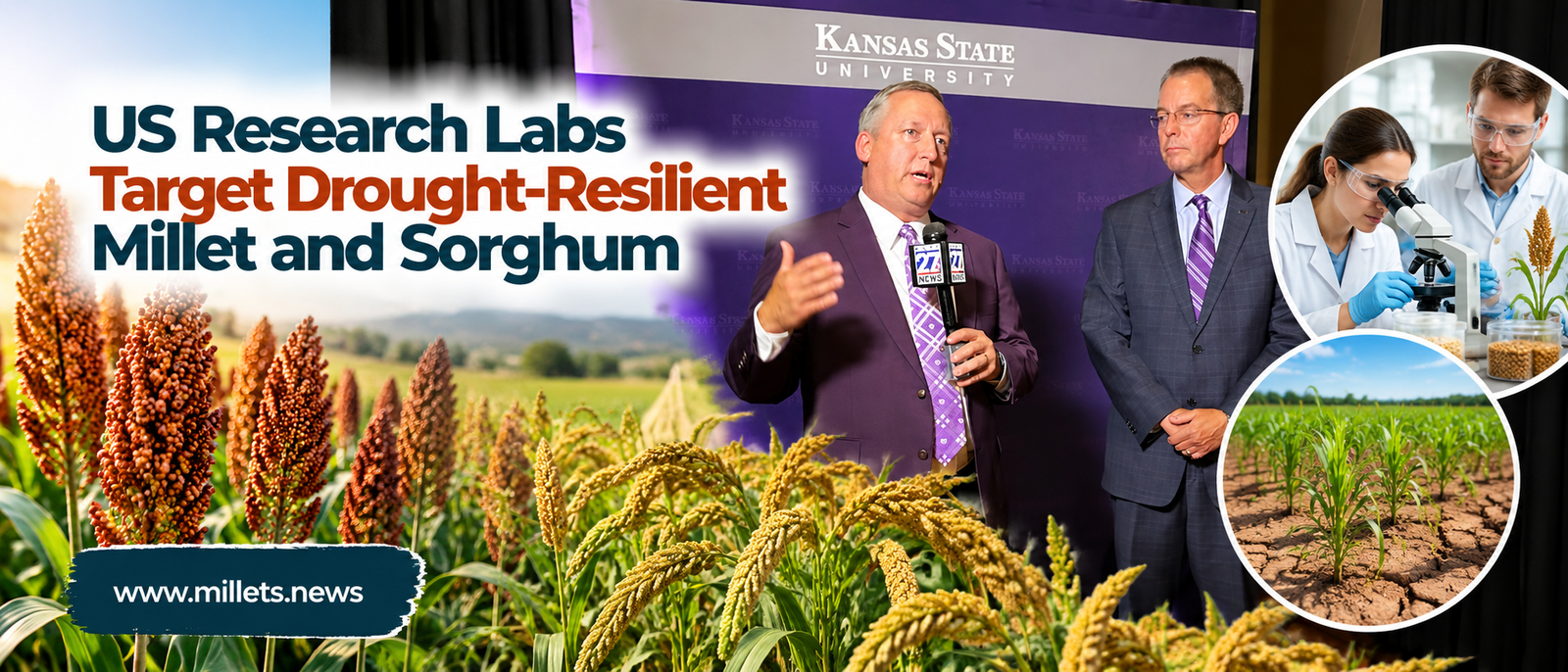
Kansas State University in the United States has received a combined US$16.6 million in funding for two Feed the Future Innovation Labs aimed at strengthening global food security through agricultural research and innovation.
The funding was announced by the US Department of State on October 15, 2026, and will support the university's two initiatives over the next two years.
One of these initiatives, the Feed the Future Cereals Innovation Lab, will focus on improving four major cereal crops: millet, sorghum, wheat and rice.
The research programme aims to identify and use genetic variation to develop crop varieties better able to withstand environmental challenges, including drought, heat, cold and diseases.
For pearl millet, researchers will investigate genetic characteristics associated with early flowering and drought tolerance. Sorghum research will focus on identifying genes linked to drought resilience.
These objectives are particularly relevant to regions where farmers face irregular rainfall, rising temperatures and other production constraints.
The Cereals Innovation Lab will be directed by Nina Lilja, associate dean of international programmes in Kansas State University's College of Agriculture.
The initiative brings together researchers from Kansas State University and partner institutions, including Clemson University, Cornell University, Louisiana State University, Purdue University, Texas A&M University and the University of Florida.
Scientists from these institutions will collaborate with researchers in Bangladesh, Ethiopia and Senegal to strengthen cereal breeding capabilities and develop varieties adapted to challenging agricultural conditions.
The second initiative, the Feed the Future Sustainable Intensification of Targeted Agricultural Systems (SITAS) Innovation Lab, will focus on translating agricultural research into practical solutions for farmers.
Led by agronomy professor Vara Prasad, the programme will operate across eight countries in regions including the Indo-Pacific, Central America and the Lobito Corridor.
Its activities will address crop productivity, soil and water management, agricultural technology and farmer access to locally suitable innovations.
The programme will also explore digital tools, artificial intelligence, smart sensors and partnerships between research institutions, businesses and agricultural extension services.
Together, the two laboratories aim to strengthen agricultural research capacity while improving the practical application of scientific advances.
For the global millet and sorghum sectors, the Cereals Innovation Lab represents an important opportunity to advance crop genetics and breeding methods for climate resilience.
However, the funding announcement describes planned research rather than completed crop improvements. The development of new varieties and their performance under farm conditions will require further research and evaluation.
The initiative highlights continued international investment in strengthening cereals that contribute to food security in environmentally vulnerable farming regions.