 By Admin
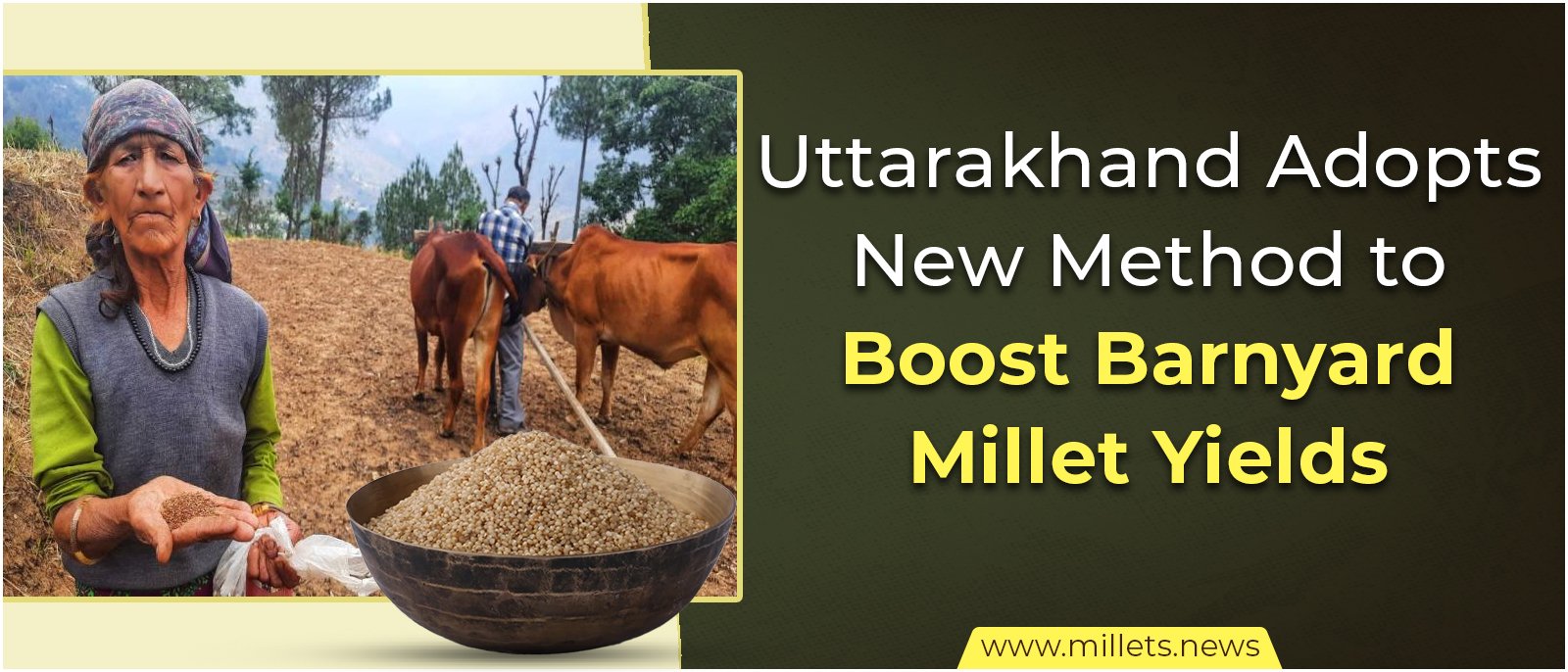
Uttarakhand is introducing a new cultivation approach for barnyard millet as the Himalayan state seeks to increase productivity, reduce input requirements and strengthen sustainable millet farming.
The System of Millet Intensification (SMI) has been launched in Uttarkashi district during the ongoing Kharif season. The technique differs from conventional cultivation by using considerably fewer seeds and transplanting young seedlings at defined spacing.
Under the new approach, seedlings are initially raised in nurseries for approximately 15 to 21 days before being transplanted into fields. Farmers maintain spacing of around 10 × 12 inches, while the seed requirement is approximately 150 grams per acre.
The reduced seed requirement is particularly noteworthy. ICAR-IIMR's good agricultural practices also indicate that transplanted barnyard millet requires substantially less seed than broadcast cultivation, while line planting can facilitate better intercultural operations and weed management.
According to Uttarakhand Agriculture Director Dinesh Kumar, SMI could potentially increase millet productivity by two to three times per acre while simultaneously reducing cultivation costs. These are projected benefits of the technique, rather than reported results from the current Uttarkashi crop, so field performance will be important to monitor.
The cultivation system also emphasises farmyard manure instead of chemical fertilisers. Mechanical weeders are used to improve soil aeration and root development, with officials expecting these practices to contribute to greater drought resilience.
Barnyard millet already occupies an important position in Uttarakhand's agricultural landscape. State agriculture officials cited in the report describe Uttarakhand as India's largest producer of the crop, with annual production of approximately 40,200 metric tonnes across 28,250 hectares.
The initiative therefore represents more than the introduction of another cultivation technique. Improving productivity in an established millet-growing region could influence farmer economics while demonstrating whether intensification methods can be successfully adapted to traditional hill crops.
The state is also exploring opportunities to connect millet production with nutrition programmes. Kumar said the government is considering introducing barnyard millet-based recipes into school meals, with childhood anaemia identified as one of the nutritional challenges the initiative could seek to address.
Market support remains another important issue. Unlike some other millet crops, barnyard millet currently lacks a Minimum Support Price. According to the report, the agriculture department is discussing possible MSP coverage with the state's finance department.
The Uttarkashi initiative consequently brings together several components of millet development: improved cultivation practices, lower seed requirements, natural nutrient management, potential productivity gains, nutrition applications and farmer price support.
For the wider millet sector, the programme will be particularly valuable to follow through harvest. If the projected productivity improvements are demonstrated under farmers' field conditions, SMI could provide another model for strengthening the economic viability of barnyard millet cultivation in India's Himalayan regions.