 By Admin
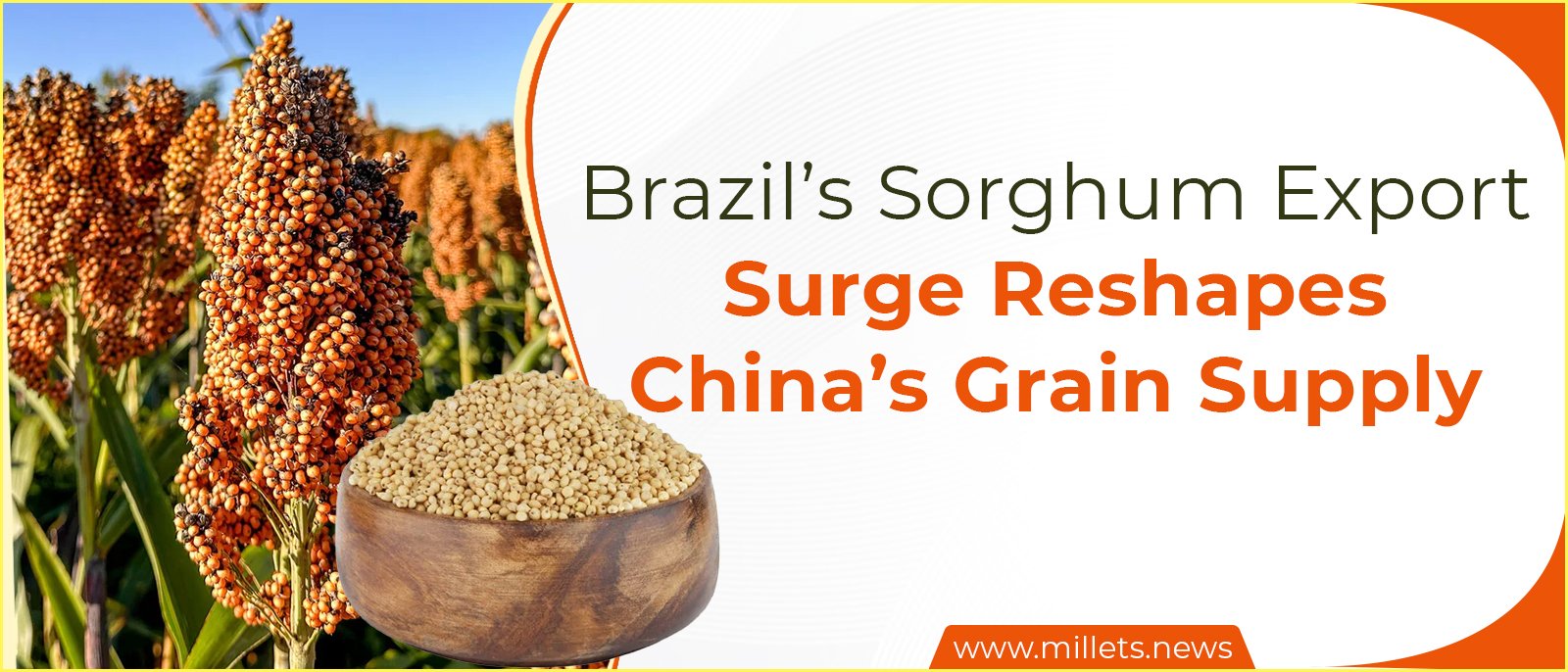
Brazil is rapidly strengthening its position in the international sorghum market as shipments to China accelerate on an unprecedented scale. More than 400,000 metric tons of sorghum are scheduled for shipment during August, signalling the emergence of a significant new agricultural trade corridor. For Brazilian growers, access to Chinese demand could transform sorghum from a predominantly domestic crop into an increasingly important export commodity.
The expansion follows China's approval of Brazilian sorghum suppliers after trade tensions disrupted established sourcing patterns. Brazil made a small 25-ton trial shipment to China in January 2026, but commercial activity has since expanded dramatically. Six vessels scheduled for August are expected to carry approximately 407,700 tonnes, provided shipping operations proceed without delays.
China's growing interest in Brazilian sorghum also reflects a broader strategy of diversifying agricultural import origins. Establishing alternative suppliers can reduce exposure to geopolitical disputes, export restrictions and production disruptions in individual countries. Sorghum is particularly relevant to China because it serves markets including livestock feed and grain-based beverage production.
The new export opportunity is already influencing Brazilian agriculture. Sorghum acreage increased by more than 30% to around 2.15 million hectares in the 2025/26 season, according to figures cited from Conab. National production is projected to reach approximately 7.6 million tonnes, representing an increase of about 25% as producers respond to stronger demand and improved market prospects.
For farmers, access to a major international buyer could provide greater flexibility in marketing their harvest. Export-oriented demand may enable producers to secure forward contracts, improve revenue visibility and reduce dependence on domestic feed markets. Higher volumes could also stimulate investment in storage, transportation, grain handling and port infrastructure across Brazil's agricultural regions.
However, rapid growth also introduces new challenges. Brazil's expanding grain ethanol sector consumes sorghum domestically, creating potential competition between export and industrial demand. Strong buying interest has already pushed sorghum prices temporarily above corn in some producing regions, demonstrating how quickly the emerging Chinese market is influencing domestic market dynamics.
China, meanwhile, is unlikely to view Brazil simply as a complete replacement for other suppliers. Maintaining multiple sourcing relationships would provide greater protection against market or geopolitical disruptions. Brazil's long-term success will therefore depend on competitive pricing, consistent quality, phytosanitary compliance, efficient logistics and its ability to supply grain reliably over successive seasons.
The development represents a potentially important structural shift in the global sorghum economy. If substantial shipments continue through the coming months, Brazil could establish itself as a durable supplier to the world's largest agricultural import market. That would create new opportunities for Brazilian producers while further diversifying the international supply architecture surrounding sorghum.