 By Admin
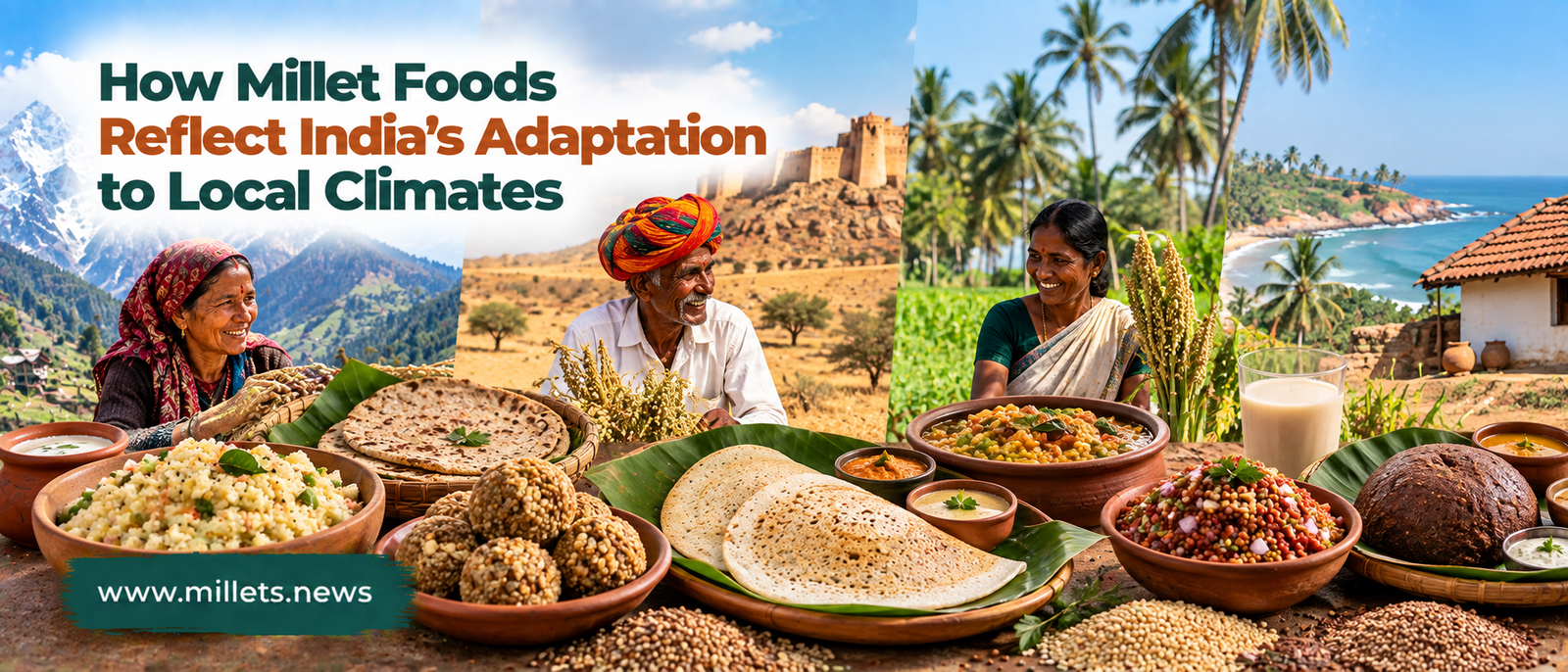
India's traditional food landscape reflects centuries of interaction between communities, agriculture and local environmental conditions. Among the clearest examples are millet-based foods that developed in regions where water availability, rainfall and terrain shaped what farmers could reliably cultivate.
In Rajasthan and western India, pearl millet or bajra became an important crop in dry agricultural environments. Its ability to perform under relatively low-water conditions helped make bajra roti a longstanding part of regional food culture.
A similar relationship can be seen in Karnataka and parts of the Deccan, where finger millet or ragi has long supported rainfed farming. Foods such as ragi mudde became deeply embedded in local diets, reflecting the importance of a crop suited to farming systems where rainfall can be uncertain.
Finger millet also appears in the food traditions of Tawang in Arunachal Pradesh. In this mountainous environment, the grain has cultural as well as agricultural significance and is incorporated into traditional preparations.
These examples sit alongside other climate-linked food traditions across India, including preserved desert foods in Rajasthan, fermented foods in humid regions and dried or smoked foods developed where extending shelf life was important.
The relationship between climate and cuisine should not be oversimplified. Food traditions are also influenced by culture, migration, trade, religion and changing agricultural practices. Nevertheless, millet foods provide compelling examples of how communities made use of grains suited to their surrounding environments.
Their continued presence in Indian diets also gives these traditional foods renewed relevance as farmers and food systems respond to water scarcity and increasingly variable climatic conditions.