 By Admin
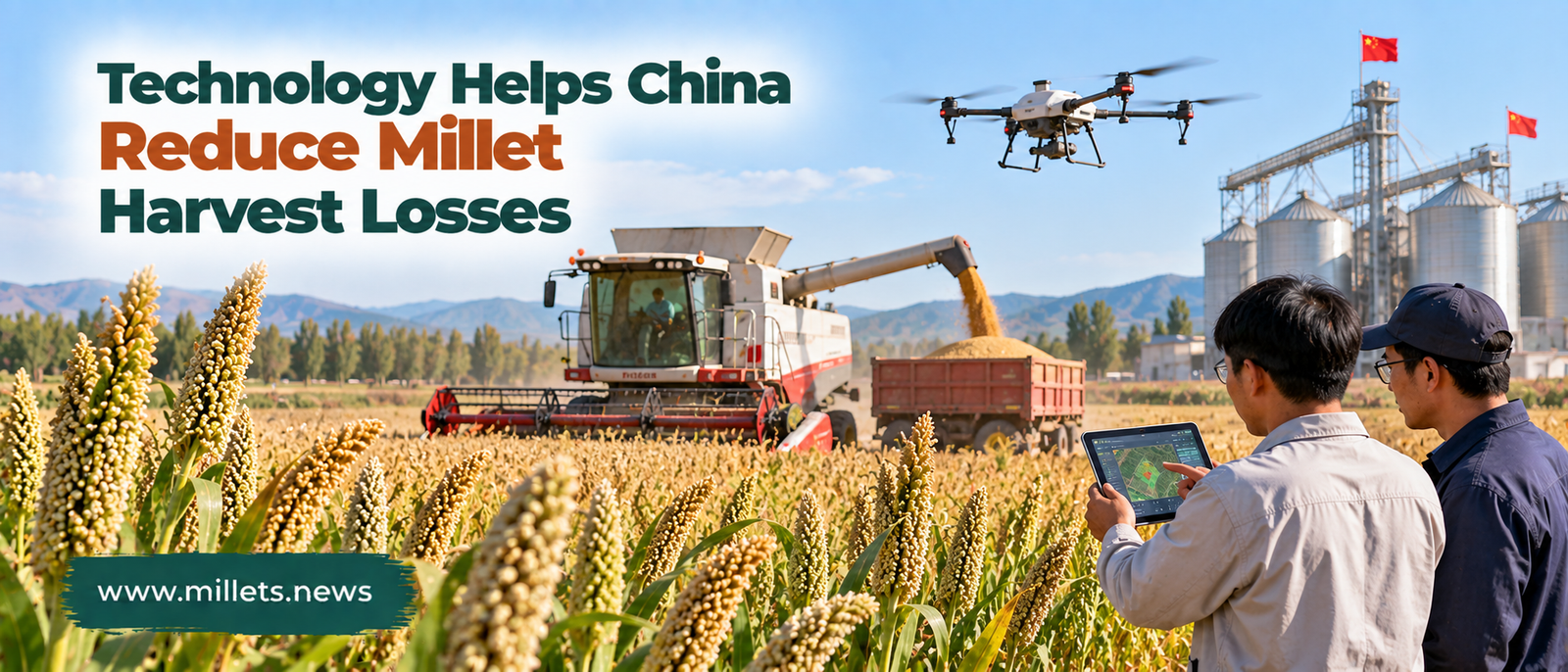
China's autumn harvest is increasingly demonstrating how agricultural machinery and modern technology can help farmers reduce losses between the field and storage.
The September 29 CGTN report examines technologies being deployed across grain-producing areas to improve harvesting efficiency and ensure a greater share of crops reaches storage successfully.
Millet forms part of this broader harvest story. Mechanised harvesting can help producers collect mature millet more efficiently while reducing losses that may occur during traditional harvesting, handling and transportation.
Reducing field losses is important because improving food availability does not depend solely on producing higher yields. Preventing already-grown grain from being lost during harvesting, transport and storage can also strengthen the efficiency of agricultural systems.
The development is particularly relevant for millet production, where appropriate machinery can help address labour requirements and improve the speed and consistency of harvesting operations.
China has a long agricultural relationship with millet, especially foxtail and broomcorn millet. Modern mechanisation therefore represents a very different chapter in the crop's history, as technologies increasingly influence how traditional grains are cultivated and harvested.
For the wider millet sector, the example demonstrates how agricultural innovation can extend beyond crop breeding. Harvest machinery, precision agriculture, processing and post-harvest technologies can all contribute to improving the amount and quality of grain ultimately reaching consumers.
Millets.News already covers emerging millet technologies ranging from digital supply-chain traceability to advanced crop genetics, so this story adds a useful farm-mechanisation and harvest-efficiency dimension to that technology coverage.