 By Admin
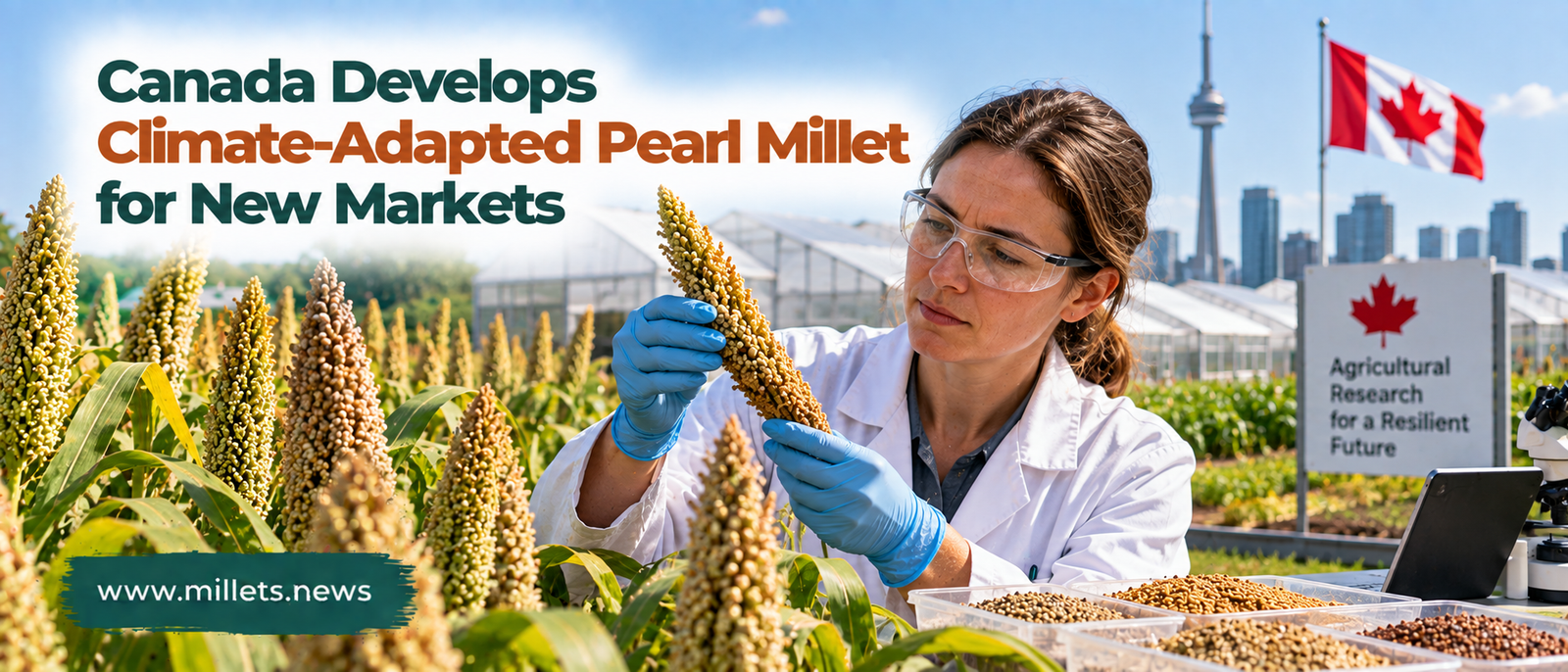
Canada's agricultural landscape remains dominated by crops such as canola, corn, soybeans and barley, but increasing climate variability is creating interest in additional crops capable of serving specialised markets while helping farmers diversify production.
Sorghum and pearl millet are emerging as two possibilities. Rather than replacing Canada's established field crops, they could complement them through drought-tolerant forage, specialised grain markets, livestock feed, food processing, crop rotations and industrial applications.
Developing crops originally associated with warmer climates for Canadian agriculture required extensive adaptation. According to the article, Agriculture and Environmental Renewal Canada Inc. has spent more than 35 years using conventional breeding and selection to combine drought and heat tolerance with traits needed in Canada, including early emergence, cooler-temperature adaptation, early flowering and maturity, and stable grain or biomass production.
The programme evaluated approximately 4,850 accessions. From these, 38 sorghum and 22 pearl millet lines demonstrated useful adaptation in the Ottawa–Carleton environment. The article explicitly notes that this work involved conventional plant breeding rather than genetic engineering.
Pearl millet has several potential roles. CGPMH-90 is presented as a short-duration grain hybrid for food, livestock feed and specialised grain products. CFPMH-101 is intended for forage applications, while CSSPMH-7 combines forage production with sugar-rich sap that could potentially support fermentation and renewable-energy applications.
Another interesting opportunity is crop rotation. The article says the three pearl millet hybrids have demonstrated potential for suppressing root-lesion nematodes, suggesting possible use in potato and vegetable rotations alongside their grain or forage value.
Ontario could be particularly well positioned because of its livestock sector, food-processing capacity, agricultural research and proximity to large consumer markets. Canadian-grown millet grain could eventually support gluten-free flour, bakery mixes, snacks and other products, although commercial expansion would require reliable seed supplies, agronomic validation and dependable buyers.
The article therefore presents millet expansion as a measured diversification opportunity rather than a replacement for Canada's dominant crops. Further multi-location trials, production guides, seed multiplication and processor participation will be important before substantial acreage expansion.