 By Admin
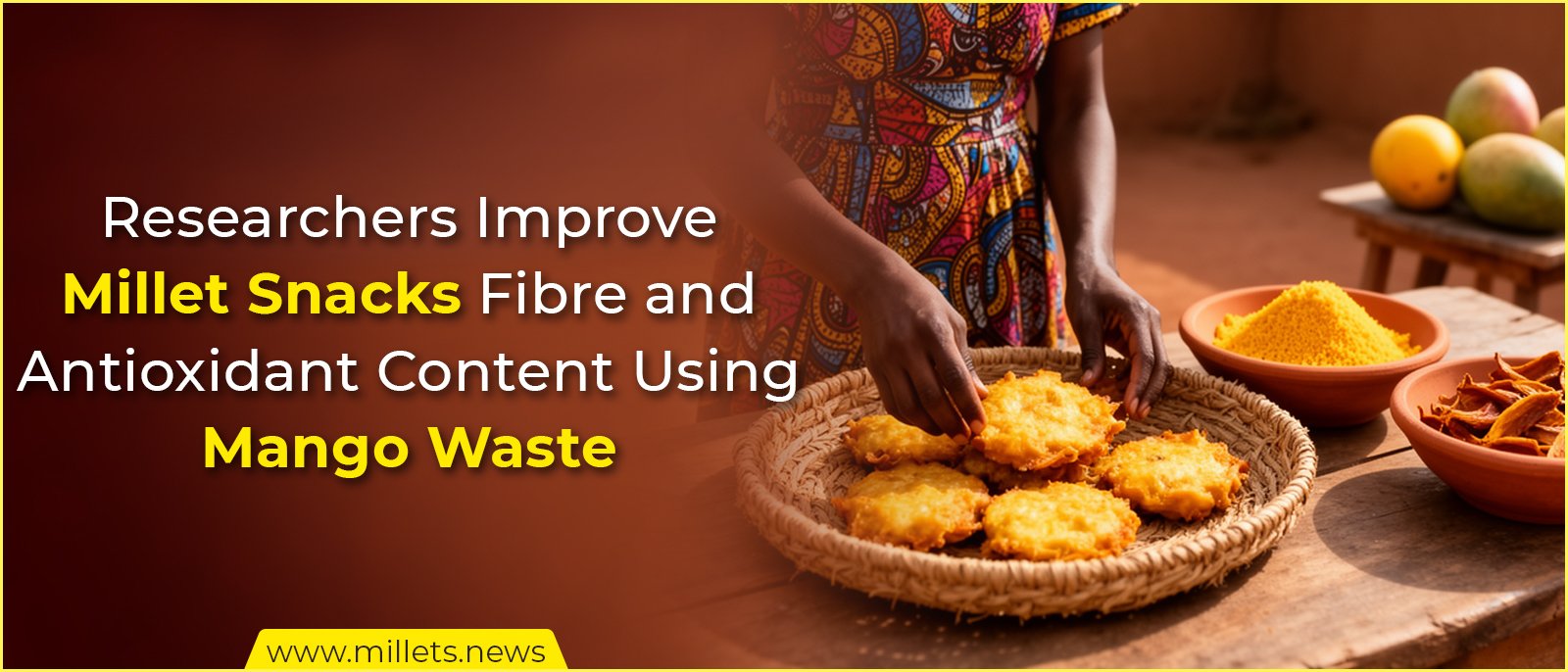
Researchers in Burkina Faso have explored a new approach to improving the nutritional composition of mugudugu, a traditional snack prepared from millet and groundnuts, by incorporating flour produced from mango processing by-products.
The study, published in Food, Nutrition and Health in 2025 and highlighted in November 2026, investigated whether mango peels and kernels could be used as ingredients in millet-based foods.
Led by Wendkouni Marguerite Bamogo and colleagues, the research focused on reducing agricultural waste while exploring opportunities for food fortification.
Mugudugu is traditionally consumed in Burkina Faso and is made using millet, peanuts, sugar and salt.
For the experiment, researchers prepared mango peel flour and mango kernel flour from the Lippens mango variety. The kernels underwent soaking and boiling before drying and milling to reduce antinutritional compounds.
The team prepared several formulations in which 10%, 20%, 30%, 40% or 50% of the millet ingredient was replaced with mango peel flour, mango kernel flour or a combination of both.
Laboratory analysis showed that the fortified formulations generally contained higher levels of dietary fibre and ash, an indicator related to total mineral content.
The researchers also reported increases in potassium, calcium and magnesium concentrations.
At the highest substitution level, the mango peel formulation showed particularly notable increases in selected minerals.
The addition of mango-derived ingredients also increased measured phenolic and flavonoid concentrations.
Formulations containing mango kernel flour demonstrated substantial improvements in laboratory antioxidant activity, including DPPH radical-scavenging capacity.
These results indicate that mango processing by-products may be useful ingredients for developing millet-based foods with different nutritional and chemical characteristics.
However, the researchers also identified an important trade-off.
Protein content declined as the proportion of mango flour increased, suggesting that further formulation adjustments may be necessary to maintain a balanced nutritional profile.
A sensory evaluation involving 60 participants assessed the acceptability of the experimental snacks.
The fortified formulations generally received favourable scores, although the traditional control formulation remained the most preferred overall.
Mango peel flour also influenced the colour and texture of the snack, demonstrating how ingredient substitution can affect both nutritional composition and consumer experience.
Microbiological testing did not detect the organisms examined in the tested samples, but this does not establish long-term shelf-life performance or commercial-scale food safety.
The research has potential implications for millet-based food processing in regions where mango production generates substantial quantities of peel and kernel waste.
Converting these materials into suitable food ingredients could create additional value from existing agricultural resources.
The approach may also encourage food processors to explore locally available ingredients rather than relying exclusively on conventional fortification materials.
Nevertheless, the study examined food composition, laboratory antioxidant activity and sensory characteristics.
It did not involve human clinical trials or demonstrate that consuming the fortified snack prevents disease.
Further research would be needed to evaluate nutrient bioavailability, storage stability, commercial feasibility and potential health outcomes.
For the millet sector, the study provides an example of how traditional foods can be adapted through ingredient innovation while maintaining their cultural identity.
By combining millet with processed mango by-products, the researchers have demonstrated a promising direction for food product development and agricultural waste utilisation in Burkina Faso.