 By Admin
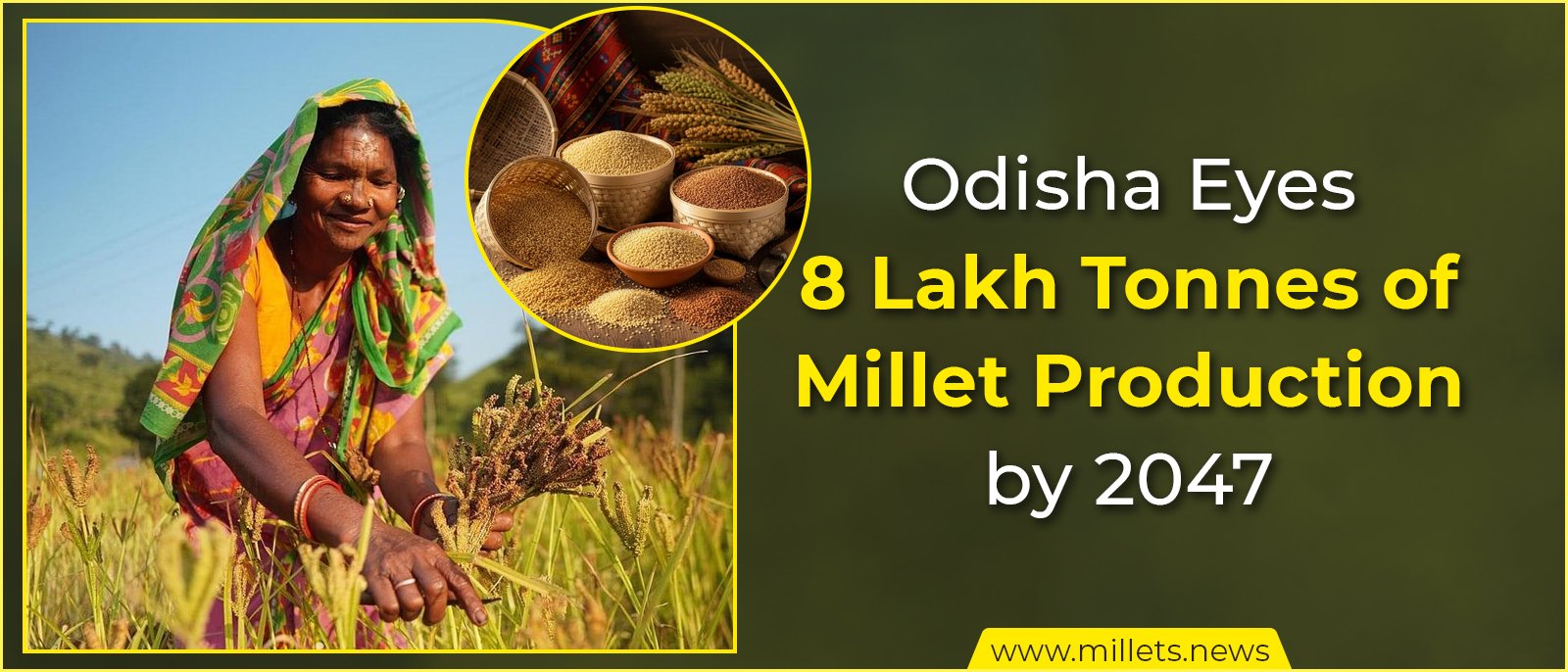
Odisha is exploring an ambitious long-term roadmap for millet-led agricultural development, with a vision to expand the state's millet cultivation area to 5 lakh hectares and achieve annual production of 8 lakh metric tonnes by 2047.
The targets were outlined by Dr Mangi Lal Jat, Secretary of the Department of Agricultural Research and Education and Director General of the Indian Council of Agricultural Research (ICAR), during a national agricultural event in Bhubaneswar on November 10, 2026.
The two-day programme focused on agricultural biodiversity conservation, climate-resilient farming and sustainable food systems.
Dr Jat highlighted the potential of Odisha's agricultural diversity, particularly traditional grains such as millets, to contribute to climate adaptation, soil management and more diverse food systems.
He commended the progress of Odisha Shree Anna Abhiyan and suggested that its experience could inform millet development initiatives elsewhere in India.
A major element of the proposed roadmap involves increasing the area under millet cultivation from the existing 1.79 lakh hectares to 5 lakh hectares by 2047.
The vision also includes a production target of 8 lakh metric tonnes, reflecting an emphasis on both cultivation expansion and agricultural productivity.
The announcement builds on Odisha's existing efforts to promote finger millet cultivation and procurement.
According to the official release, the state procured 7.5 lakh quintals of ragi during the 2024–25 Kharif Marketing Season.
A procurement target of 8 lakh quintals was identified for the 2025–26 marketing season.
The discussion also highlighted the importance of conserving indigenous millet varieties.
Odisha has documented 163 finger millet landraces, representing locally maintained genetic diversity that may be valuable for agricultural research and crop conservation.
Traditional varieties including Kalia, Bati, Mami and Bharathi were specifically mentioned.
Preserving these varieties can help maintain agricultural heritage and provide researchers with genetic resources for future crop improvement.
Alongside finger millet, Dr Jat encouraged greater attention to minor millets such as suan and kangu.
He also emphasised scientific cultivation practices and the development of affordable processing machinery to support millet value addition.
Strengthening Farmer Producer Organisations and women's self-help groups was identified as another important priority.
Such institutions can support collective production, processing and market participation, potentially improving opportunities for small-scale farmers and rural entrepreneurs.
The proposed roadmap also highlights research collaboration and institutional capacity building.
Dr Jat called for stronger cooperation involving the ICAR-Indian Institute of Millets Research in Hyderabad.
He additionally proposed establishing a Centre of Excellence on Millets at Odisha University of Agriculture and Technology.
The proposed centre could provide a platform for research, technology development and knowledge exchange, although the official release does not confirm its approval, funding or operational timeline.
The event was attended by Odisha Governor Braj Mohan Ram, Agriculture Minister Kanak Vardhan Singh Deo, M.S. Swaminathan Research Foundation Chairperson Dr Soumya Swaminathan and senior agricultural officials.
Participants also visited exhibitions displaying indigenous crop diversity, agricultural innovations and millet-based products.
The programme highlighted the importance of connecting crop conservation with agricultural research, food processing and market development.
For Odisha's millet sector, the proposed 2047 targets represent a substantial long-term expansion of the existing cultivation area.
Achieving these ambitions would require sustained investment in quality seeds, farmer support, processing infrastructure and reliable market access.
The targets should be understood as a development vision outlined during the event, rather than evidence that the proposed expansion has already been formally implemented.
The announcement nevertheless provides a measurable direction for future discussions about millet cultivation, biodiversity conservation and rural enterprise development in Odisha.