 By Admin
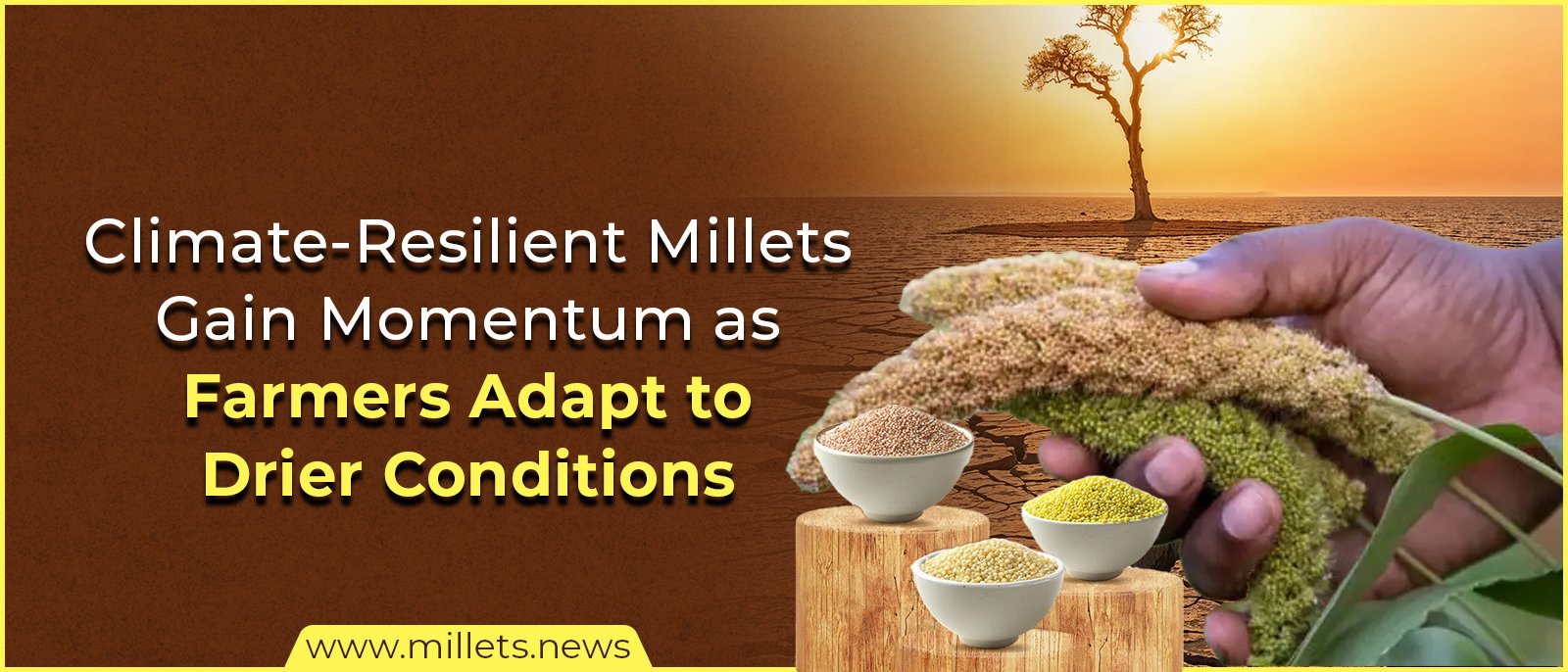
Changing weather patterns are prompting more farmers in India to explore crops that can perform well under limited rainfall. Millets, known for their drought tolerance and lower water requirements, are emerging as a preferred option in regions facing increasing climate uncertainty.
Growing awareness of climate resilience, combined with government support and rising consumer demand for nutritious grains, has strengthened interest in millet cultivation. These traditional cereals can withstand harsh growing conditions while providing reliable yields, making them an attractive choice for farmers seeking to reduce climate-related production risks.
Experts note that millets not only help farmers adapt to water scarcity but also contribute to improved nutritional security. Rich in fibre, minerals, and essential nutrients, they are increasingly finding a place in both domestic and international markets as demand for healthier food options continues to rise.
The renewed focus on millets reflects a broader shift toward sustainable agriculture. By promoting crops that require fewer natural resources while supporting farmer livelihoods, India is reinforcing the importance of millets in building a resilient agricultural system capable of meeting future climate challenges.