 By Admin
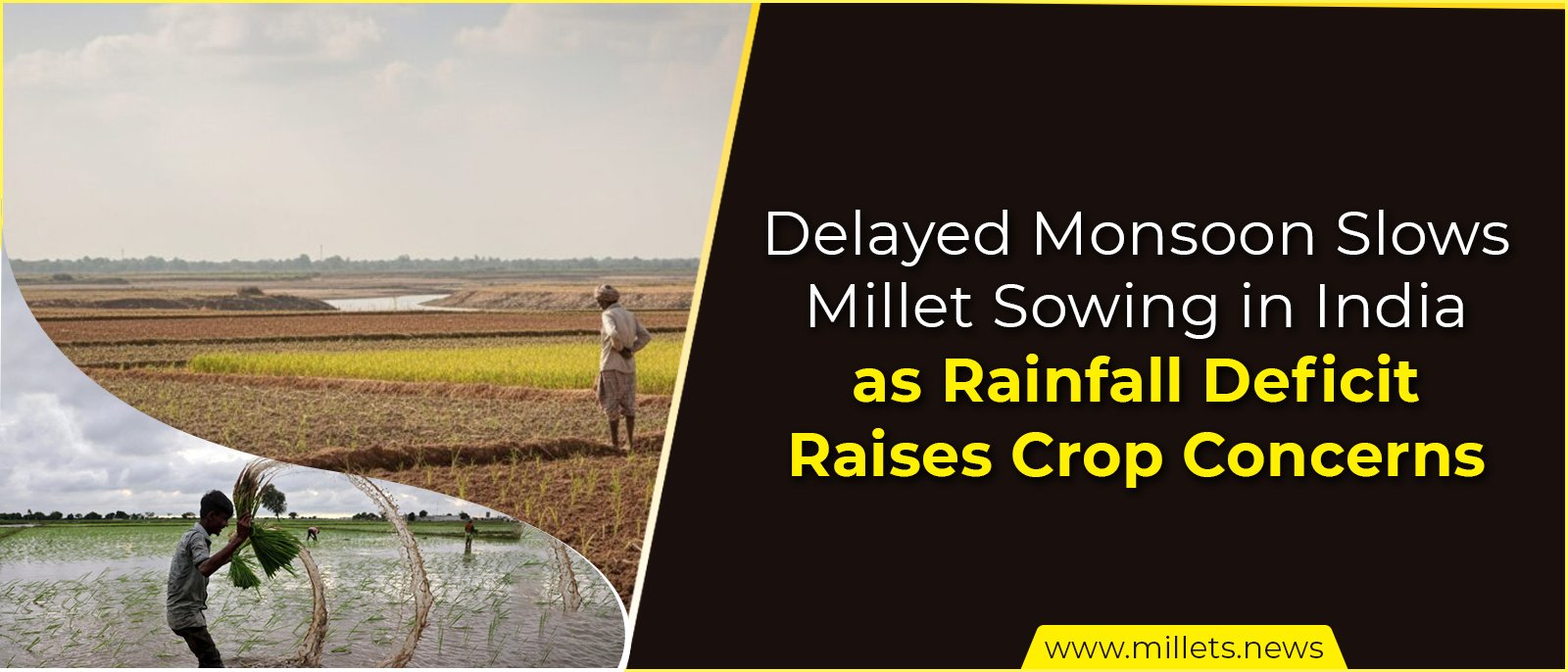
India's 2026 kharif sowing season has witnessed a slower start as below-average rainfall in several regions has delayed the planting of key crops, including millets. The uneven progress of the southwest monsoon has affected agricultural activities across multiple states, creating uncertainty for farmers who depend on timely rains for cultivation.
Millets, widely recognized for their resilience to drought and their ability to thrive in rainfed conditions, are generally more adaptable than many water-intensive crops. However, delayed rainfall during the sowing window can still reduce planted acreage and impact crop establishment, particularly in areas experiencing prolonged dry spells.
Agricultural experts note that the current rainfall deficit has slowed the sowing of several kharif crops. Farmers in affected regions are closely monitoring weather conditions before expanding cultivation, hoping that improved rainfall in the coming weeks will support normal crop growth.
Millets—including sorghum (jowar), pearl millet (bajra), finger millet (ragi), foxtail millet, little millet, and kodo millet—play an important role in India's food system. Besides providing nutritional benefits, these climate-resilient grains contribute to sustainable farming by requiring fewer inputs and performing better under water-limited conditions than many conventional cereals.
Climate variability, including the possibility of El Niño-related weather disruptions, continues to influence agricultural planning. Although millets are often promoted as climate-smart crops, consistent rainfall during the early growth stages remains important for achieving healthy yields and stable production.
Farmers and policymakers are expected to closely monitor monsoon progress throughout the season. If rainfall improves, delayed sowing may recover in many regions. Continued dry conditions, however, could affect overall millet production, market availability, and rural incomes.
The situation highlights the importance of strengthening climate-resilient agriculture through improved weather advisories, better seed availability, water conservation practices, and greater adoption of resilient cropping systems. As global attention toward nutritious and sustainable grains continues to grow, ensuring stable millet production remains essential for food security and agricultural sustainability.