 By Admin
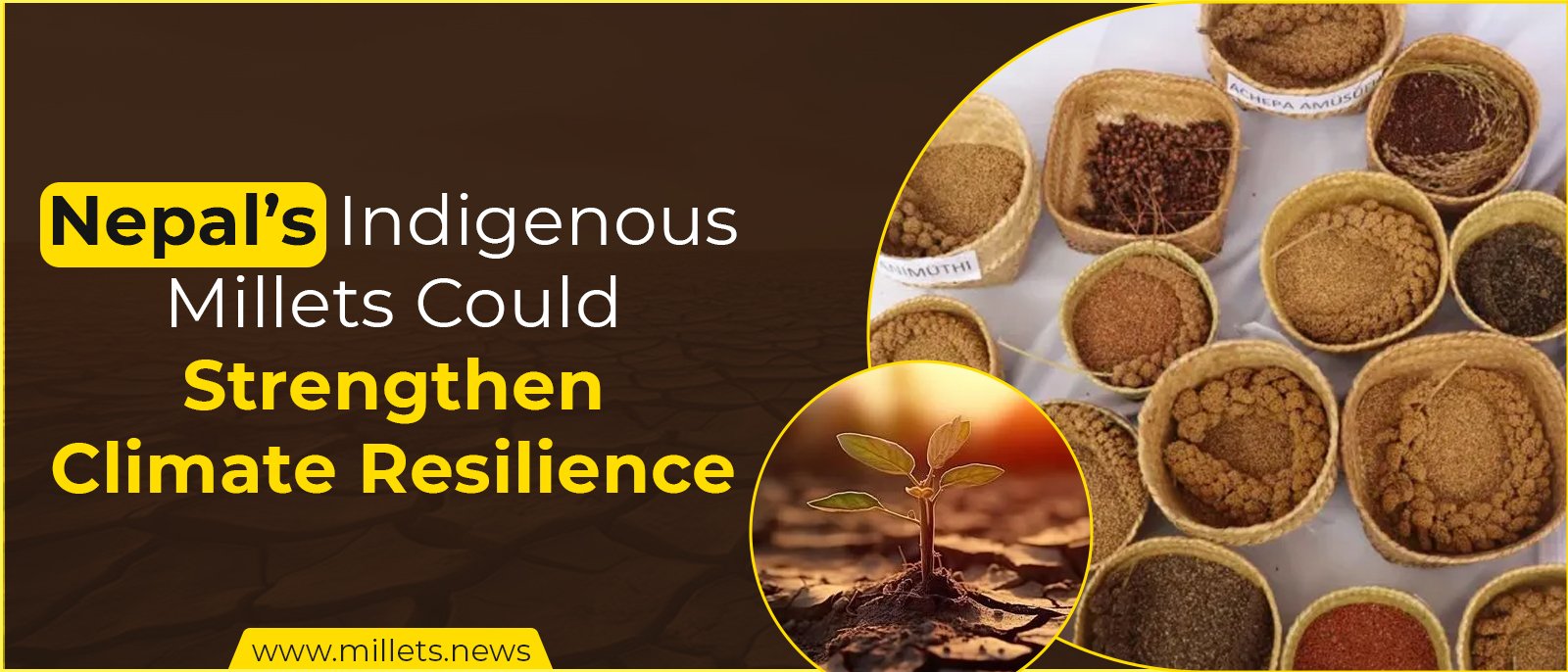
Nepal’s indigenous millet varieties are gaining importance as agricultural genetic resources that could help farmers and researchers respond to increasingly uncertain climatic conditions.
Traditional crops have been selected and maintained by farming communities over generations, allowing different varieties to adapt to specific soils, temperatures and growing environments. Among Nepal’s diverse indigenous crops are kodo, or finger millet, and kaguno, or foxtail millet, particularly important in hill and mountain farming systems.
The growing concern is that some of this agricultural diversity is disappearing at the same time that climate change is increasing the need for resilient crops. Research cited in the report from Pasagaun in Lamjung found that traditional varieties of foxtail millet and rice had disappeared from cultivation in the community studied. Declines in millet and rice yields were also documented.
Indigenous crop diversity can provide farmers with a broader range of options when confronting drought, temperature changes, pests, diseases and other environmental stresses. Not every traditional crop is automatically climate-resilient, but preserving genetic diversity gives researchers valuable material for future crop improvement and breeding.
Nepal has already developed several approaches to conserve these resources. Its National Genebank maintains thousands of agricultural samples, while community seed banks, household genebanks and farmer seed networks help preserve varieties closer to the environments where they evolved.
Keeping traditional varieties in farmers’ fields is particularly important because crops continue interacting with local environmental conditions. Farmers can observe their performance, select seeds and transfer both planting material and agricultural knowledge between generations.
Similar work with millet landraces in Nepal has demonstrated the diversity available to farmers. An FAO-documented on-farm initiative in Bajura evaluated finger millet, foxtail millet, barnyard millet, sorghum and proso millet, allowing farmers to assess different landraces for characteristics including yield and resistance to pests and diseases.
Conservation must also provide economic opportunities. Better processing, branding, value addition and market connections could encourage farmers to continue cultivating indigenous millets rather than abandoning them for commercially dominant crops.
Protecting Nepal’s millet diversity therefore goes beyond preserving traditional foods. It could safeguard genetic resources that may become increasingly valuable for developing resilient food systems as climate conditions continue to change.